Philippines Joins India in Stepping Up Currency Defense as Oil Rises
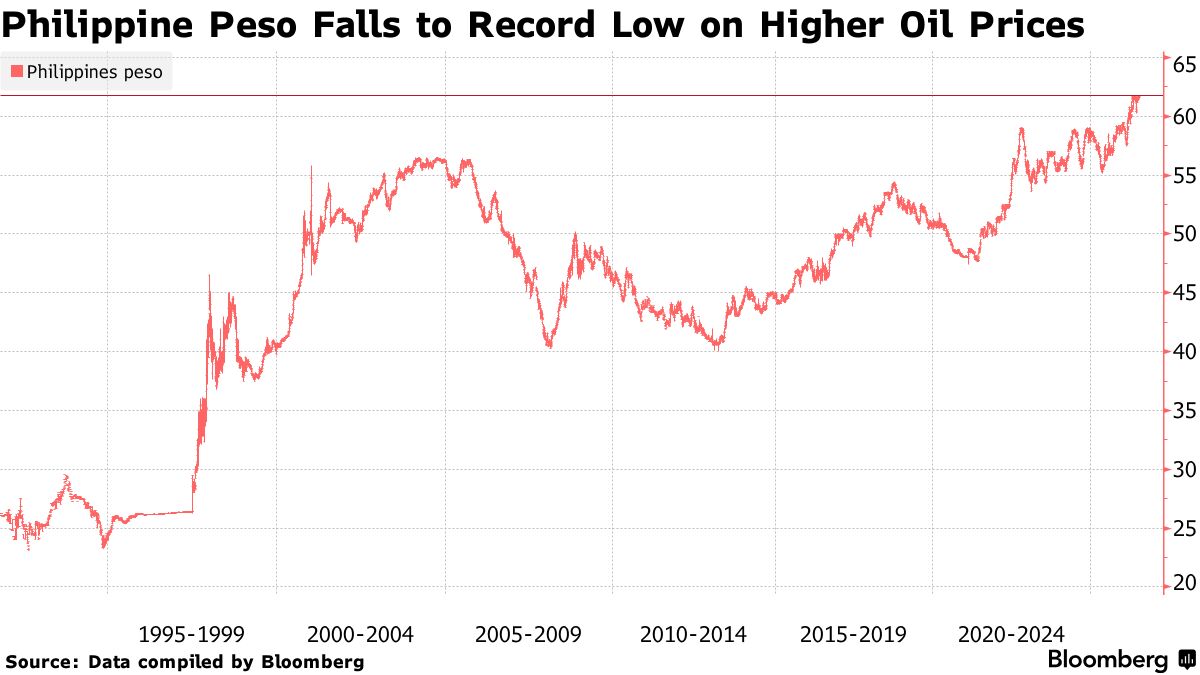
The Philippine central bank intervened in the foreign-exchange market as the peso fell to a record low, joining in protecting currencies hit by surging oil prices.
Bangko Sentral ng Pilipinas sold dollars in the onshore market on Wednesday, traders familiar with the matter said, asking not to be identified because they aren’t authorized to speak publicly. Governor Eli Remolona didn’t reply to a query confirming the central bank’s dollar sales.
The peso declined to 61.75 per dollar on Wednesday, a level that has held since late April. The more than 20% surge in oil prices this month is putting pressure on currencies of oil importing nations in Asia, with Indian authorities this week also intervening to support the rupee.
“The central bank should be able to hold the line at 61.75,” said Michael Ricafort , chief economist at Rizal Commercial Banking Corp. in Manila. “They have a lot of reserves, enough to mount a successful defense until the dust has settled.”
Higher oil prices and the risk of the El Nino weather phenomenon are exacerbating the peso’s weakness this year. The Philippines imports almost all its oil requirements and higher prices threaten to widen its current-account deficit. also fell, with the benchmark index down more than 1%.
Some analysts see the risk of the peso weakening further, with Robeco Group saying it could fall to 62 in the near term.
“In the current global context, and with the potential for El Nino to have a negative impact on agricultural production across Asia, the peso will be among the most vulnerable currencies in the region,” said Philip McNicholas , Asia sovereign strategist at Robeco in Singapore.
The peso declined almost 5% this year to become one of Asia’s worst performing currencies. Philippine foreign-exchange reserves have fallen more than 5% this year to $105 billion.