Deutsche Bank Says Cheap Yuan Hits Germany Harder Than Euro Area
China’s yuan is still undervalued versus the euro despite its recent gains, presenting a larger “competitiveness challenge” to Germany than to the wider currency union, according to Deutsche Bank AG.
Based on a range of metrics including purchasing power parity and external balances, the yuan is around 15% below its fair value against the shared currency, compared with 20% a year ago, Deutsche Bank strategist Shreyas Gopal wrote in a report published Monday.
The lender’s models all showed “yuan undervaluation is more pronounced against a hypothetical Deutschmark,” based on where it estimates the European country’s former currency would be trading, he said.
The yuan’s exchange rate has become a flashpoint in the EU’s relations with Beijing as European officials seek measures to reduce the bloc’s trade deficits with China. German Chancellor Friedrich Merz reinforced a call for currency dialogue with the world’s second-largest economy in a on Monday, claiming the yuan has been undervalued by 25% “for years.”
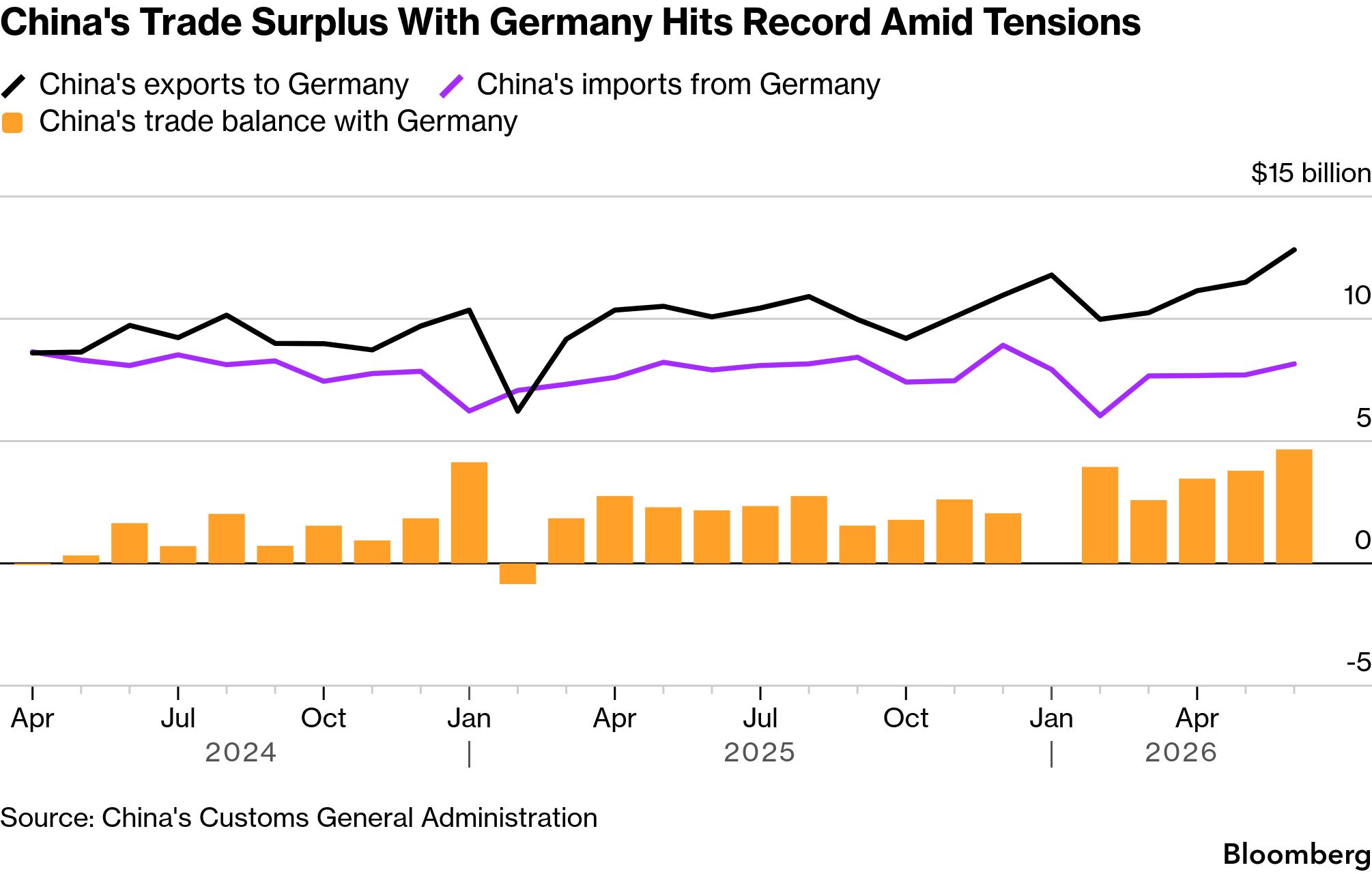
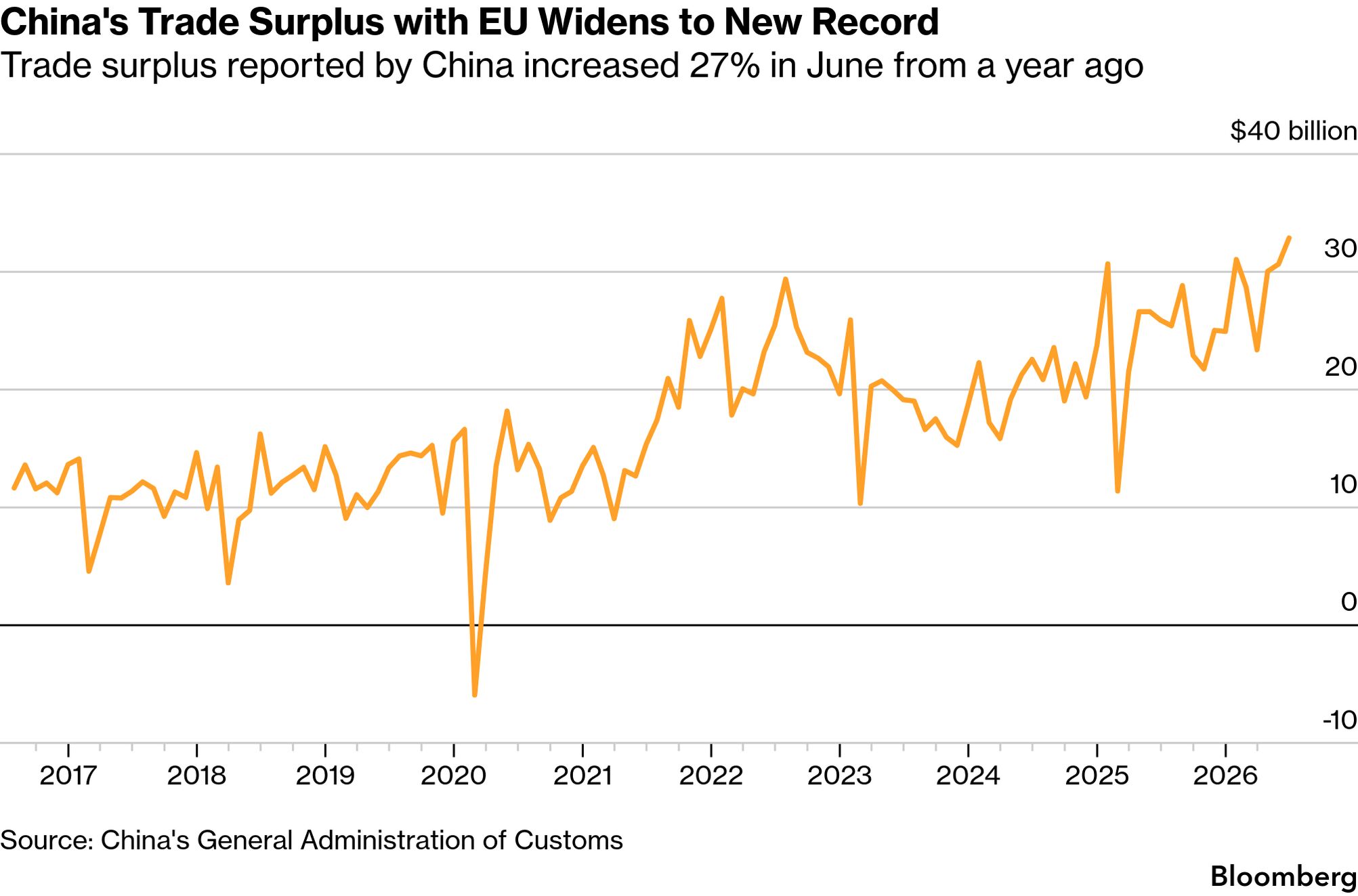
Chinese customs data released on Tuesday showed the country’s trade surplus with the EU and Germany both climbed to in June. But while the imbalance with the bloc widened 27% from a year earlier, it more than doubled with Germany.
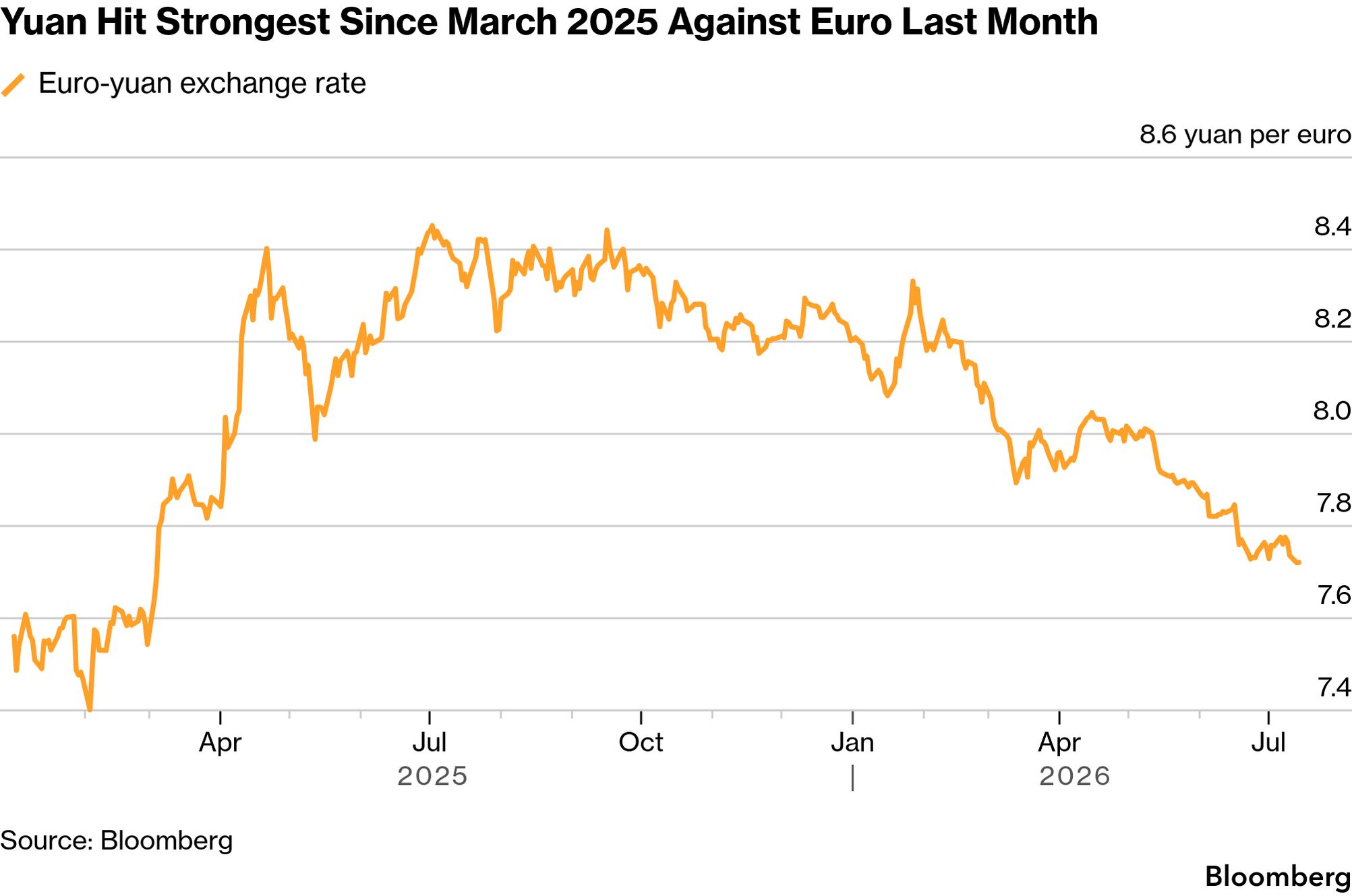
The yuan has appreciated 6.2% versus the euro this year, and advanced last month to the strongest level since March 2025. Nevertheless, China’s currency is still about 13% weaker than its peak in 2022.
Germany is seeing “some small signs of a nascent reversal in the worsening trade deficit with China,” possibly because the yuan’s gains over the past year are filtering through, according to Deutsche Bank. Still, “a large portion of the currency undervaluation remains,” it said.
The People’s Bank of China has signaled tolerance for a modest appreciation of the yuan against the dollar, and recently set the currency’s daily fixing at the strongest level since February 2023.
Merz envisions a more far-reaching approach that he’s likened to the 1985 Plaza Accord, when finance ministers and central bankers from the US, Japan, West Germany, France and the UK met in the New York hotel to coordinate policies to engineer a weaker dollar while strengthening the yen and other currencies.
Some economists say Beijing is of the Japanese currency’s rapid appreciation in the wake of the agreement, which helped fuel asset bubbles and financial instability. A shock one-off devaluation in the yuan in 2015 roiled markets and undermined global confidence in the government’s handling of the exchange rate.
“There is no world in which China will allow, or Europe is in any way able to impose, a new Plaza Accord on China: it is not going to happen,” Rabobank global strategist Michael Every said in a report. “End of discussion. China could decide it wants to see the yuan appreciate for its own reasons.”
But with job losses mounting and Europe’s manufacturing upended by the flood of competition from Chinese rivals, a stronger yuan could contribute to a less lopsided trading relationship, according to Deutsche Bank.
“The many causes of Europe’s competitiveness struggles vis-à-vis China are unlikely to all be solved by the euro-yuan pair moving closer to fair value,” Gopal said. “Nevertheless, they would be helped at the margin by the further strengthening in the yuan which our colleagues expect.”