Yen Strengthens as Traders Brace for Holiday Intervention Risk
Options traders are paying up to hedge against sharp moves in the yen ahead of thin US holiday trading, as speculation grows that Japanese authorities may be less predictable in how they intervene to support the currency.
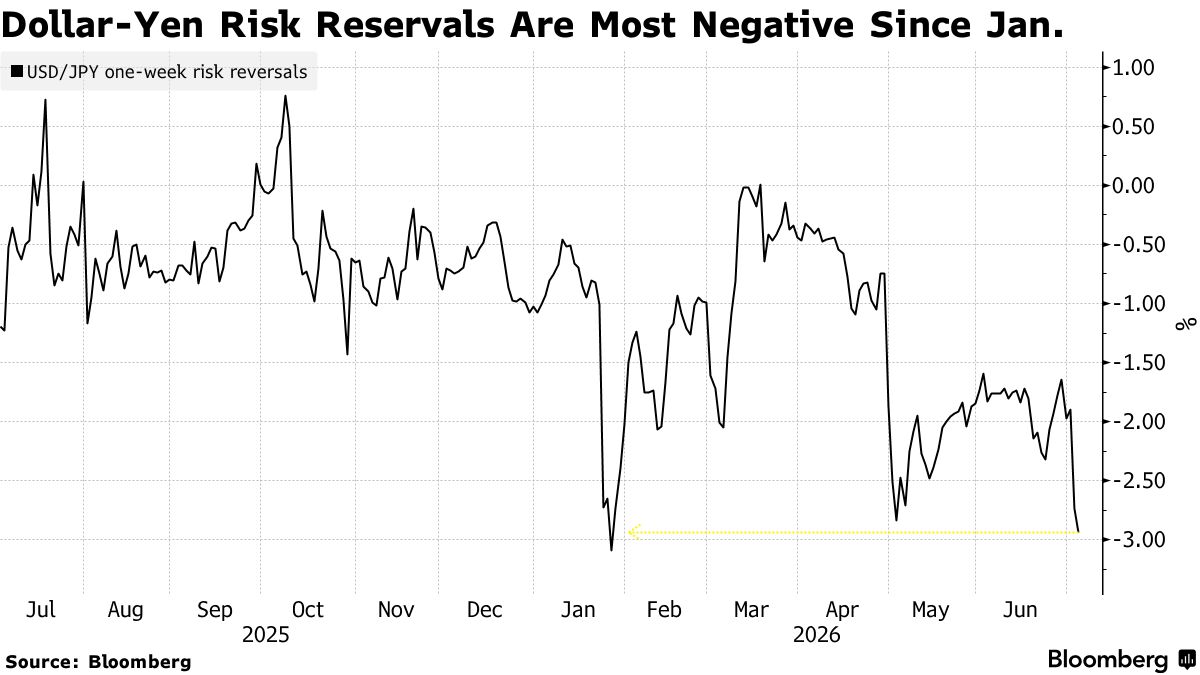
One-week dollar-yen risk reversals have become more negative recently, signaling greater demand for yen call options relative to dollar calls. At the same time, one-week butterfly spreads have widened the most since April 2024, suggesting investors are paying more for protection against outsized moves in either direction.
Together, the moves suggest traders are positioning for heightened volatility with a bias toward yen strength that reflects concerns the Japanese government may step into the market. Thin liquidity around the US Independence Day holiday could amplify any sharp moves in the currency pair.
The yen touched its weakest level against the dollar earlier this week before rebounding on Thursday to below 162 per greenback after US payrolls data came in , triggering dollar weakness. It briefly strengthened past 161 on Friday after Finance Minister Satsuki Katayama said she expects the Bank of Japan to conduct appropriate monetary policy to achieve their price target.
The authorities waited until a long Japanese holiday in April when they for the first time since 2024. That has set off speculation that it might try something similar over the US Independence Day holiday in its next foray into the currency market.
Read More:
“With US markets closed for the Independence Day celebrations, currency liquidity will be thin – an ideal time to have a large impact on the market,” said Carol Kong , a strategist at Commonwealth Bank of Australia. “The Ministry of Finance has in the past surprised markets with interventions during public holidays.”
Authorities have stayed away from the market after spending a record ¥11.73 trillion ($72.7 billion) on yen-buying in the month through May 28, when the currency first weakened beyond the 160 level. The currency traded at 161.30 against the dollar on Friday.
Investors are also weighing reports that Japanese officials may abandon the practice of telegraphing any intervention intentions in advance, a shift from the approach taken in the operations earlier this year. A less predictable strategy could make it more difficult for investors to maintain speculative positions against the currency.
“Knowing where intervention is likely to occur provides valuable information for risk managers,” said Chris Weston , head of research at Pepperstone Group Ltd. “Remove those guideposts and investors naturally become more cautious holding large yen positions, particularly during periods of thinner liquidity when surprise intervention can have a far greater market impact.”