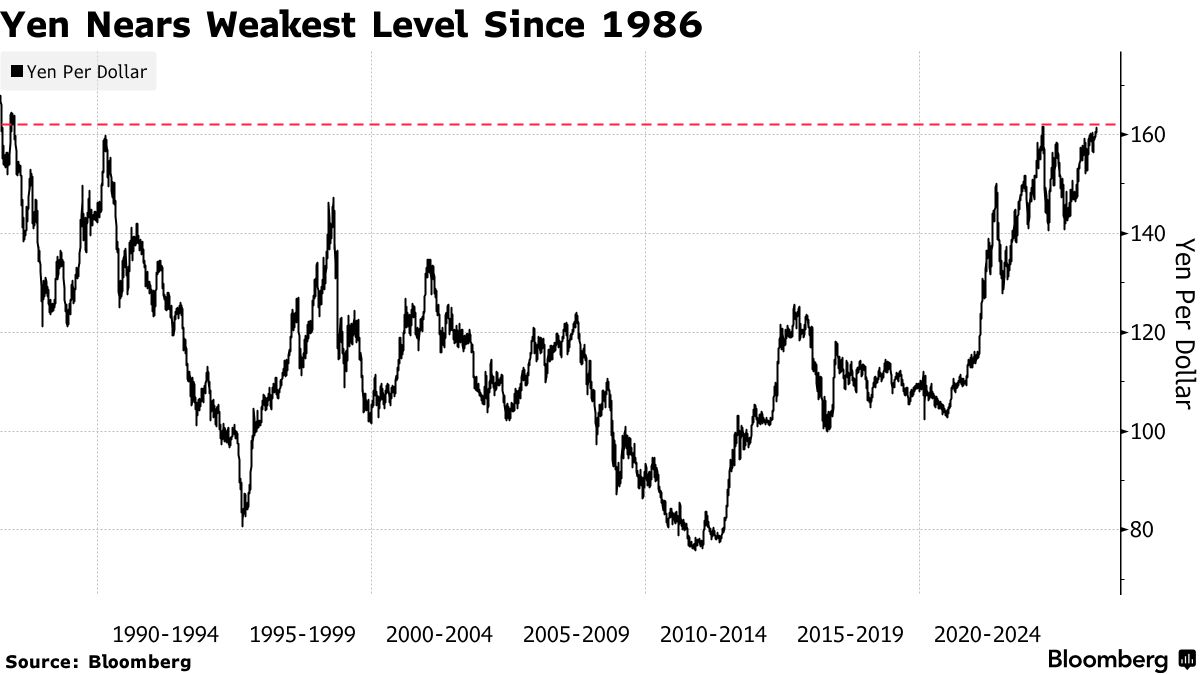
Warning to Yen Traders Fails to Help Currency Near 40-Year Low
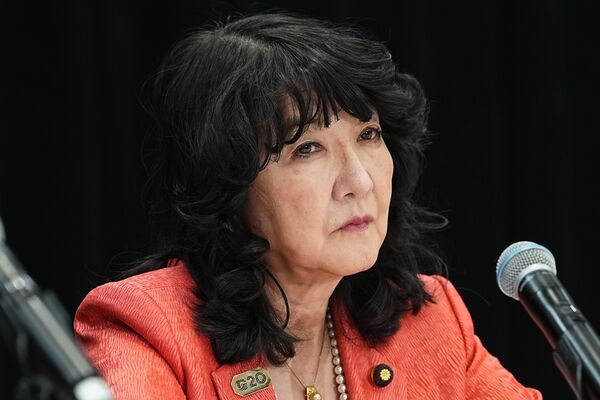
The yen remained within reach of its weakest level in four decades on Friday, even after Japan warned that it stands ready to take “bold action” to defend the currency.
The impact of the comments from Finance Minister Satsuki Katayama faded within a few hours, leaving the yen vulnerable to choppy moves. It traded at about 161.30 versus the dollar at 9:54 a.m. in London. Should it pass 161.95, the currency would be back to levels last seen in December 1986.
A holiday in the US means that trading liquidity is likely to get thinner as the day goes on, offering an opportunity for speculators to push the yen lower. These conditions also present a chance for Japan to burn anyone betting against the currency by entering the market to buy yen, rapidly turning a rout into a rally.
“We can take bold action against excessive speculative moves in the foreign-exchange market,” Katayama told reporters at a press conference.
While the phrase “bold action” is strong and typically taken to mean market intervention, the totality of Katayama’s remarks on Friday were not as assertive as those given in late April, just before Japan began a of intervention. At that time, she went as far as saying that people shouldn’t take their eyes off their smartphones, even when they were out or on holiday.
Ahead of the April 30 intervention, Japan’s top currency official Atsushi Mimura also issued a “ ” before authorities stepped into the market, highlighting the proximity of the intervention. He has not commented publicly on FX since early May.
“The remarks from Katayama were no different from what we’ve heard before, and did not give the impression that intervention is imminent,” said Shota Ryu , a currency strategist at Mitsubishi UFJ Morgan Stanley Securities.
Yet traders also have to contend with the risk that Japan may be looking to change tactics this time and enter the market with a greater element of surprise.
Options pricing reflects this. Demand to protect against, or bet on wider ranges in the Japanese currency in the coming week climbed to the highest level since April 2024, while options sentiment was the most bearish in a month.
Read More:
“With US markets closed on Friday, thinner liquidity could amplify any moves should authorities intervene in the currency market,” said Shogo Karitani , a strategist at Minato Bank.
The yen’s latest slide coincides with broad dollar strength, as the greenback staged its biggest two-day rally in three months on that the Federal Reserve will start raising interest rates in coming months.
That overshadowed the Bank of Japan meeting earlier in the week, when policymakers interest rates to the highest since 1995 without generating much support for the yen. Speaking at parliament on Friday, BOJ Deputy Governor Ryozo Himino said that exchange rates remain an for the economy and prices, adding that the central bank will closely monitor their impact.
Japan stepped into the currency market in the month through May 27, spending a ¥11.73 trillion ($72.8 billion) to prop up the yen. To finance the intervention, Japan foreign securities, including US Treasuries, a move that may draw scrutiny in Washington amid heightened concern over the stability of the Treasury market.
Katayama said currency issues were also addressed at this week’s Group of Seven summit in France. In a joint statement, leaders said they “reaffirm our existing G7 exchange rate commitments.”