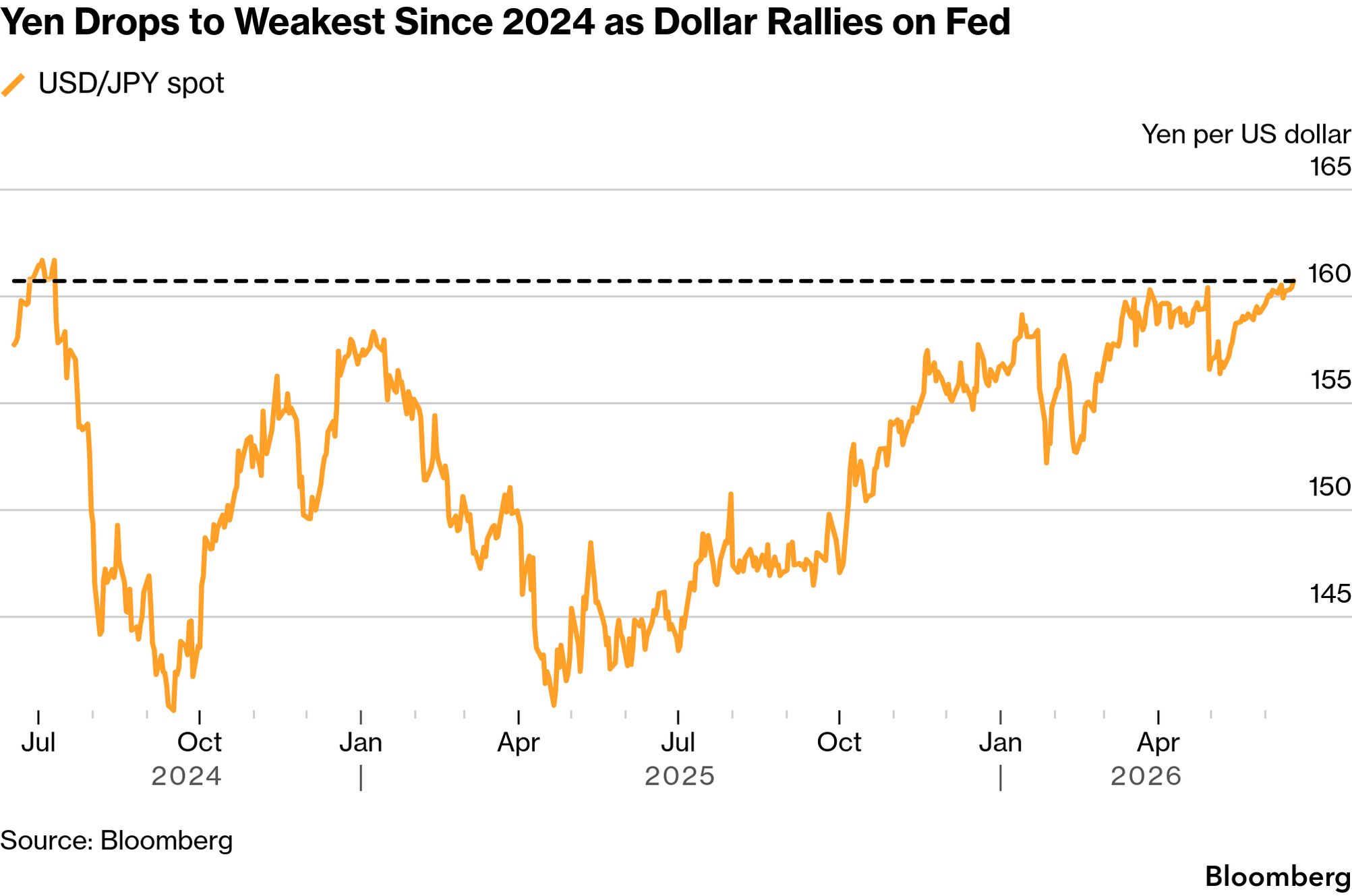
Japan Intervention Risk Mounts as Yen Drops to Lowest Since 2024
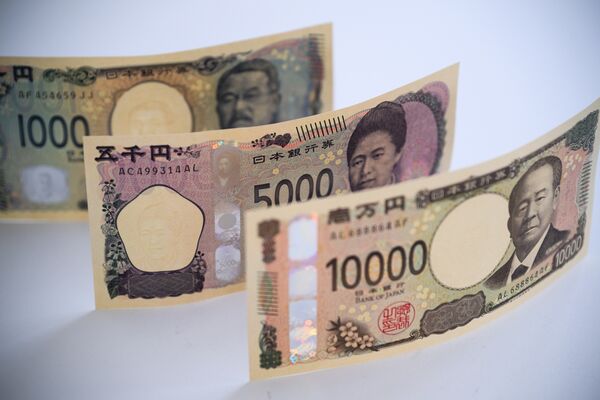
Yen watchers are on alert for the risk of intervention by authorities to prop up the currency after it hit its weakest level against the dollar since July 2024.
Japan’s currency fell as much as 0.2% to 160.80 per dollar on Wednesday before trading at around 160.70 on Thursday morning in Tokyo. The move overnight was driven by a rally in the US currency as traders added to that the Federal Reserve will increase interest rates this year.
“The Fed meeting signaled a hawkish shift in policy,” said Andrew Hazlett , a foreign-exchange trader at Monex Inc. “This is driving dollar strength and has put the yen at levels where intervention is absolutely on the table.”
Investors remain that the Bank of Japan may not be raising borrowing costs fast enough to control inflation and remove pressure on the currency, even after lifting its benchmark interest rate on Tuesday. Deputy Governor Shinichi Uchida said during a post-meeting press conference that the foreign exchange rate is important but not a policy target of the central bank.
Overnight index swaps show about an 80% chance of a move by the BOJ by year-end. Some 90% of 44 economists by Bloomberg forecast that the BOJ will raise its benchmark rate by its December meeting.
The latest move in the currency also comes despite a ¥11.73 trillion ($73.6 billion) intervention by authorities from April 28 to May 27. Japan on its holdings of foreign securities, including US Treasuries, to finance the intervention, according to Ministry of Finance reserve data.
“The markets are and should be on high alert for potential action here from the Japan MOF,” said Brian Daingerfield , head of G10 FX strategy at NatWest Markets. “We have seen in the past that interventions have been event risk driven before.”
Finance Minister Satsuki Katayama recently that authorities are prepared to respond to foreign exchange moves as needed at any time. Still, some strategists say recent moves in the yen do not warrant intervention.
“There is absolutely no justification for intervention, and I don’t think the finance ministry is in a position to even discuss it,” said Tohru Sasaki , chief strategist at Fukuoka Financial Group. “The dollar is strong, and the yen is actually strong against other currencies. This is not a case of broad-based yen weakness.”
The yen has been under pressure from the wide interest-rate gap between the US and Japan. The elevated price of oil due to the US-Iran conflict has also hit Japan because of its heavy dependence on imported crude, which is traded in dollars.
While the US and Iran reached an to reopen the Strait of Hormuz, the benefit to the yen has been minimal. Speculators have boosted their bets against the yen to a , signaling the revival of the yen carry trade despite intervention risks.
Beyond current levels, the next key milestone for the yen would be 161.95, a break of which would bring it to the lowest level since December 1986 against the dollar.