Japan Used Record $73.6 Billion to Support Yen in Past Month
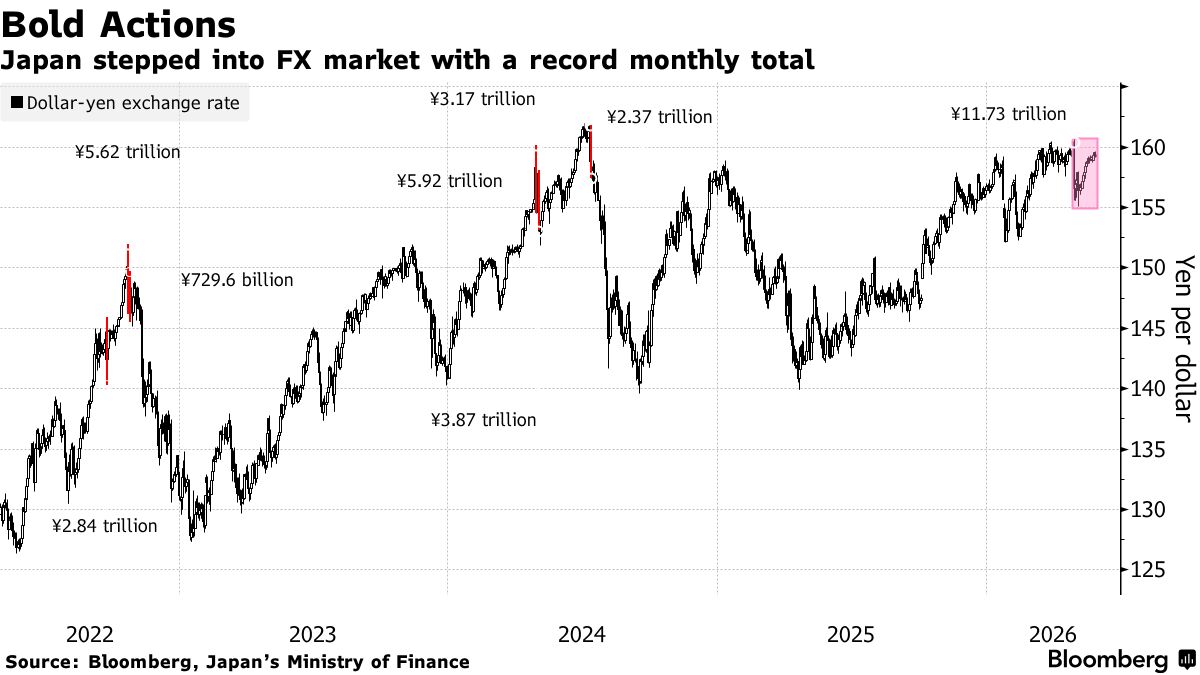
Japan used a record of almost $74 billion over the past month to prop up the yen after the currency slid past 160 per dollar, according to Finance Ministry data confirming the government’s first market intervention since 2024.
The ministry disclosed figures Friday for the month from April 28 to May 27 showing total intervention of ¥11.73 trillion ($73.6 billion) over a period marked by several spikes in the yen.
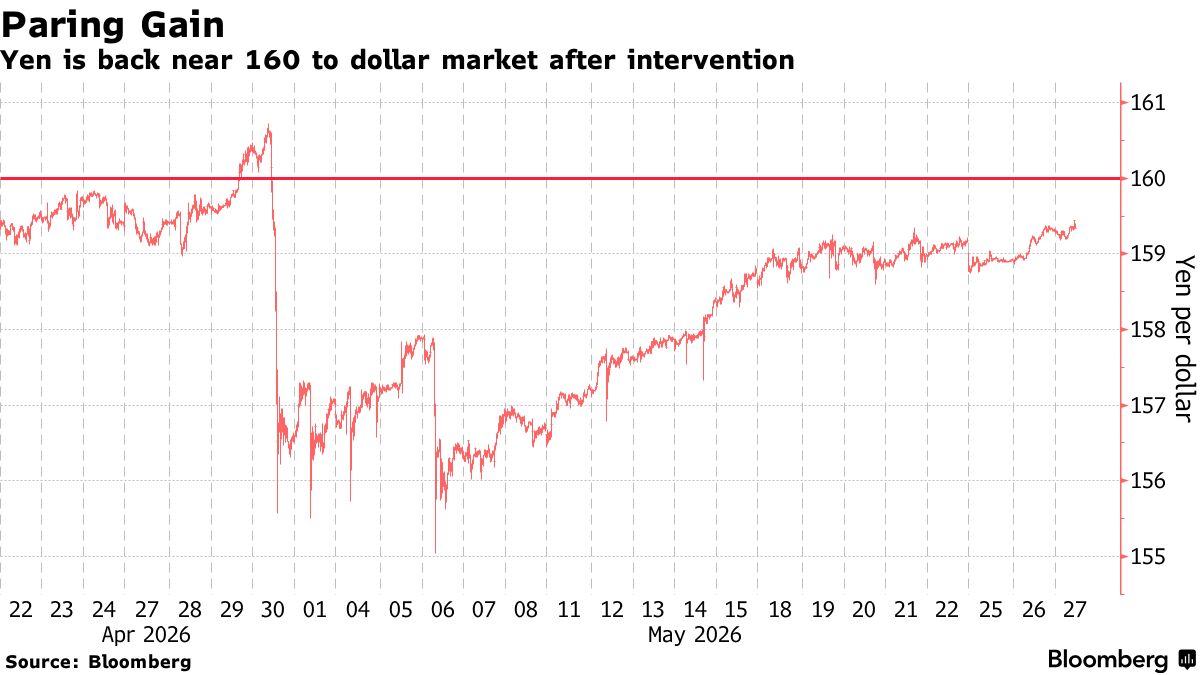
The figures underscore the authorities’ determination to prevent a freefall of the yen and are the first official acknowledgment that the authorities stepped into the market after the yen hit 160.72 against the dollar. A person familiar with the matter had said Japan intervened on April 30, and speculation has continued of further rounds of yen-buying in subsequent days.
The total came in larger than expected. Calculations based on central bank flow data had pointed to spending of as much as ¥10.08 trillion after two rounds of action. The bigger number suggests the ministry had a tougher time propping up the yen and may fuel the chatter that multiple rounds of intervention took place.
“This raises the possibility that stealth intervention was conducted in the 158.50–159.50 yen range,” said Rinto Maruyama , senior FX and rates strategist at SMBC Nikko Securities Inc. “This would likely be interpreted as a failure to halt the yen’s depreciation despite stealth intervention, likely strengthening arguments regarding the limitations of unilateral intervention.”
Traders will need to wait until early August for more precise information on action undertaken, when the ministry releases figures for the second quarter detailing the exact timing and size of operations on a day-by-day basis.
Before then, the ministry is scheduled to release next week a detailed breakdown of Japan’s foreign reserves as of the end of May. Those figures may offer clues about how Tokyo financed the yen-buying operation. In past operations since 2022, Japan sold part of its US Treasury holdings to fund currency support measures. As of the end of April, Japan had $1.17 trillion in foreign currency assets.
US Treasury Secretary Scott Bessent recently described sharp foreign exchange volatility as undesirable , indicating tacit US approval of Tokyo’s moves. But sales of Treasuries to fund the intervention might irk Bessent as they can put upward pressure on US yields.
Read more:
The US Treasury Department typically publishes its foreign exchange report in June. That latest edition may offer further insight into Washington’s assessment of Tokyo’s actions.
BOJ Impact
The April 30 action came two days after the Bank of Japan held its policy settings steady. The operation resembled a pattern seen in April 2024, when the BOJ’s end-of-month stand-pat decision weakened the currency and prompted the government to step into the market.
The currency has remained under pressure from the wide US-Japan interest rate differential and mounting inflation concerns linked to the Middle East conflict, with few clear catalysts that might reverse that dynamic.
The BOJ’s next policy decision is June 16, with many in the market predicting a quarter-point hike, a move that might help close the gap.
“The authorities bought about a month of time, from April 30 through late May. During that period, markets were dealing with extraordinary uncertainty surrounding the Middle East conflict,” said Yuji Saito , executive adviser at SBI FXTrade Co. Despite those risks stemming from the Strait of Hormuz and the upward strength of the dollar, the ministry kept the exchange rate within a ¥5 range. “From that perspective, I would say the intervention succeeded in its main objective of containing volatility.”
Still, questions about the effectiveness of the record-sized intervention are likely to rumble on, especially as the dollar has already recovered most of its post-intervention losses. The yen was trading around 159.29 per dollar on Friday evening.
“It had an impact at the time. But I don’t believe they successfully changed the head space of the market,” said Bart Wakabayashi , Tokyo branch manager at State Street Bank & Trust. He sees the possibility for further action going forward.
Officials have continued signaling their readiness to act again if necessary. Finance Minister Satsuki Katayama her willingness to respond to excessive currency swings earlier Friday.
“If the market moves above 160 and the move is too easy, I do think we will see intervention,” Wakabayashi said.