One by One, Asian Currencies Are Faltering as Oil Worries Worsen
Oil’s renewed surge above $120 a barrel is dealing a heavy blow across Asia’s currency markets, pulling some of the region’s most vulnerable currencies back to all-time lows as inflation fears resurface.
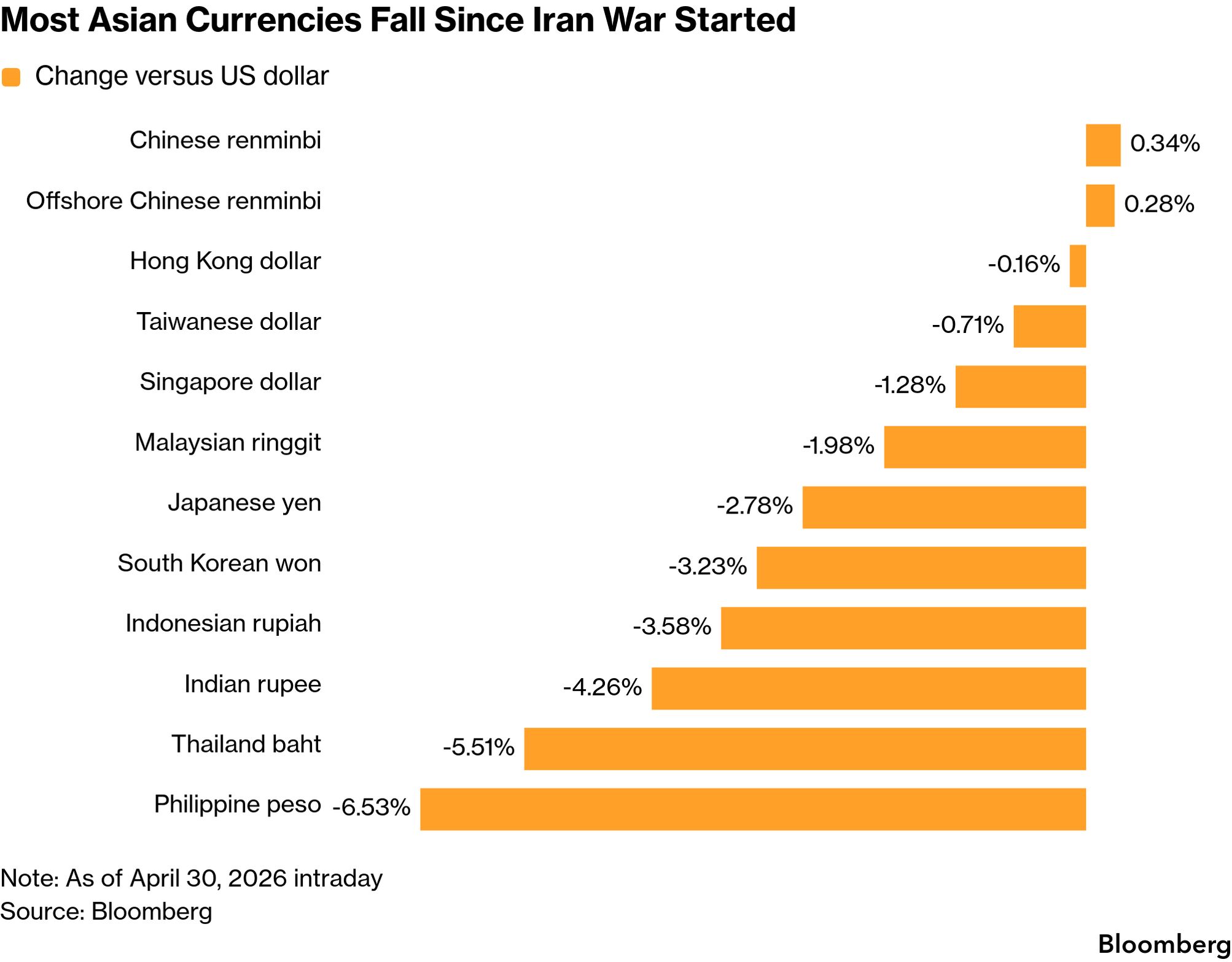
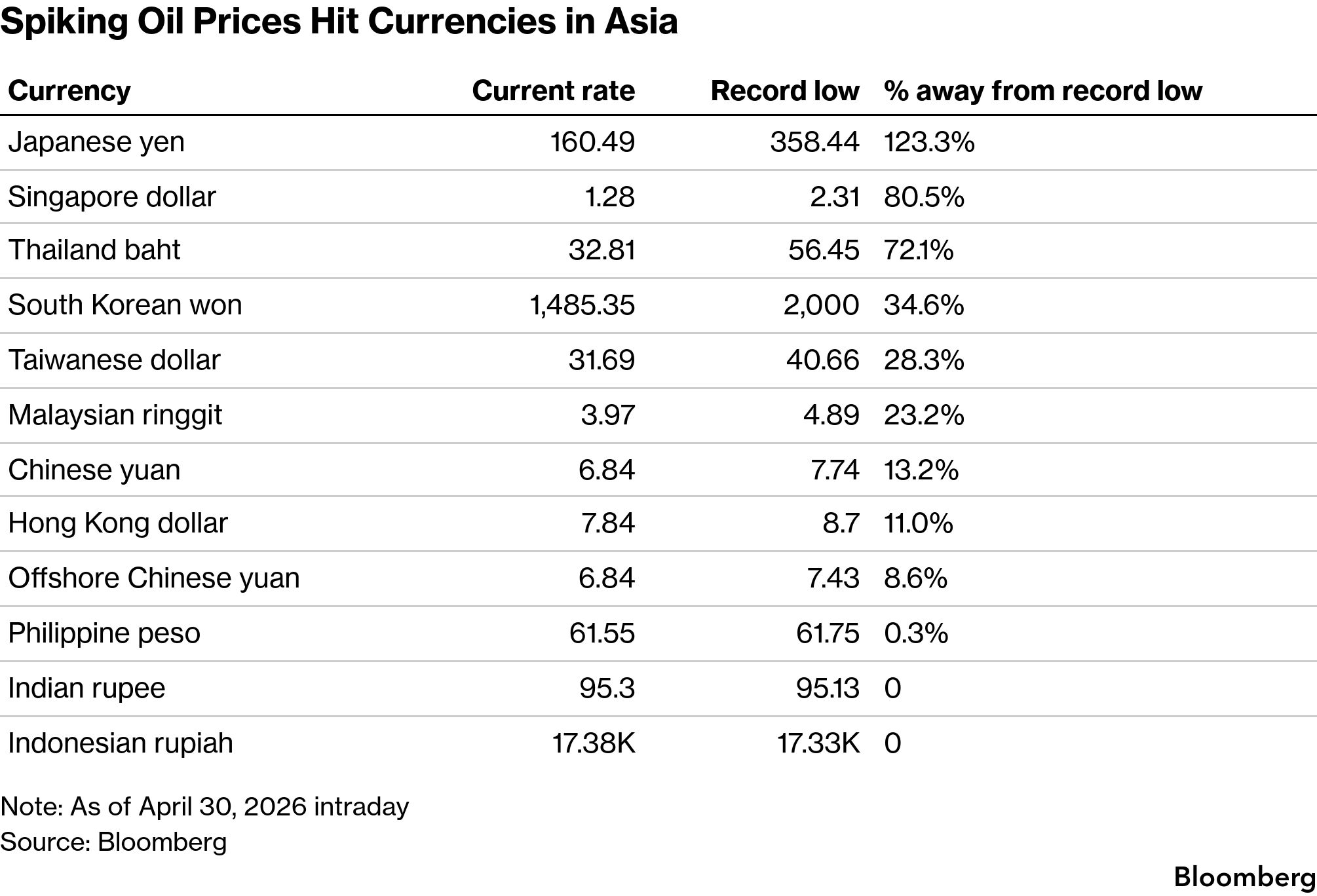
Since the war started just two months ago, the Indonesian rupiah , Indian rupee and Philippine peso have all slid sharply, putting them among the weakest performers not just regionally but also across emerging markets. That pressure heightened on Thursday when the rupiah and rupee slid more than 0.5% against the dollar to reach lows, while the peso briefly neared that level.
The selloff reflects the three nation’s heavy reliance on imported oil, which has left their currencies highly exposed to the energy supply shock. Higher fuel costs threaten to rekindle inflation, hurt current and fiscal deficits and complicate central banks’ efforts to keep the economy afloat while containing prices.
“The structural reality is brutal for most Asian currencies,” said Ashwin Binwani , founder of Alpha Binwani Capital and three-decade markets veteran, pointing to the rupiah and peso as the most vulnerable. “Risks from the stalled ceasefire, a ‘dual blockade’ on the Strait of Hormuz and surging inflation mean Asian currencies are far from out of danger — and a ceasefire collapse could trigger a recessionary spiral.”
The turn marks a sharp reversal from recent weeks, when an announced extended ceasefire between the US and Iran had convinced traders that the worst of the conflict was behind them. Investors had started to move back into risk assets, easing off the sell trade as energy prices eased.
That optimism is now quickly being assessed. With oil prices surging to near four-year highs and reports that President Donald Trump was soon going to receive a briefing on new plans for potential military action in Iran, investors are unwinding bets that relied on tensions easing.
The clearest warning signs may be emerging in the derivatives market. Currency options traders are pricing in around a 33% chance that the rupiah weakens to 18,000 per dollar over the next three months. Options also imply an 18% probability that the peso weakens to 65 and the rupee slides to 100 per dollar over the same period.
As MUFG Bank Strategist Lloyd Chan put it in a Thursday note, “more credible signs of de-escalation are needed to ease depreciation pressures.”
Currency weakness followed the Federal Reserve’s decision on Wednesday to keep interest rates unchanged, a move that some analysts say would heighten pressure on emerging-market currencies as investors increasingly price in rate cuts being pushed further out, boosting the dollar.
Attention is now turning to how effectively central banks can contain the fallout. The Reserve Bank of India, for example, has rolled out a series of — including opening a dedicated dollar-swap window for oil refiners and barring banks from offering the most widely used offshore rupee trading instrument — to curb speculation and support the currency. Those measures are on top of the central bank’s increased intervention efforts.
Indonesia’s central bank has said it is to do more to stabilize the rupiah and vowed to keep intensifying both offshore and onshore intervention. It also rules on dollar buying to stem outflows. Meanwhile, the Philippine central bank has signaled that it’s willing to deliver a series of modest interest-rate increases to rein in inflation.
Still, analysts caution such the efforts appear to be limited without clearer signs that progress on the war’s end is improving. The pressure is also spilling beyond emerging markets, with participants in Japan officials to step into the market to offer support for the yen as it slides beyond 160 per dollar, its weakest level this year.
“The worst is not over yet,” said Abbas Keshvani , macro strategist at Royal Bank of Canada in Singapore. “The energy drag is going to be most acute for Indian rupee and Thai baht — these economies have oil and gas imports around 4% of GDP or more.”