Japan’s Retail FX Traders Bet Their Government Can Prop Up Yen
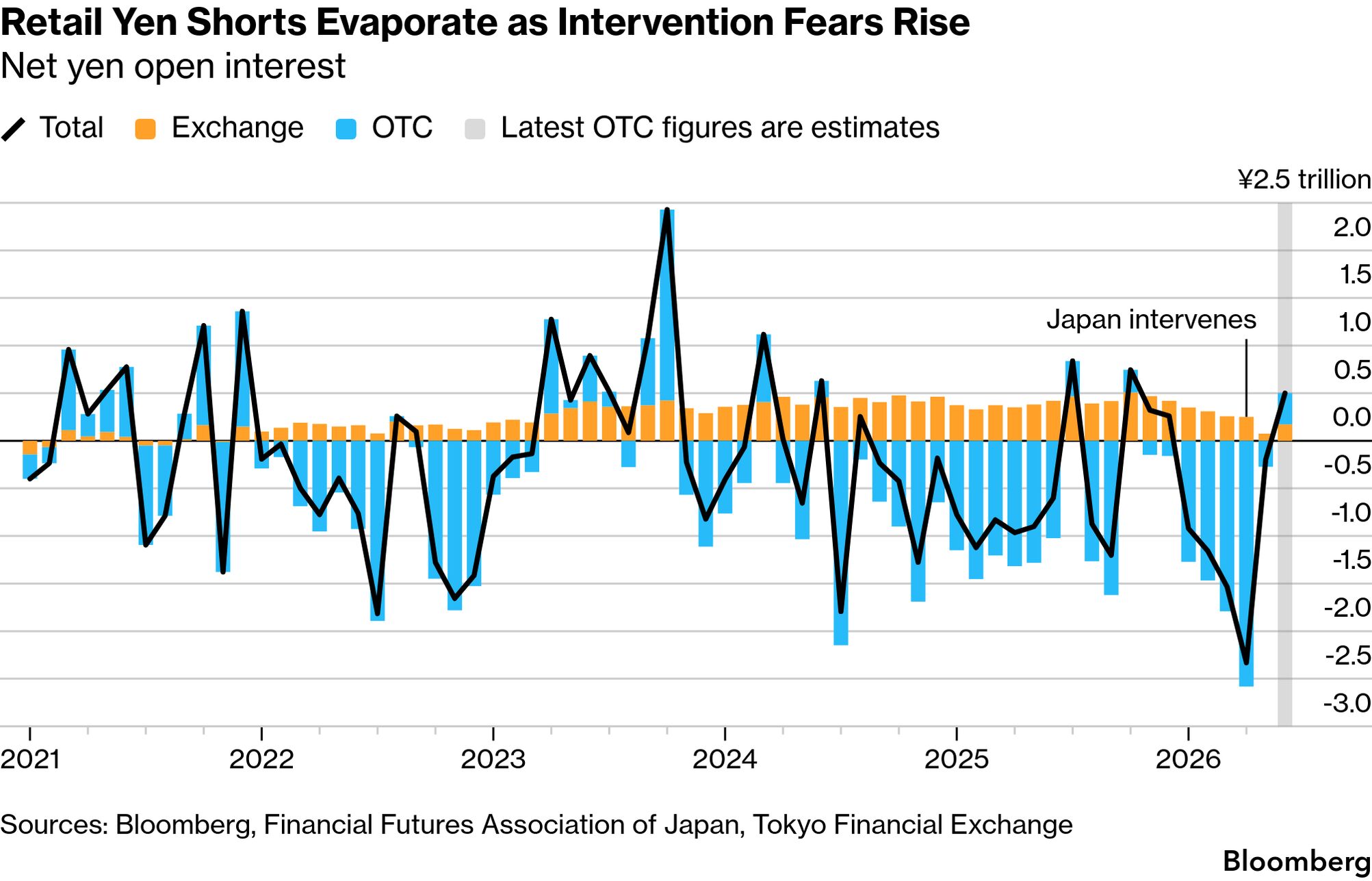
Japan’s army of retail currency traders have heeded their government’s warning and stopped betting on the yen to decline, putting them at odds with professional investors positioning for further weakness.
The mean estimate of individual investors’ yen positions flipped to a net long bet of about ¥500 billion ($3.1 billion), according to a Bloomberg analysis of data from the Financial Futures Association of Japan and Tokyo Financial Exchange Inc. That compares with bearish wagers of ¥2.33 trillion on the currency at the end of April, the most since late 2020.
The yen weakened to as much as 161.93 per dollar Monday, past the level in late April when the Ministry of Finance into markets to support the currency and raising the risk of another intervention. Pressure on the currency has continued despite an interest rate hike by the Bank of Japan, which investors as acting too slowly to meaningfully narrow the nation’s interest-rate gap with other major economies.
“Individual investors may be building up contrarian short-dollar bets against the yen on expectations that Japan will intervene,” said Marito Ueda , managing director at SBI FX Trade in Tokyo.
Junichi Ishikawa , senior market analyst at IG Securities Ltd., also sees a shift in retail positioning. “Our data suggest buy and sell positions are roughly evenly balanced,” he said.
In contrast, leveraged funds and asset managers together held the largest net short yen position since July 9, 2024, near the record bearish wagers reached a week earlier, according to the latest Commodity Futures Trading Commission data for the week through June 16.
This positioning by professional investors appears to disregard repeated from Japanese Finance Minister Satsuki Katayama that authorities are ready to take “bold action” to damp excessive speculative moves in the foreign exchange market. Katayama and Japan’s top currency official, Atsushi Mimura, held an online meeting with US Treasury Secretary Scott Bessent Monday, public broadcaster NHK reported.
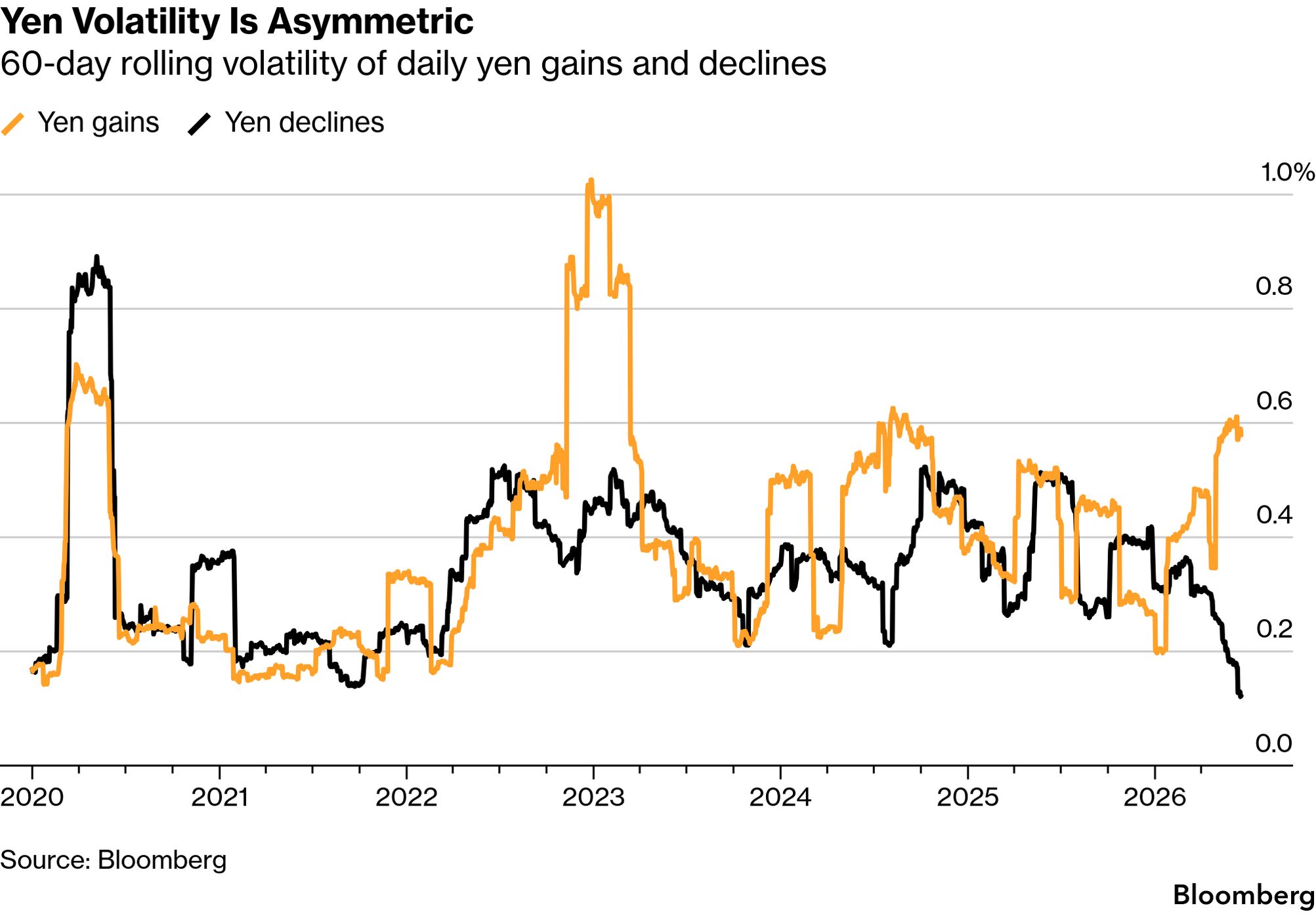
Volatility has tended to rise more sharply when Japan’s currency rallies than when it drops. The gap between yen-gain and yen-fall volatility has widened this year, as intervention fears limit yen weakness.
That risk of a volatility surge during yen rallies works against yen-funded carry trades, a strategy where investors sell Japan’s currency to purchase higher-yielding assets and pocket the difference in interest rates.
Dollar-yen is “trapped between intervention risks on the top side and the ongoing carry attractions of short yen on the bottom,” said Ray Attrill , head of foreign-exchange strategy at National Australia Bank Ltd. “Somewhere in the 162-163 range we might see another burst of gunfire,” he said, referring to Japanese intervention.
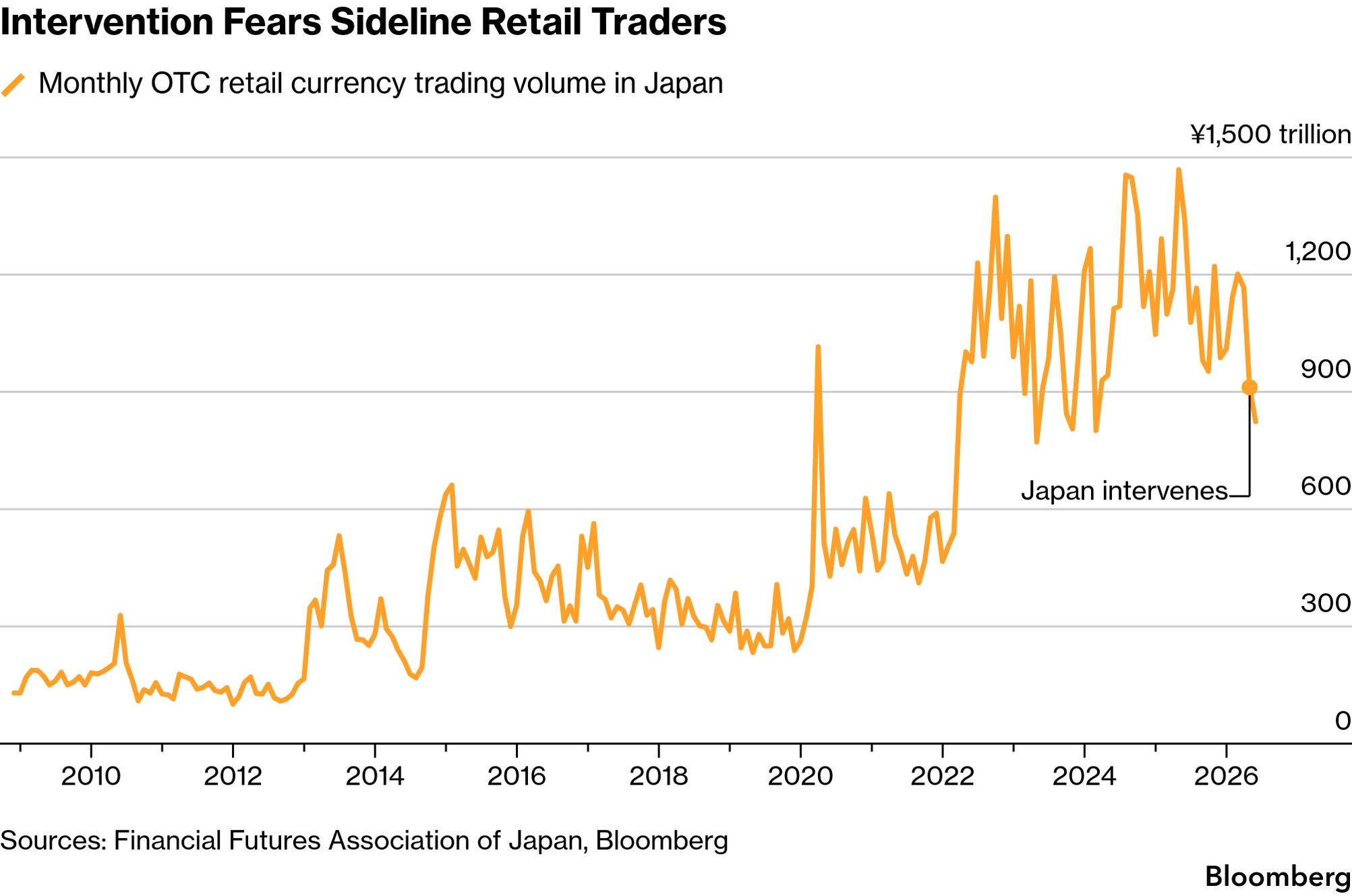
Monthly over-the-counter retail trading volume dropped last month to the lowest since February 2024, FFAJ data show, signaling caution among individual traders.
“Even when there are deep-rooted expectations of persistent yen weakness, local retail investors may be reluctant to touch the yen” because intervention could trigger a surge in yen volatility, said Ayako Sera , senior market strategist at Sumitomo Mitsui Trust Bank Ltd. in Tokyo.