Curious Yen Spikes Have Traders Gaming Japan ‘Warning Shots’
Every few trading sessions, the yen against the dollar, and then it suddenly drops.
That has become a recurring feature of yen trading in recent weeks, sparking debate among investors and strategists over whether Japanese authorities are trying to stem further weakness in the yen through smaller operations.
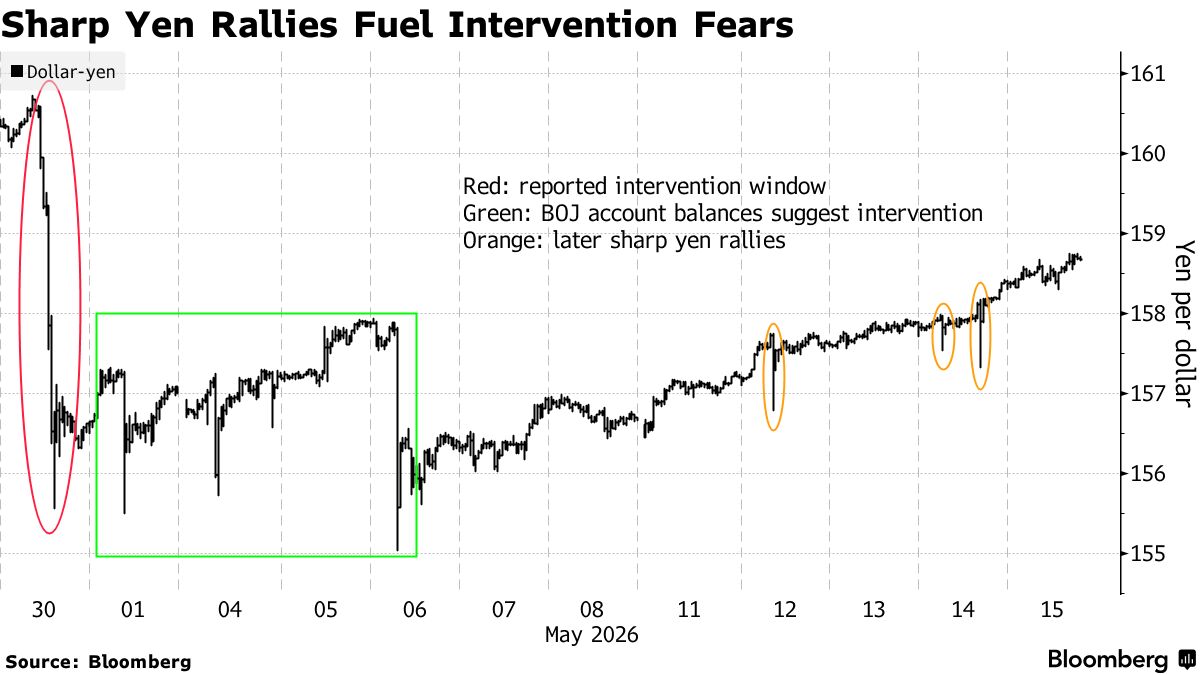
On Thursday, the yen jumped as much as 0.5% against the dollar in just two minutes during New York trading before quickly surrendering those gains. A similar move happened on Tuesday, when it abruptly rose by roughly the same amount. On May 8, the yen also briefly climbed 0.2% before reversing course.
No one can say for certain what’s behind it, but traders are taking note because the moves may signal Tokyo’s unease over the yen’s weakness. Even the perception that authorities could intervene makes betting against the currency riskier.
“My interpretation of the renewed activity is that the Ministry of Finance is uncomfortable with dollar-yen above 160 and wants to discourage another test of that level,” said Gareth Berry , a strategist at Macquarie Group Ltd. in Singapore. “These proactive nudges and warning shots — even before 160 is reached — point in this direction.”
The momentary surges, appearing at different points from Tokyo through New York trading, come after a stretch of reported intervention in currency markets. While Japanese authorities have declined to comment on whether they stepped in, people familiar with the matter said intervention on April 30, and of the central bank’s accounts indicates Japan may have spent as much as around ¥10 trillion yen supporting the yen through the Golden Week holiday.
“There’s caution over intervention, so a slight move can spook people,” said Marito Ueda , managing director at SBI FX Trade.
There’s no definitive evidence authorities are behind the latest moves. Unlike past interventions, there have been no fresh public warnings from officials, widespread trader reports of rate checks or clear signals in BOJ data.
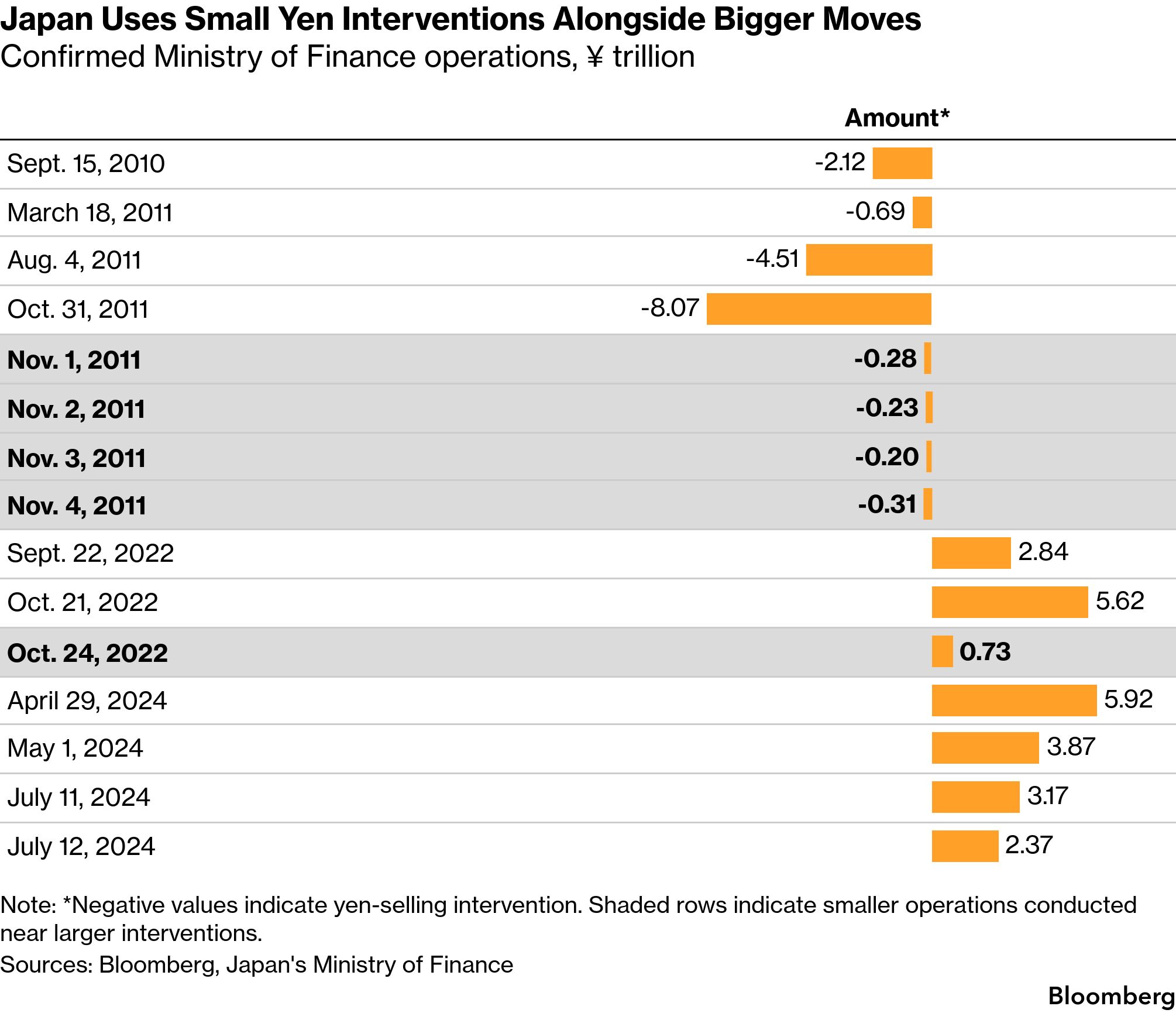
But Japan has a history of pairing large currency interventions with smaller follow-up operations. In late 2022, a ¥729.6 billion ($4.6 billion) yen-buying operation followed a much bigger ¥5.62 trillion intervention aimed at slowing yen weakness.
Still, with the currency continuing to trend weaker, some investors are questioning what was actually achieved. The yen traded at 158.67 per dollar in New York on Friday, weakening from a recent high of 155.04 on May 6.
“The success or failure of Ministry of Finance intervention to strengthen the yen was always going to come down to factors outside Japan’s control and those factors are clearly working against a strengthening of the yen,” Derek Halpenny , head of research, global markets EMEA and international securities at MUFG Bank Ltd, said.
Analysts at Goldman Sachs Group Inc. have assessed how much capacity Japan has to counter yen weakness. They authorities could conduct intervention on a scale seen late April around 30 more times, though they expect officials to conserve reserves and act selectively.
Whether the latest moves were driven by intervention, rate checks or simply jittery trading, investors are on edge, according to Ayako Sera , senior market strategist at Sumitomo Mitsui Trust Bank Ltd. Dollar-yen, she noted, is already back around 158.
“If last night’s move was intervention too, then I’m not really sure what the point of it was,” Sera said. “It feels like the finance ministry is just buying time.”