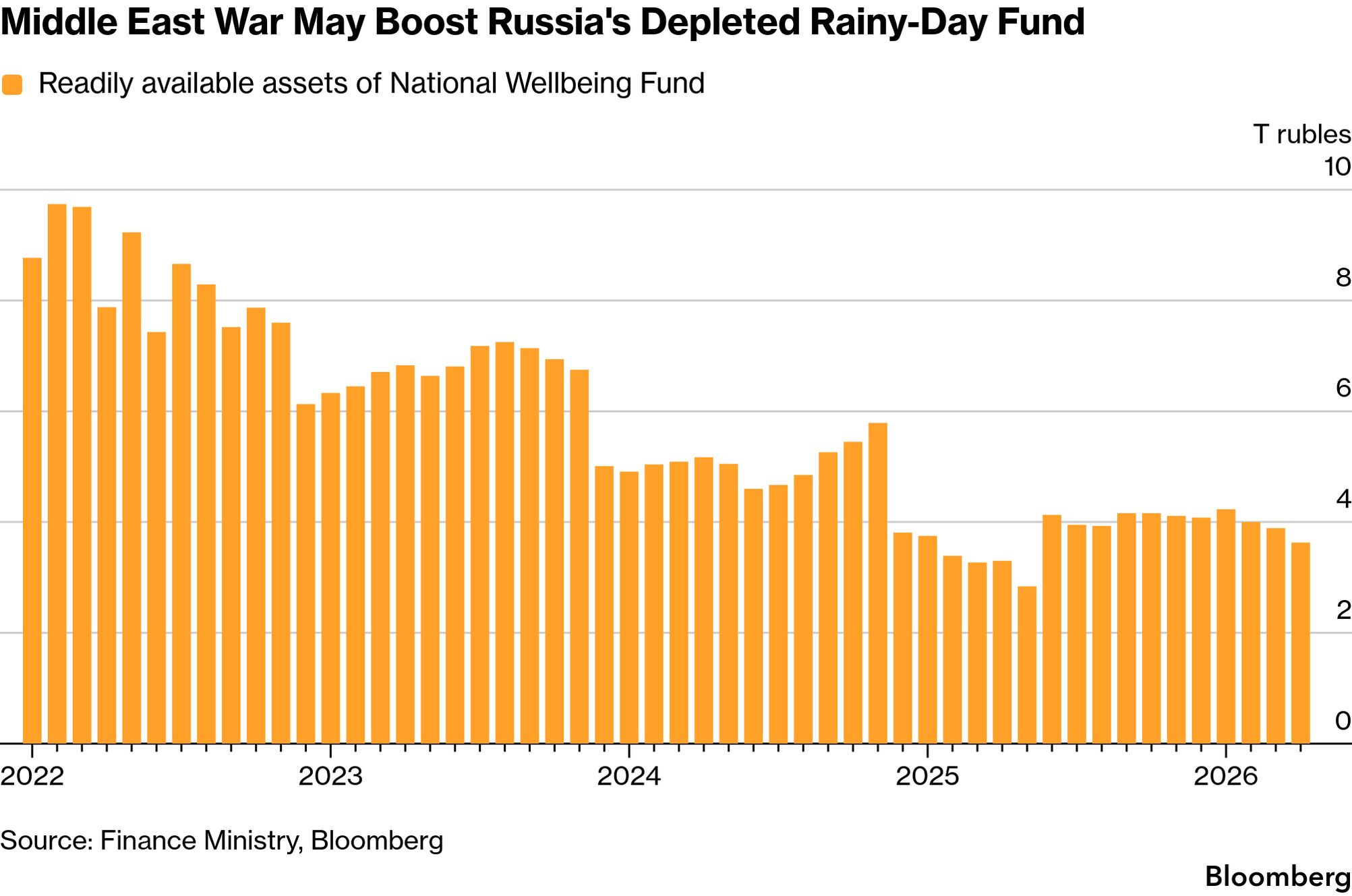
Russia Boosts Rainy-Day Fund for First Time in Almost a Year
Russia resumed purchases of foreign currency and gold for its National Wellbeing Fund for the first time since June last year, as a surge in oil prices driven by the war in the Middle East boosts export revenue.
In May, the Finance Ministry will buy foreign currency and gold worth 110 billion rubles ($1.5 billion), the ministry in Moscow Wednesday. The figure includes deferred operations from March and April, it said.
The move highlights the potential windfall for President Vladimir Putin from the conflict ignited by the US and Israel attacking Iran. It gives Moscow a chance to top up state coffers after spending more than half of its rainy-day reserves financing the invasion of Ukraine.
Under Russia’s fiscal rule, excess energy revenue is saved when the export price of Russian oil exceeds $59 a barrel, while the fund is drawn down to cover budget shortfalls when prices fall below that level. In the first two months of the year, Russia spent about 419 billion rubles from the fund to compensate for weaker oil revenue.
The National Wellbeing Fund’s readily available assets amounted to 3.6 trillion rubles as of May 1, according to the Finance Ministry on Wednesday, down 14% from January and roughly 60% below levels prior to the invasion of Ukraine.
Earlier this year, policymakers planned to lower the oil cutoff price to slow the depletion of reserves. Operations under the fiscal rule were put on hold until July .
That plan was later shelved as demand and prices for Russian oil surged after Middle East tensions disrupted shipping through the Strait of Hormuz, while the US temporarily eased sanctions pressure.
Still, Moscow is wary that favorable conditions may prove short-lived and is considering lowering the oil price threshold for replenishing the fund from next year.
While that would limit room for future budget spending, Finance Minister Anton Siluanov has repeatedly said the priority is to safeguard financial stability. That means reducing dependence on oil prices and ensuring reserves are sufficient to cover at least three years of weak energy markets.
Additional risk comes from the United Arab Emirates’ exit from OPEC, which could reshape future supply dynamics.
“Today it’s clear the market is constrained by passage through the Strait of Hormuz, but what happens tomorrow?” Siluanov said last week.