Hungary’s Euro Dream Is Reshaping East European Bond Markets

Hungary ’s ambition to join the euro is changing the hierarchy of eastern European bond markets in a way that hasn’t been seen in years.
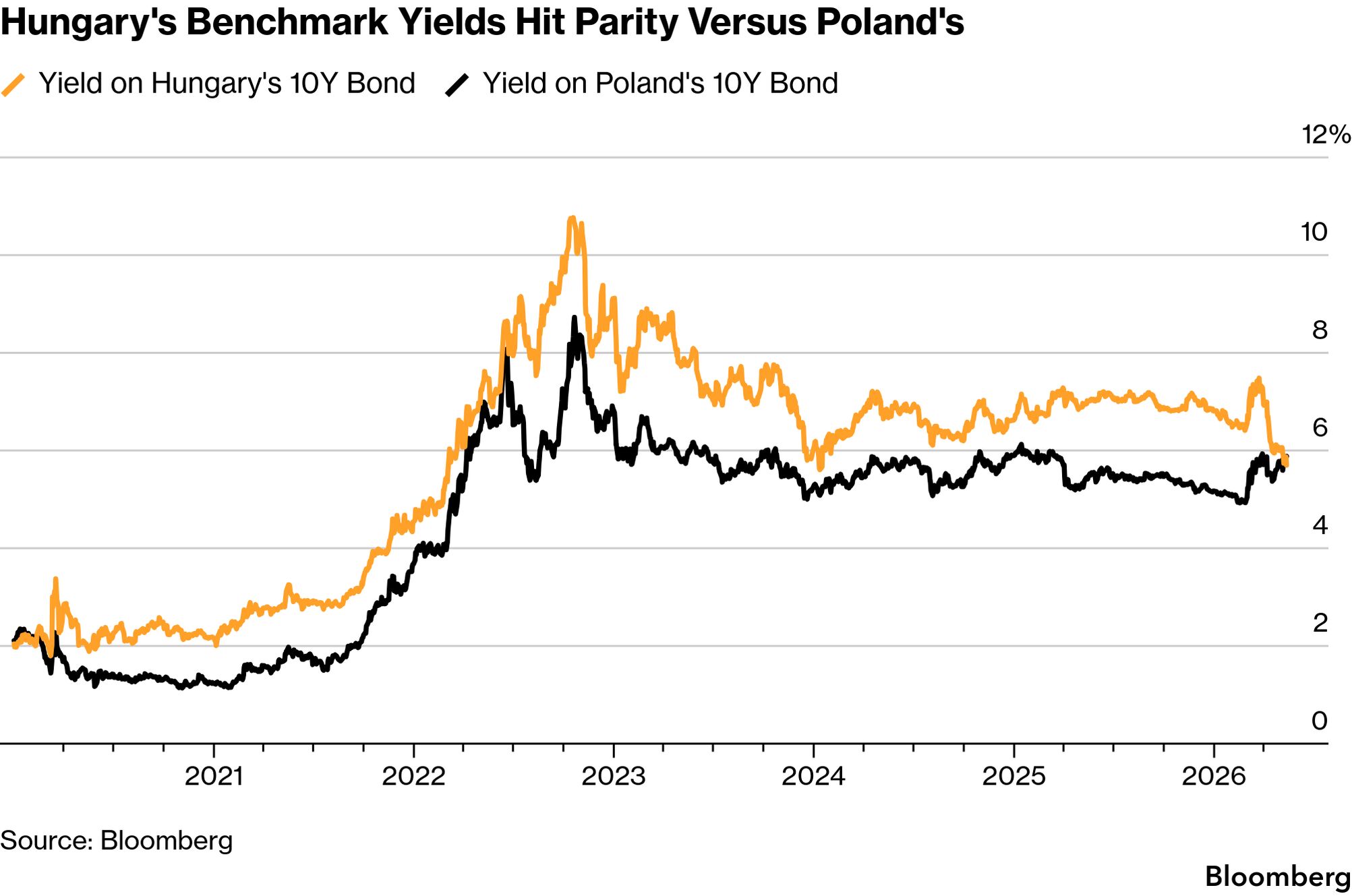
For the first time since 2020, Hungary’s borrowing costs are lower than Poland and the gap over Czech Republic bonds has fallen by two percentage points since March. It’s a shift that underscores how investors have changed their mind on some of the region’s biggest economies as new Prime Minister Peter Magyar embarks on a mission to bring Hungary into the European mainstream.
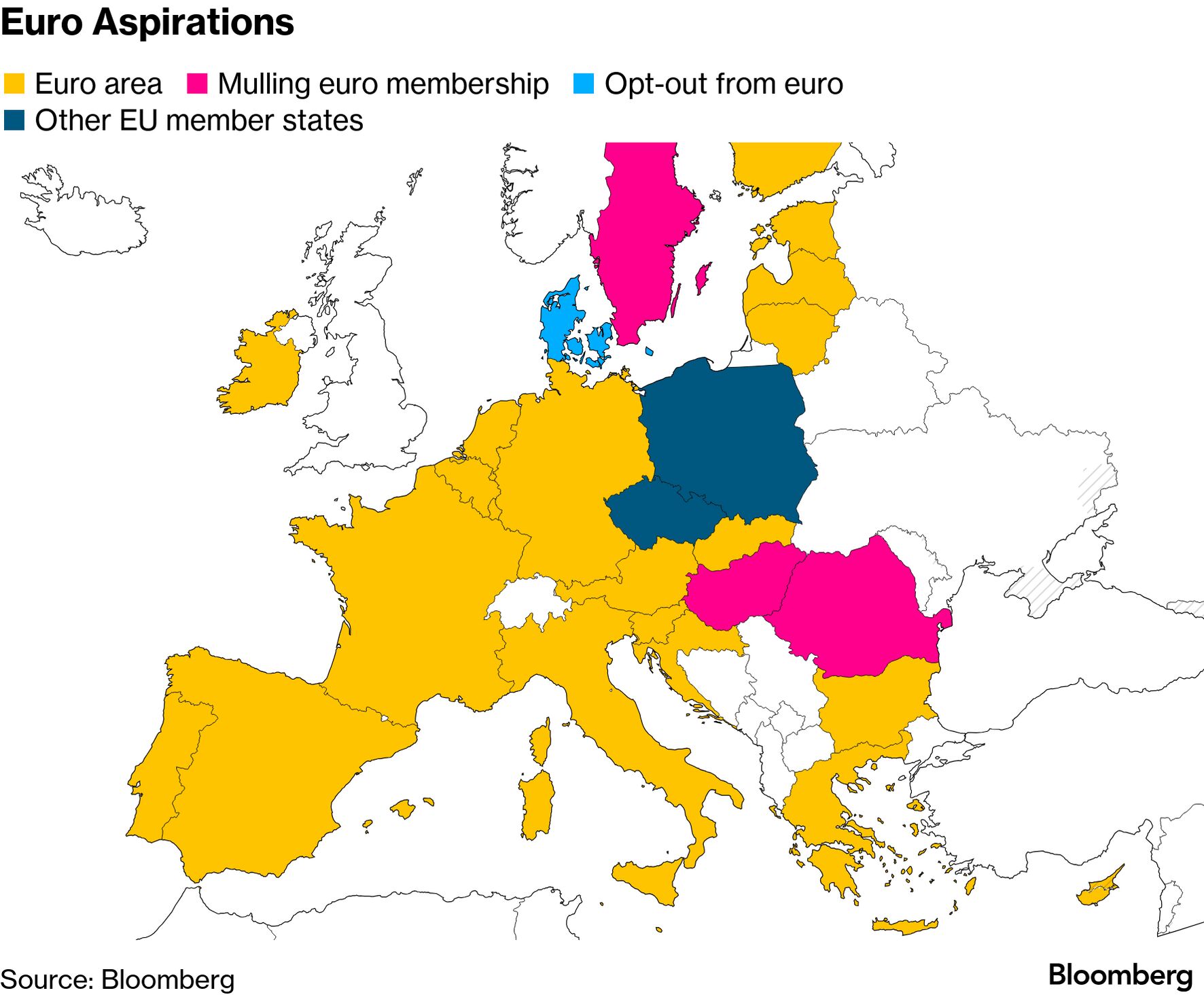
Before last month’s election, Hungary was viewed as the riskiest of the group with a legacy of entrenched corruption and unpredictable policies under Viktor Orban . But with Magyar pledging to meet criteria for euro adoption in the next four years, investors are throwing their support behind his administration. Foreigners have piled into Hungarian bonds and the forint is near a four-year high against the euro.
“We’re probably as long Hungary as we’ve ever been,” said James Novotny , an investment manager at Jupiter Asset Management Ltd. “Because of the structural problems that Hungary had for over a decade — low growth, productivity and so forth — we feel this is just the start.”
Read More:
That kind of optimism is making Hungary has one of the hottest trades in emerging markets. An of the local-currency bonds has returned 9.6% in dollars since the April 12 ballot, by far the best EM performance over that period. For comparison, Polish, Czech and Romanian bonds are all in the red since then.
Novotny has sold Polish debt and expects 10-year Hungarian yields to fall another half a percentage point relative to core euro-region debt within a year. The forint is also about 10% too cheap compared with the zloty, he estimated.
Hungary’s benchmark bond now carries a yield of around 5.6%, 34 basis points less than on Poland’s 10-year note and 66 basis points more than similar Czech debt. Foreigners own a record 8.7 trillion forint ($28.3 billion) of Hungarian debt securities, official data show, 44% more than a year ago.
Bulls are counting on what’s been dubbed the “euro convergence trade,” a belief that Hungary’s inflation, interest rates and public finances will eventually align with the bloc’s. It’s an investing theme popularized back in the early 2000s, when Hungary, Poland and the Czech Republic joined the EU, and hopes were running high of closer European integration.
Ultimately the 2008 global meltdown and the euro debt crisis a few years later exposed the fault lines of the trade as countries like Greece and Italy came under pressure.
Hungary is a modern twist on the strategy. Analysts are quick to point out that the road to joining the euro may be many years away and the hurdles are high for an administration that only took power a week ago. Magyar is also grappling with how to rein in a budget deficit that’s expected to top 5% of economic output this year. Euro-area countries are supposed to cap theirs at 3%.
Read:
Another debate among strategists is whether a stronger Hungarian economy will boost investment at the expense of Poland, Romania and the Czech Republic, or support the region overall.
UBS Group AG’s Nimrod Mevorach is among those who see a rotation as likely to play out, especially in Hungary starts to mirror “high-quality European markets.” On the flipside, Barclays Plc strategist Marek Raczko has downplayed the risk of large outflows from Polish and Czech bonds. In his view, the low foreign positioning in those markets will limit the “substitution effect.”
“The journey toward euro adoption is even more important than the goal,” said Egle Fredriksson , portfolio manager at East Capital Holding AB. She says there’s scope for a 20% to 30% rally in Budapest-listed stocks as companies reap the rewards from closer EU ties and a stronger economy.
“It’s about the political risk premium, faster earnings growth for longer, better financial integration and coming closer to the living standards of western Europe,” she said. “All of those things are convergence.”