Asia Markets Begin Clawing Back War Losses on Easing Tensions
Asian markets, among the hardest hit by the Iran war, are starting to recoup those losses, signaling investors are growing more confident that tensions in the Middle East will ease.
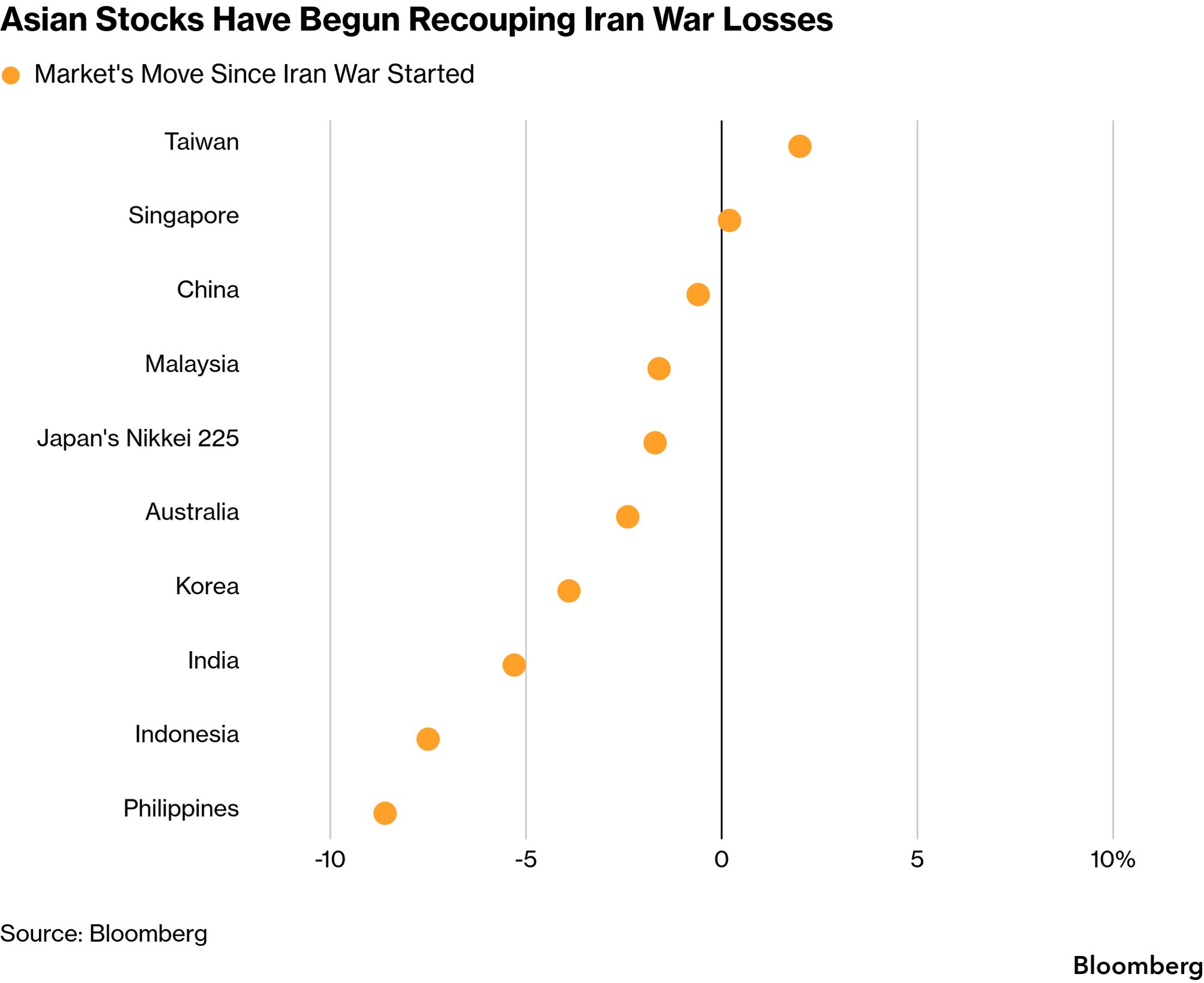
and Singapore equities have erased their declines. Mainland China is less than 1% away, Japan within 2%, and Australia and Hong Kong about 3% below pre-war levels. In currencies, the Australian dollar is close to reversing its drop against the greenback, while the yuan has strengthened.
The rebound in parts of Asia has on Wall Street. While tensions remain elevated — particularly after President Donald Trump ordered a of the Strait of Hormuz following failed talks — signs are emerging that another round of ceasefire negotiations could be underway. Confidence is building in financial markets that a deal remains within reach and that energy flows will stabilize, allowing investors to refocus on growth and corporate earnings.
“The inflection point of the war has passed and the situation is de-escalating,” said Hao Hong , chief investment officer at hedge fund Lotus Asset Management. “Such positive development is helping risk sentiment and letting investor to refocus on how best to position in Asia alongside the US.”
Investors are slipping back into a familiar trade, piling into tech and growth stocks. Taiwan’s benchmark jumped to a fresh record high on Tuesday and is up about 25% this year, far outpacing the MSCI Asia Pacific Index’s 10% gain.
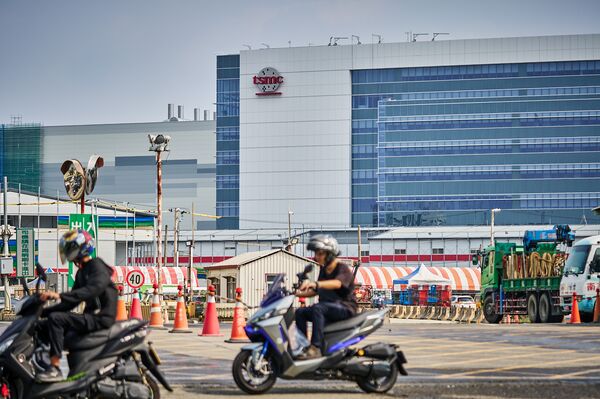
Strong earnings are helping that shift. reported an in quarterly profit, highlighting robust AI-driven demand. Taiwan Semiconductor Manufacturing Co. results due Thursday will be the next big test, with Citigroup Inc. expecting its AI-related revenue to more than double.
“A rebound in chip stocks is really helping in lifting the sentiment for the region,” Hong said. He added that Australian markets are getting a boost from a rebound in materials, while Singapore is seeing support from dividends and its defensive appeal.
The recovery isn’t uniform across the region. South Korea remains about 4.4% below pre-war levels, reflecting its heavier exposure to cyclical memory chips versus Taiwan’s strength in advanced semiconductors. Oil-dependent markets have also lagged, with the Philippines down almost 9%, alongside declines in Indonesia and India.
Currencies
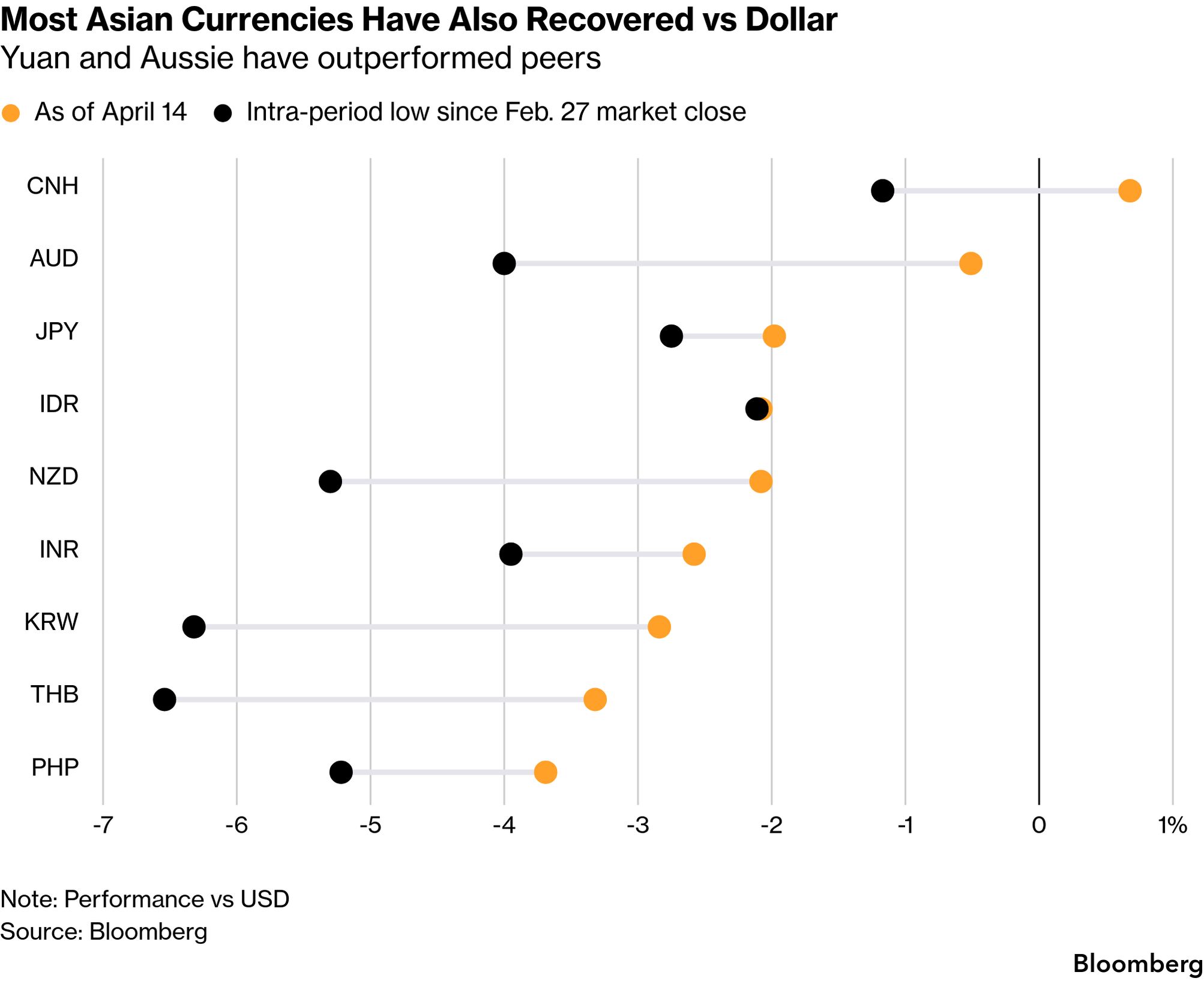
In foreign-exchange markets, the offshore yuan has climbed about 0.7% against the dollar, erasing a loss of as much as 1.2% shortly after the war broke out. Chinese assets more broadly are emerging as a relative , aided by its dominance in renewable energy, policy support and easing deflation.
Read more:
The Australian dollar is also nearing a full recovery against the US dollar as investors price in at least two more interest-rate hikes from the Reserve Bank to quell inflationary pressures. Australia is relatively insulated as a net energy exporter, even though it still relies on petroleum imports.
“Overall we are optimistic on the AUD” and see the currency at 75 US cents by year-end, said Mahjabeen Zaman , head of FX research at ANZ Group Holdings Ltd. in Sydney. “The carry advantage, positive terms-of-trade shock overall has helped offset some risk off moves.”
Emerging-market currencies remain under pressure as high energy costs ripple through their economies. The Thai baht and Philippine peso have weakened more than 3%. Indonesia’s rupiah has hit a record low, weighed by fiscal concerns and declining foreign holdings of equities and long-term bonds. The Indian rupee has climbed from a record low after central bank .
Still, some see signs markets are starting to look past the turmoil in the Persian Gulf. Anna Wu , a cross-asset strategist at Van Eck Associates Corp., said investors had priced in worse scenarios before and are growing fatigued by war headlines.
“The risk is skewed to the upside for equities,” Wu said. Investors are leaning toward the view that the worst has passed and that peace talks will eventually materialize, even if it takes time, she added.