Yuan to Dodge Seasonal Slump on Iran War Resilience, Economy
China’s yuan is poised to defy its typical second-quarter slump as the nation’s resilience to the Iran war and a burgeoning economic recovery offset seasonal pressures.
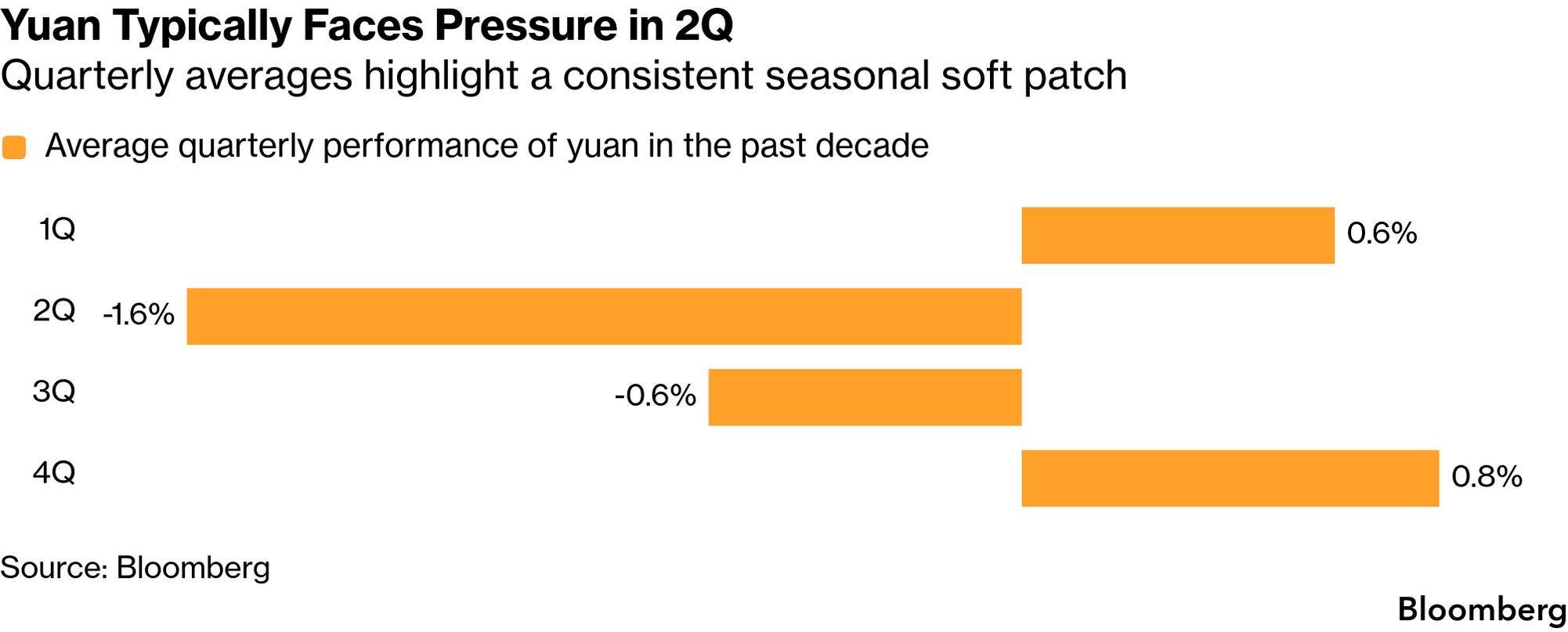
and expect the currency to appreciate to 6.8 per dollar this quarter. That forecast represents a 1% gain from current levels and a sharp reversal from the currency’s average 1.6% second-quarter decline over the last decade.
The yuan tends to face seasonal selling pressure in the second quarter as tourists exchange currency for trips abroad and Hong Kong-listed firms convert profits into foreign exchange for dividend payments . These headwinds will be offset by domestic economic momentum and China’s strategic oil autonomy, which are enabling the currency to weather the shocks rattling its peers.
“Traditional seasonality is the yuan underperforming mid-year, but that may not be the case for now given such strong yuan demand,” said Eddie Cheung , senior emerging-markets strategist at Credit Agricole in Hong Kong.
The onshore yuan posted its largest annual gain since 2020 last year and has since emerged as the best-performing currency in Asia so far in 2026. It surged close to 3% versus a basket of peers in the first three months of the year to round off its the biggest quarterly rise since late 2024.
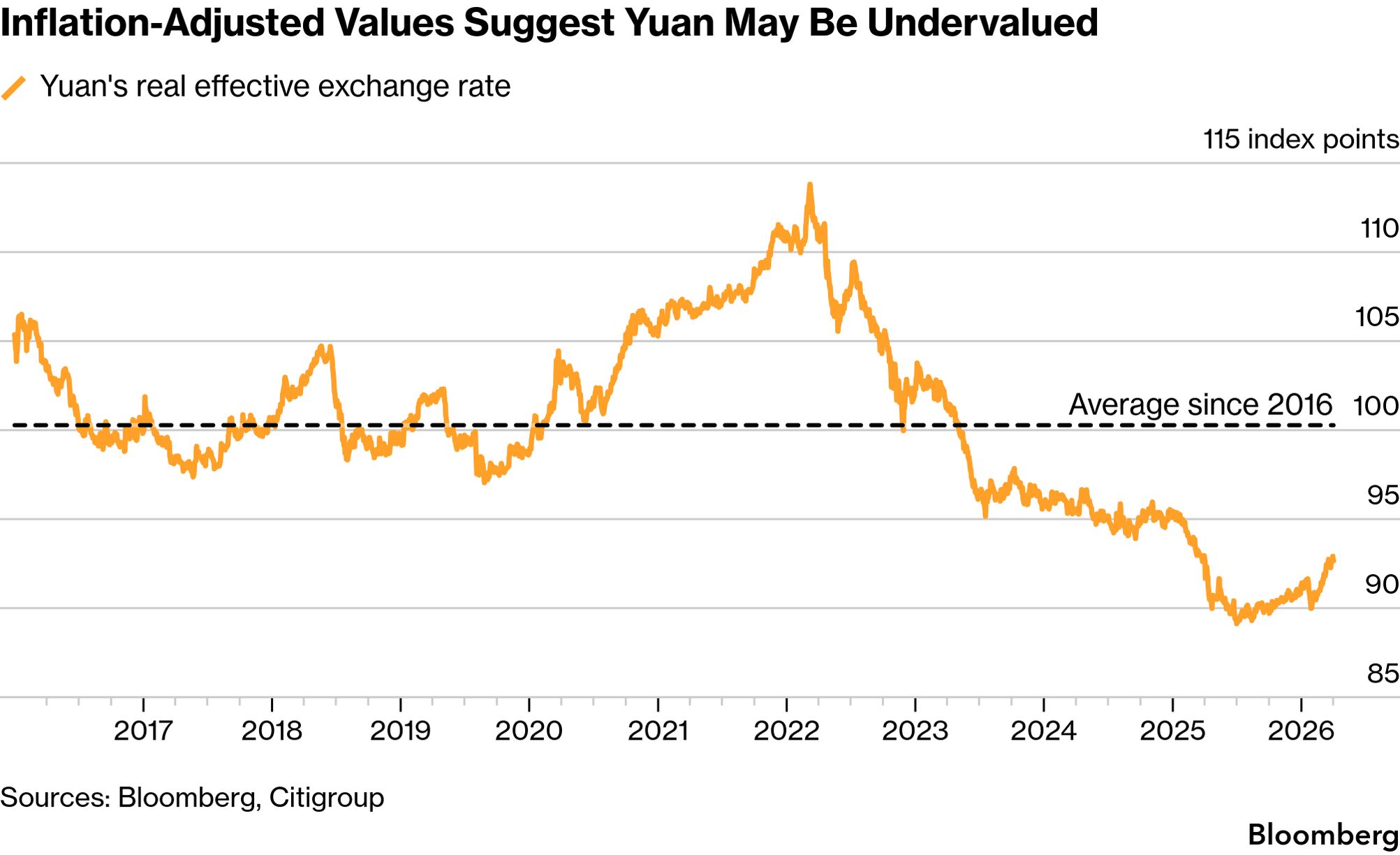
Underpinning this rally is a wave of economic optimism with and showing resilience in March even after the Iran war began. This industrial strength is in turn widening the trade surplus while creating a valuation gap that analysts say needs to narrow.
“The yuan has rallied in 2025 but valuation of the yuan remains cheap and attractive and we expect further normalization,” said Wee Khoon Chong , senior APAC market strategist at BNY. “China’s growth is recovering and foreign interest is back.”
Beyond that, the currency’s resilience is burnishing the appeal of Chinese assets as a regional haven. Massive strategic oil reserves help insulate the domestic economy from the energy price shocks currently hitting its neighbors. Markets are now pivoting to Friday’s inflation data to gauge the extent of the Iran war’s impact on the domestic economy.
“China is being perceived by markets to weather through this energy crisis in Asia due to its massive oil reserves,” said Alex Loo , a strategist at TD Securities.
“FX intervention isn’t an issue for China too relative to its peers given the size of its FX reserves. As such, I think the yuan can outperform against its peers if dollar strength is sustained in the second quarter.”
This week’s main economic events: