Dollar Rally a ‘Bitter Triumph’ as White House Whims Overhang
During times of turmoil and spiking oil prices global investors often embrace the US currency as a steadying force, but the mercurial moods of the current administration and a shaky tech sector has weighed on the dollar’s advance, according to Barclays Plc.
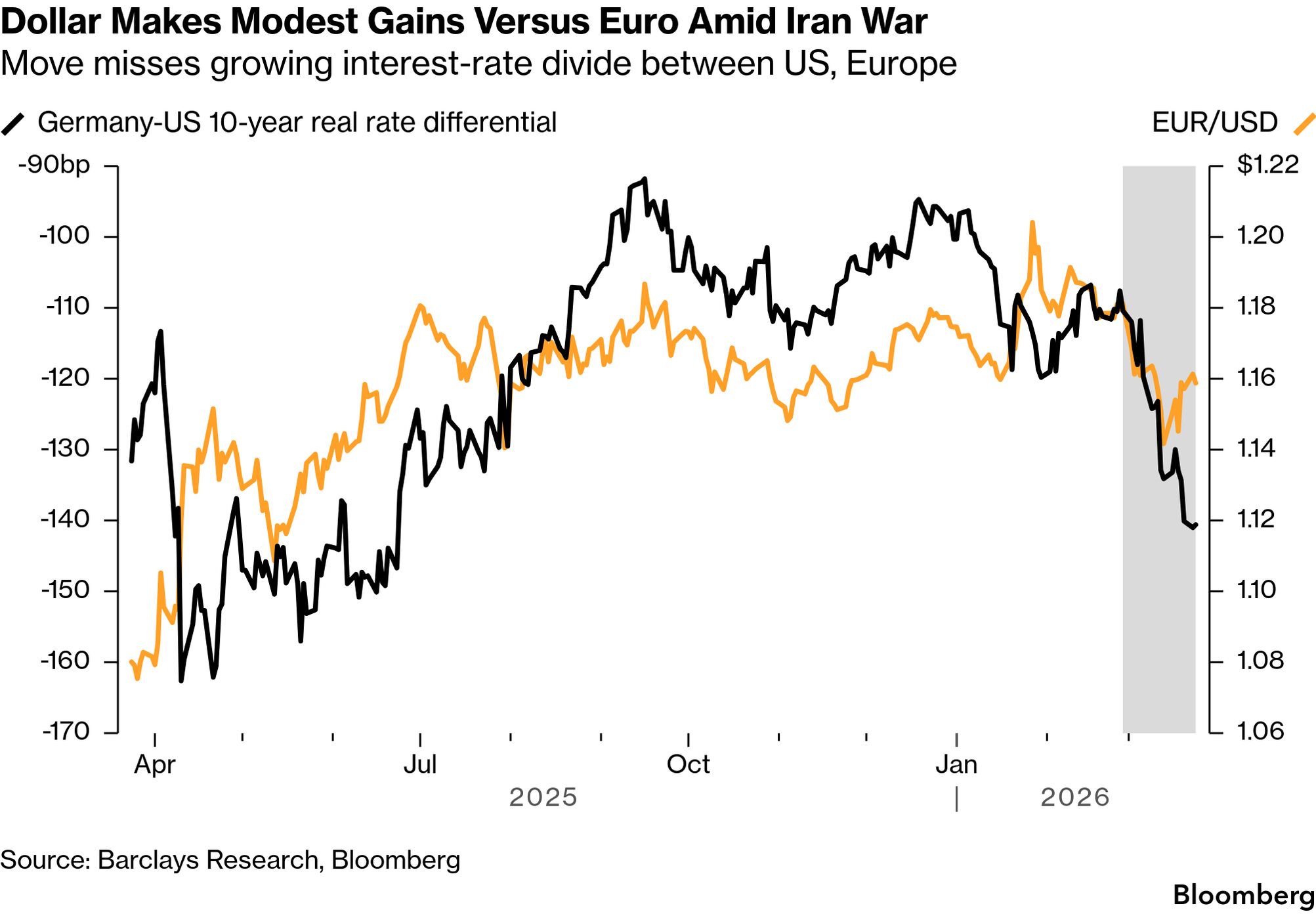
Bloomberg’s gauge of the greenback is up nearly 2% since the launch of US and Israeli strikes against Iran more than three weeks ago. But those returns trail what would be expected given sharp shifts in real interest-rate differentials versus major currency peers, particularly the euro.
For Barclays strategists that’s evidence that the dollar’s premium — the excess returns traders need to hold on to US cash — has largely idled since President Donald Trump rocked markets with his sweeping tariff proclamations nearly a year ago.
“An investor who is long dollars is exposed to the largely impossible-to-forecast risk of dollar-negative White House social media communications at any time of day,” a team including Themistoklis Fiotakis and Lefteris Farmakis wrote Tuesday. “Such events can have instant non-trivial profit-and-loss impact, which in turn means that investors may do well to require larger returns from long dollar exposure to make this risk worthwhile.”
Investors would expect a war in the Middle East and soaring energy prices to support the currency. The haven greenback is closely tied to oil prices due to the US’ status as the world’s top oil producer and by the dollar’s role as the currency for global crude trade. But the dollar’s premium has been little changed for the past year, according to a Barclays analysis.
The dollar has moved from a discount of about 5% versus the single currency heading into the 2024 US election to a premium of about 5% since Liberation Day, the bank’s strategists found. It’s held this mark in the roughly 12 months since, Barclays said, a duration that is “way longer than its half life.”
There are a number of ways to gauge a given currency’s discount or premium. Barclays’ analysis is built upon a number of factors, including the relationship between the euro-dollar currency pair, 10-year real interest rate differentials, relative stock market returns, and the future interest rates expected by investors.
In Barclays’ view, US economic policy plays a role; so too do the fortunes of the technology sector. The massive stock gains of tech giants have evolved to symbolize the exceptionalism of American assets over the last few years, but that ideology is at risk amid artificial intelligence-linked names.
The shift in Barclays’ thinking on the dollar is notable. The London-headquartered bank was over the last year in pushing back against the idea, seen in the aftermath of Trump’s universal tariffs, that investor flows into the US would dry out and hedge ratios would surge.
“A balanced dollar view needs to incorporate a path for this premium,” the Barclays team said. “Recent experience suggests a degree of premium will remain even after geopolitics eventually stabilize, which implies some near-term dollar softness.”