India’s Falling FX Buffer Prompts Calls for Softer Rupee Defense
The Reserve Bank of India’s recent defense of the rupee is weighing on the nation’s foreign exchange reserves, prompting calls from some analysts to scale back future intervention.
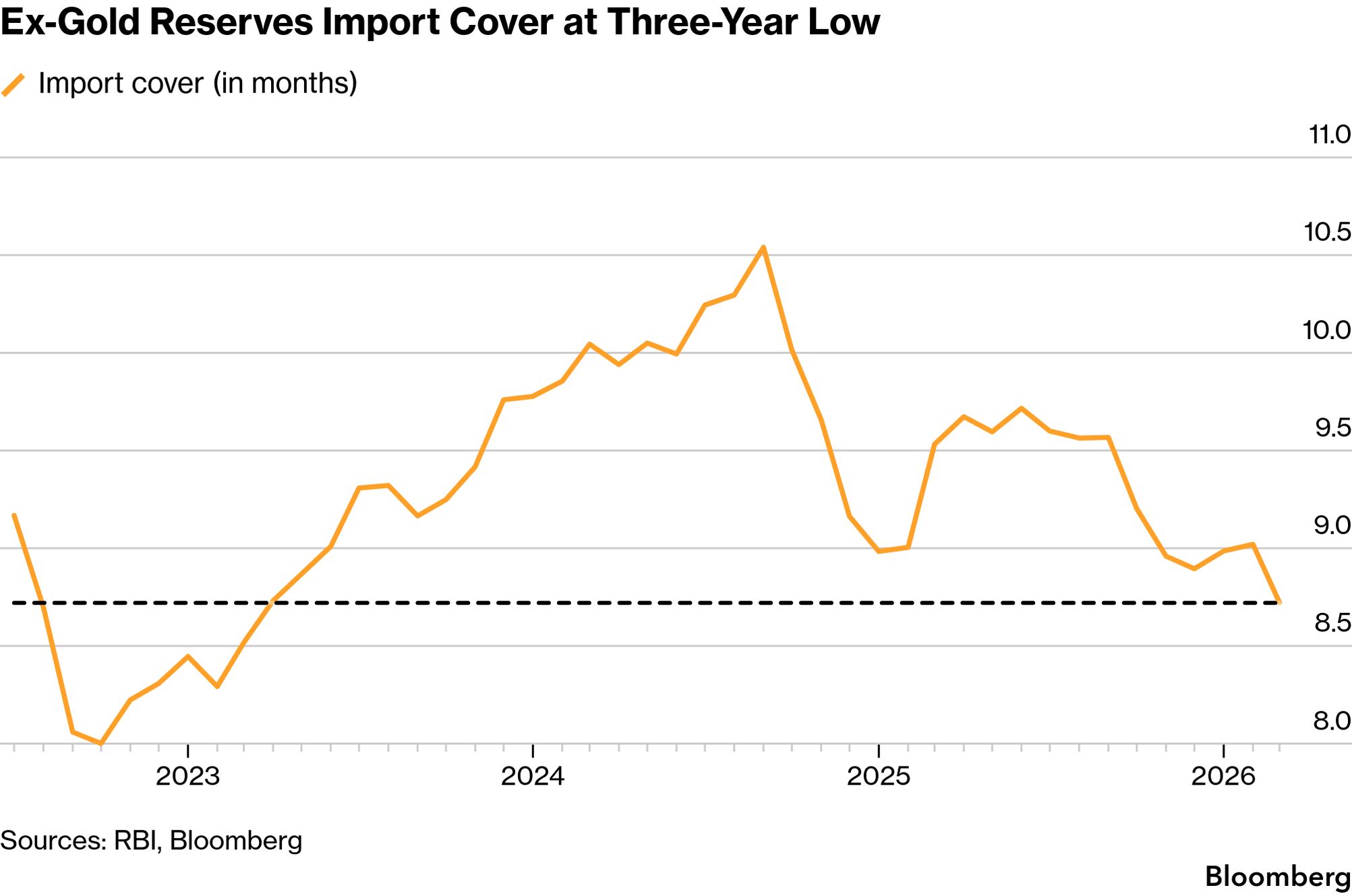
India’s forex assets, excluding gold, are now just enough to cover for 8.7 months of imports, the lowest in three years, according to data compiled by Bloomberg. The rupee weakness comes at a time when India is a rising import bill due to higher energy prices, with implications for both its and markets.
The more the RBI intervenes, the lesser firepower it will be left with, which can lead to more problems if the ongoing crisis in the Middle East continues, said Indranil Pan , chief economist at Yes Bank Ltd. “On the external sector, the shock absorber has to be the exchange rate only. There is definitely a need for the RBI to be slightly more flexible in terms of allowing rupee depreciation.”
In recent weeks, the RBI has stepped up intervention in the currency market to shield the rupee , which is hovering near its record low of 92.4788 per dollar hit Friday.
Forex assets fell to in the week of March 6, from a peak of $591 billion in June. Overall , which have been supported by higher gold prices, declined by the most since November 2024.
India needs a forex reserve of at least $1 trillion to ensure robust intervention capacity, according to former RBI deputy governor Michael Patra .
The RBI’s ammunition to support the rupee is lower after accounting for its outstanding dollar sales, with its forward book at $67.8 billion at the end of January.
“Defending a particular level of the rupee could become very problematic very quickly, if the fundamentals have shifted for good,” said Dhiraj Nim , FX strategist at Australia and New Zealand Banking Group. “The RBI can let the rupee adjust a bit more before the level of reserves becomes a concern.”