Traders Snap Up Protection Against Extreme FX Swings on War Risk
Currency traders are loading up on protection against extreme moves as they brace for what comes next in the Middle East.
After an initial shock caused by the outbreak of war and , investors are taking advantage of a period of relative calm and buying low-probability options that pay off when currencies shift abruptly in either direction.
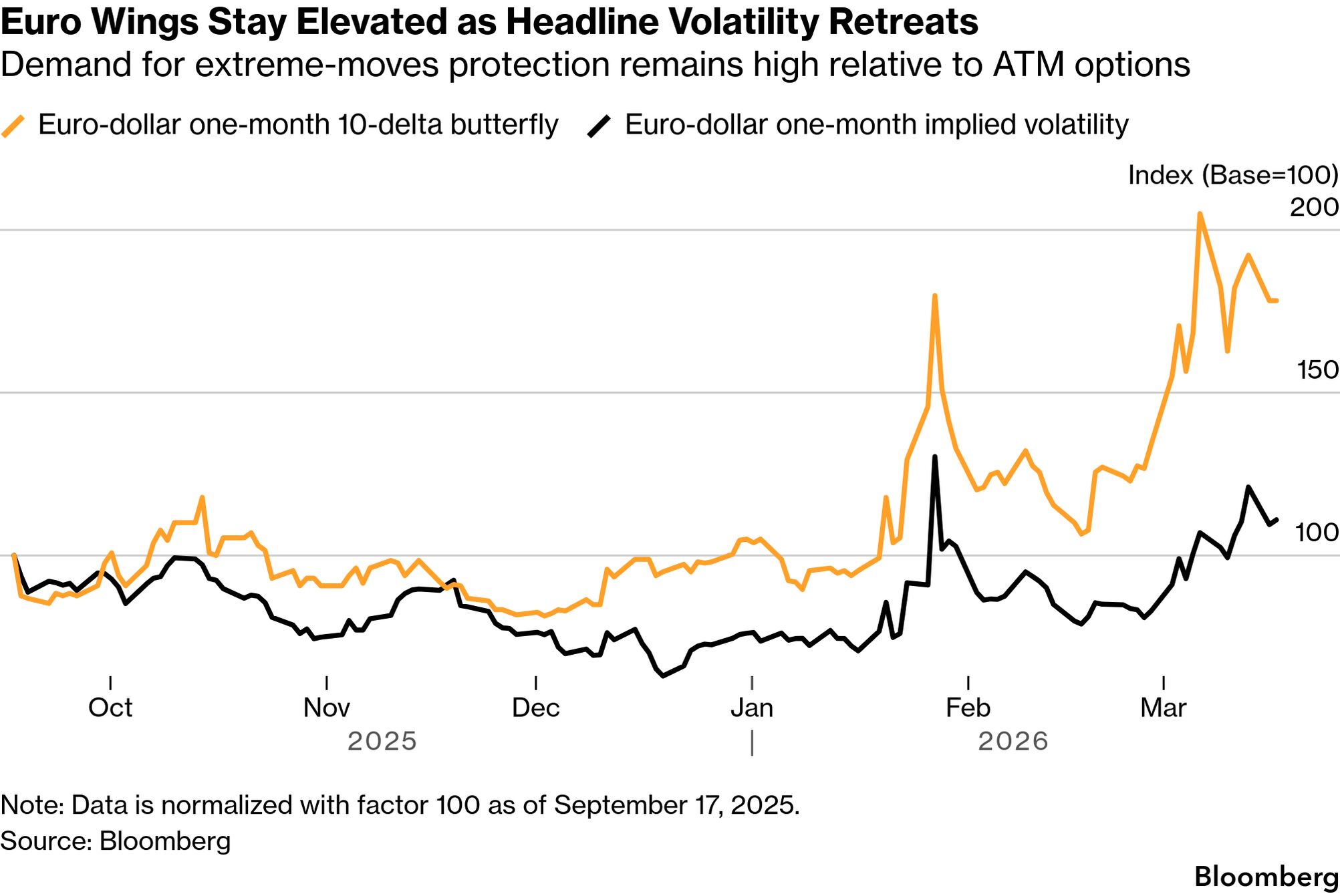
On the surface, the market appears at ease: one-month euro volatility trades at 7.68%, well off its year-to-date high and only modestly above the one-year average of 7.09%. The euro has already fallen to its weakest level since August and a broad dollar gauge has climbed to its highest since early December.
But drill down deeper, and it’s clear that traders are positioning for another round of sharp moves that could be triggered by either an escalation that sends , or a cooling of tensions that clears the way for a retreat toward $70.
This can be seen most clearly in so-called butterfly options, which allow traders to hedge against extreme currency moves. Demand for the euro-dollar options hit an 11-month high earlier in March and remains strong, at nearly double the one-year average. The same pattern repeats in dollar-yen.
Expectations around how the Federal Reserve will respond to the crisis help explain why volatility has remained contained even as demand for protection against dramatic swings has increased. Analysts at Danske Bank argue that the energy price surge is unlikely to materially alter the central bank’s path this year. The analysts argue that comparisons with 2022, when Russia invaded Ukraine, are misplaced, and the should be smaller this time.
Read more:
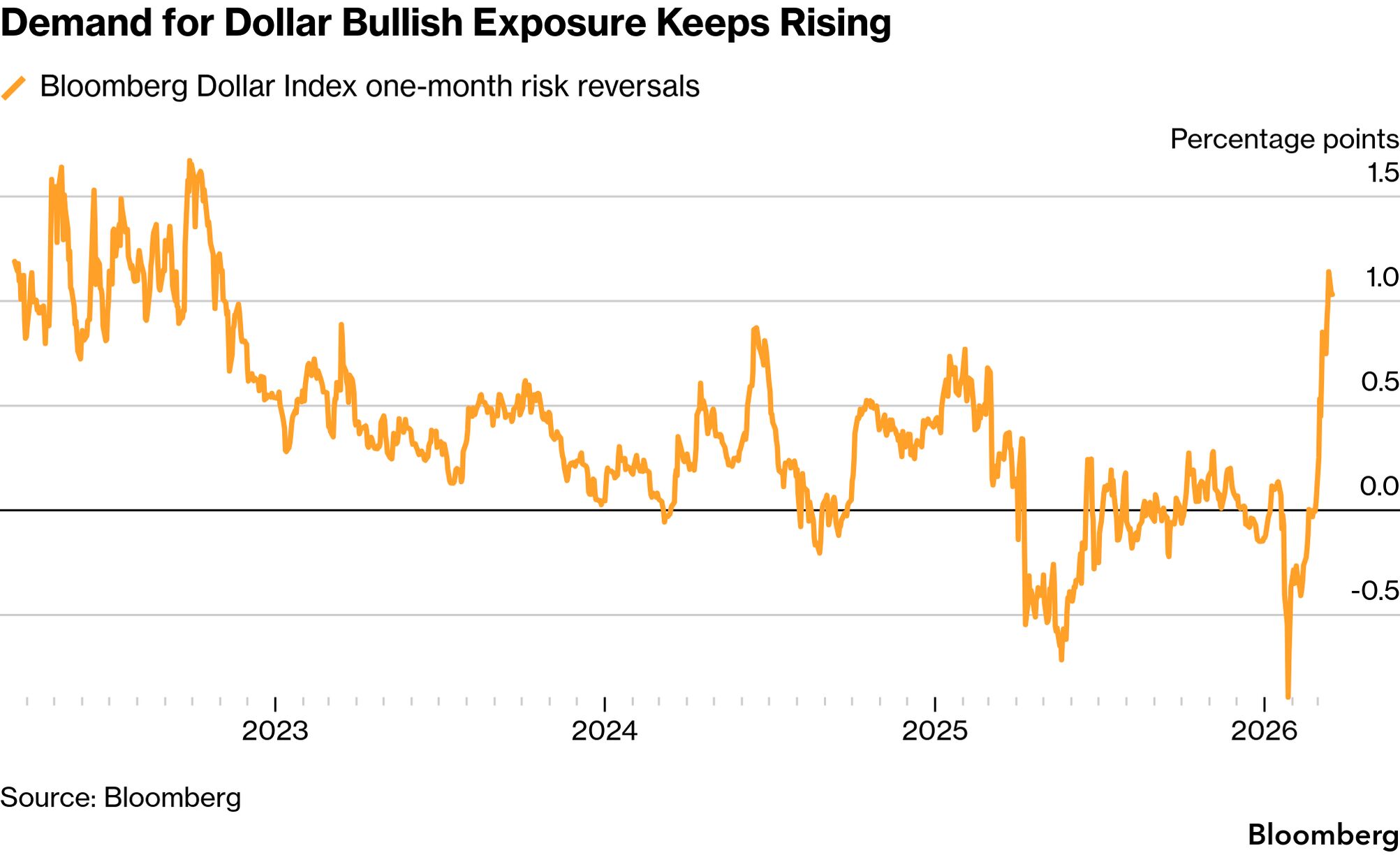
Dollar volatility skew , which shows the difference in demand between bullish and bearish options, has been grinding higher and recently reached year-to-date highs. That suggests investors buying tail-risk protection are still paying up for volatility, but those positioning directionally are increasingly leaning in favor of the dollar.