Robust Asian Reserve Pile Positioned to Defend Currency Slide
Asia’s $8 trillion in foreign-exchange reserves are giving central banks more firepower to defend their currencies as the escalating Middle East war drives up energy prices, a key risk for the region’s oil-importing economies.
Indonesia, India and Taiwan have already stepped into markets, while China signaled support through its daily reference rate. Other authorities have so far limited themselves to verbal warnings as they monitor volatility.
Currencies across the region have come under pressure as investors weigh the impact of higher oil prices on the import bill, inflation, growth and fiscal balances, with sharp depreciation risking capital outflows. The Indian rupee fell to a new record this week, the South Korean won hit levels last seen during the global financial crisis, and the Indonesian rupiah slid to a six-week low.
“FX stability anchors financial stability and heavy speculative positioning tends to have negative feedback loop for macros and markets, more than what the fundamentals demand, thus requiring central banks to be on guard,” said Madhavi Arora , chief economist at Emkay Global Financial Services Ltd.
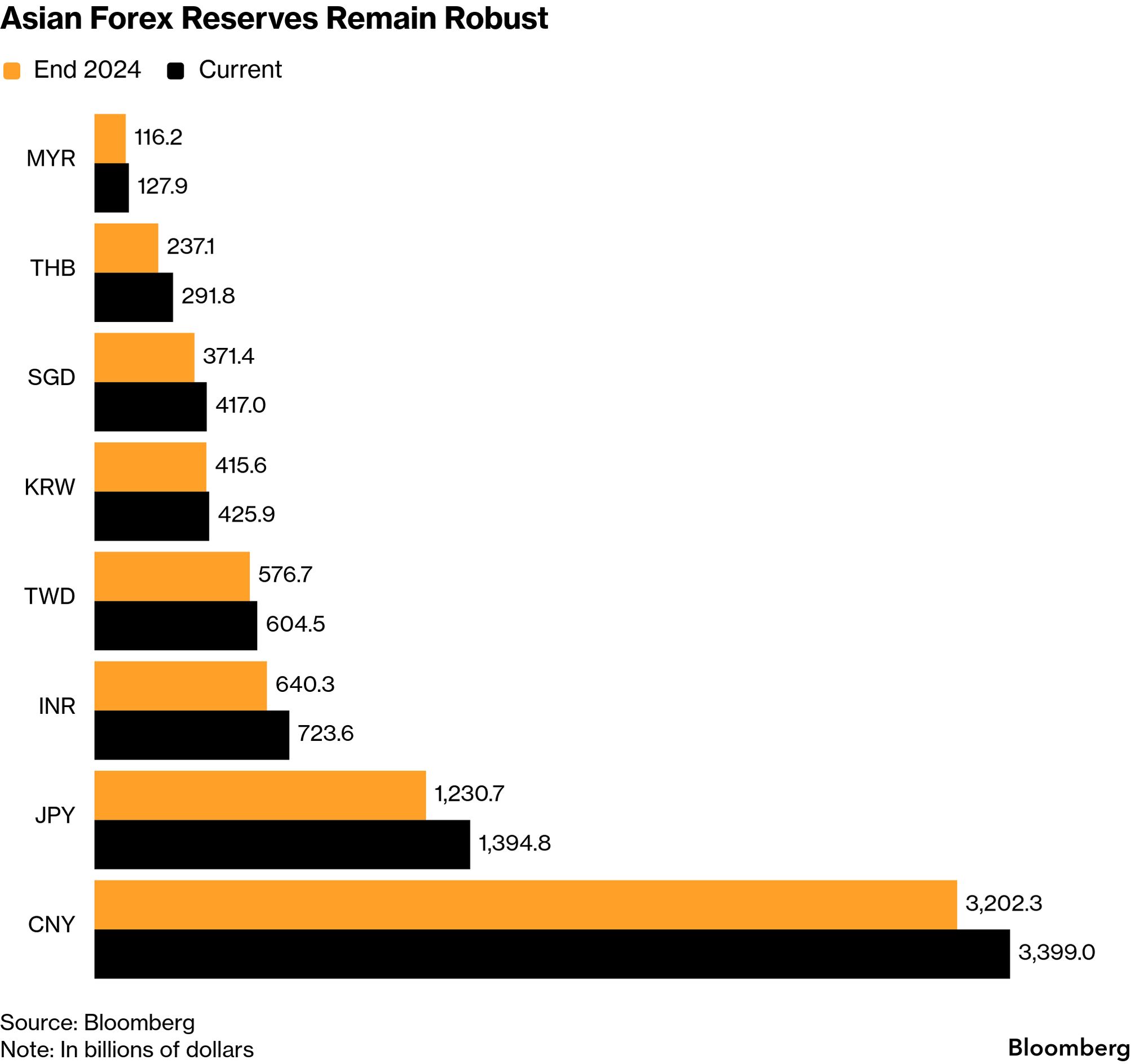
Foreign-exchange reserve piles across major central Asian banks have risen by $600 billion from the end of 2024, according to Bloomberg calculations. Authorities have been mopping up inflows over the past year, while a rally in gold prices and a weaker dollar have also raised the value of their holdings.
Policymakers are now drawing on that buffer to manage the fallout from the war in Iran. The stakes are significant: a 10% rise in oil prices cuts Asia’s current account balance by about 0.3% of gross domestic product on average, according to Nomura Holdings Inc.
Indonesia is intervening in currency markets and will continue “firm and consistent interventions” in offshore non-deliverable forwards as well as in onshore NDF, spot and bond markets, Bank Indonesia’s Senior Deputy Governor Destry Damayanti said Wednesday. Later in the day, cut the country’s credit outlook to negative due to rising policy uncertainty.
India’s central bank has been to support the rupee after it sank to a record low, Mumbai-based traders said. Taiwan’s central bank stepped into the foreign-exchange market this week due to large outflows, Eugene Tsai, head of the authority’s FX department, said at a briefing Thursday.
Elsewhere, authorities have stuck to signaling. South Korean President Lee Jae Myung has asked the cabinet to actively respond to volatility in stocks and the currency. In China, the central bank and set a stronger daily reference rate this week despite the dollar’s surge.
How much firepower central banks have — and how adequate those buffers are — may determine how long they can push back against depreciation pressure.
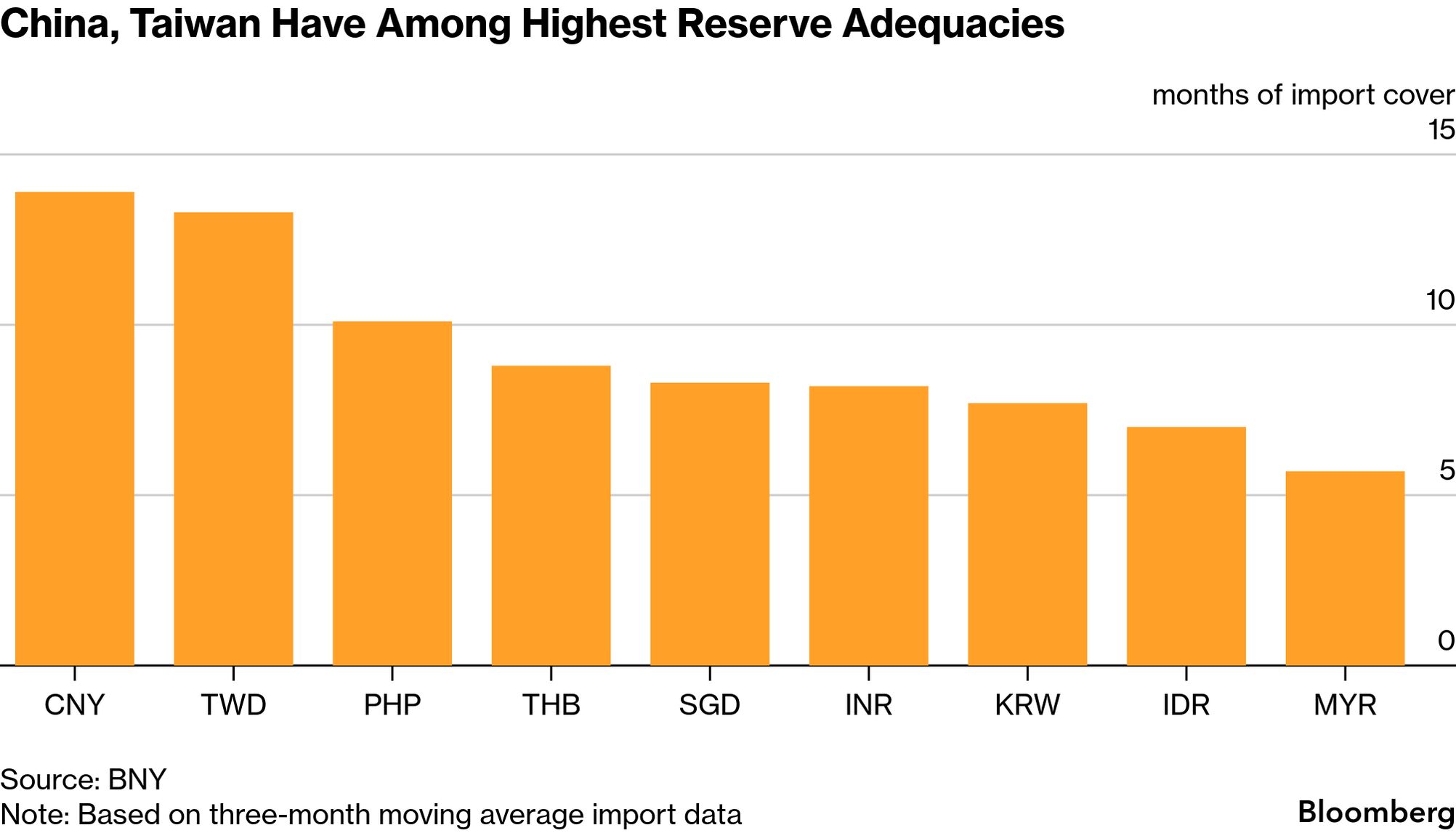
China, Taiwan and the Philippines have among the highest import cover in Asia based on a three-month moving average of imports, according to BNY. Malaysia, South Korea and Indonesia rank among the lowest.
Indonesia and South Korea rank lower on FX reserves adequacy, while Thailand, India, and the Philippines have more than adequate reserves to manage volatility, said Sonal Varma , chief economist for Asia ex-Japan at Nomura.
“Reserves are going to matter more with oil prices surging higher,” said Wee Khoon Chong , a strategist at BNY in Hong Kong. “Reserves as an ability for intervention are ample as this is not a direct speculative bet on the currencies, but is reflecting the higher dollar and market uncertainties.”