Top Australian Pension Funds Rush to Hedge Against Aussie Surge
Australia’s biggest pension funds have had to revisit their currency playbook as a sustained rally in the local dollar threatens to erode portfolio returns in the A$4.5 trillion ($3.2 trillion) retirement industry.
CBUS Super, a A$110 billion pension fund, has reduced its foreign currency exposure, according to Chief Investment Officer Leigh Gavin. Bigger rival Australian Retirement Trust — the nation’s second largest with A$370 billion in assets — has lowered its exposure to and is diversifying toward the euro, yen and pound.
Both funds said they are sticking to these strategies even as the outbreak of military conflict in the Middle East on Monday, driving the Australian dollar lower along with other Group-of-10 currencies.
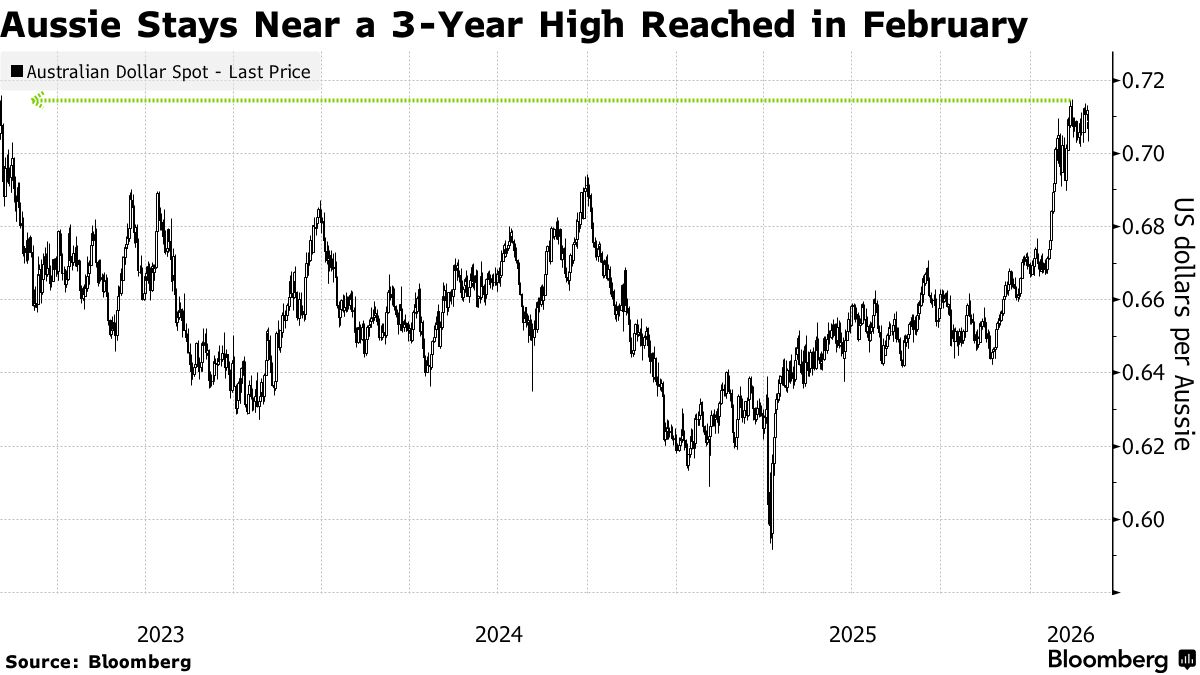
Australian pension funds invest heavily in offshore markets and have significant holdings in the US, but their payouts are in local currency. The Aussie is up almost 6% against the US dollar in 2026 — the best performance among G-10 currencies — following an advance of nearly 8% last year. The gains threaten to dent returns for the funds by eroding the value of their overseas holdings when translated back into Australian dollars.
The portfolio is “more hedged than we normally would,” Gavin said in an interview. “We still think the thematic of a potentially weaker USD and a potentially stronger AUD may have some lengths to go.”
Australia’s central bank said last month it is monitoring rising demand for currency hedging by pension funds. With over half of their assets located offshore, their hedge book is also growing, Reserve Bank of Australia’s Assistant Governor Brad Jones noted.
The Aussie has risen against all its other G-10 peers as well this year, boosted by a surge in commodities and a broader investor rotation away from US assets amid continued uncertainty over the policy outlook under President Donald Trump .
A policy divergence with the Federal Reserve has been another tailwind: while traders are pricing rate cuts in the US, Australia’s central bank last month became the first major monetary authority this year.
CBUS Super’s Gavin said the fund’s currency exposure is now in the high teens. “We were at low 20s in the last three years,” he added.
Australia’s retirement sector has grown sharply over the past few years, helped by rising mandated contributions for workers. This has prompted more super funds to ramp up investments abroad, such as in US stocks or European real estate.
“What we’re doing is redistributing that basket,” Andrew Fisher , head of investment strategy at Australian Retirement Trust, said in a recent interview, referring to the fund’s move to diversify its currency exposure. “So, a combination of euro, pound, yen primarily.”