BlackRock Says Japanese Bonds Offer 6% Yield With Currency Boost
Japan’s sovereign bonds can offer yields of around 6% for dollar-based investors willing to take a bet on long-dated debt, according to BlackRock Inc., which dubbed the current backdrop a “ golden age ” for investing.
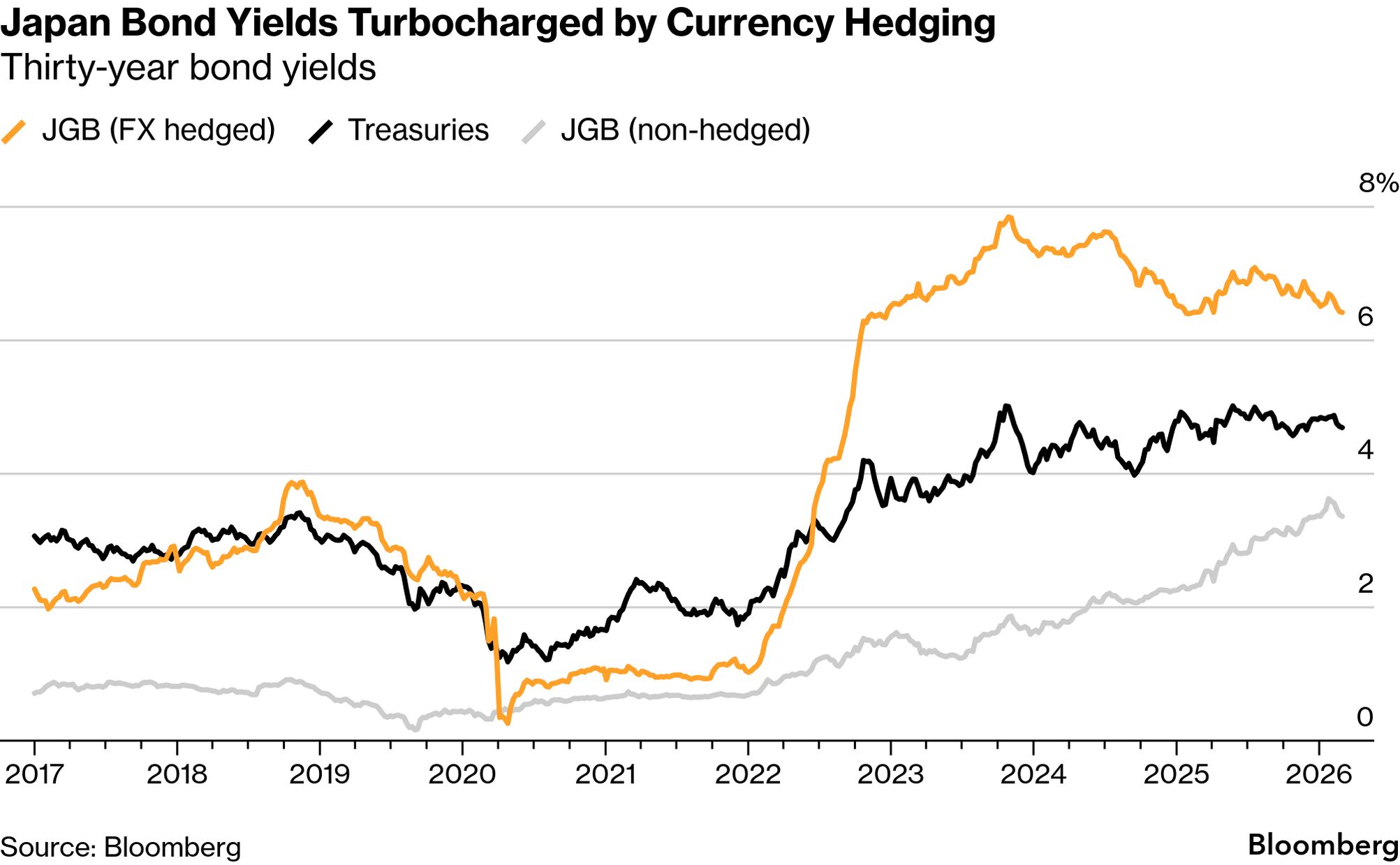
Investors can earn around 4% from the yield on long-dated Japanese bonds and pick up an additional 2% by hedging the currency, Navin Saigal , BlackRock’s head of global fixed income for Asia Pacific, said in a Bloomberg TV interview, referring to a strategy that effectively involves lending dollars and receiving yen.
That level of yield fits with BlackRock’s broader view that investors have a rare opportunity to lock in a historically high level of income — 4% to 6% — for relatively low volatility. Saigal joins the likes of in highlighting how Japanese government bonds are offering juicier yields than in years past amid concerns about higher fiscal spending and sticky inflation.
For dollar-based investors, hedging the currency exposure — holding short yen positions against the greenback — can produce yields that rival, and in some maturities exceed, those of Treasuries.
“When you hedge those yields back to dollars, that actually fits nicely in a 6% yielding portfolio,” Saigal said, referring to longer-maturity Japan debt. “You can get up to 3% to 4% on the JGB yield itself, and another 2% pickup in the FX hedge.”
Japan 20-year bonds, for instance, yield 6.06% when hedged back to the greenback, offering more than 140 basis points of pick up on similar Treasuries. The difference is even bigger with 30-year debt, as Japan bonds offer about 175 basis points more than their Treasuries peers.
Read more:
But there are risks to the trade. Longer-dated debt can be more illiquid and trading a lot more volatile. Yields on 20- and 30-year Japan bonds suddenly spiked last month on fears that Prime Minister Sanae Takaichi ’s administration would ramp up fiscal spending, $41 billion from the bond market.
A gauge of currency-hedged returns for JGBs maturing over 20 years also fell more than 15% last year, the worst losses in more than a decade.
“The longer you go out the duration spectrum, the smaller you can be in terms of size so that you can control for that volatility,” Saigal said.
Here are some of Saigal’s other views on Japan: