Foreign Deals Help Kenya’s Shilling Defy EM Currency Volatility
Kenya’s shilling has traded in an unusually narrow band against the dollar for 18 months, emerging as one of the world’s most stable currencies after a bruising 2023 rout.
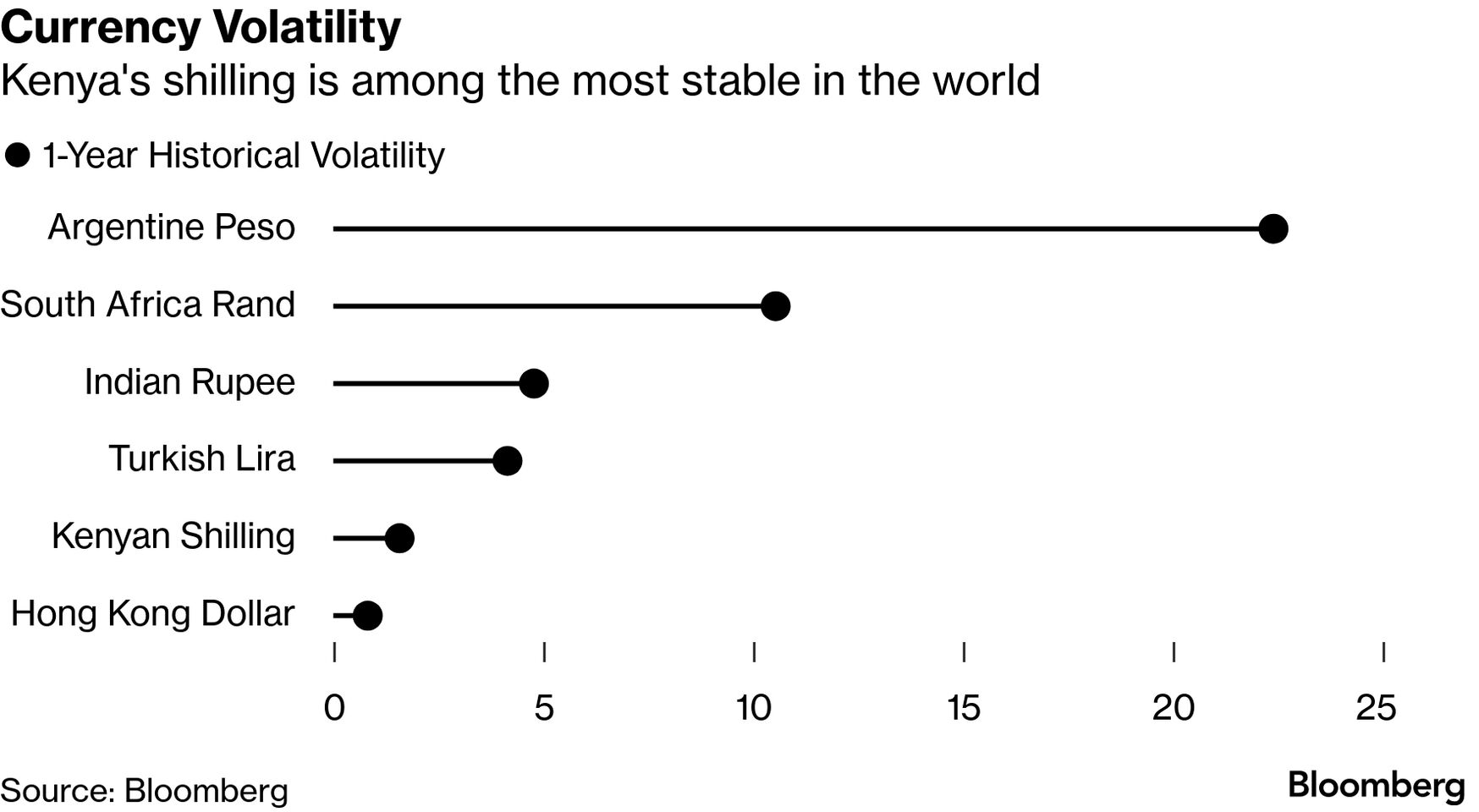
Since the central bank began cutting interest rates in August 2024, the currency has hovered between 128 and 130 per dollar, a stark contrast to the 21% slide it suffered the previous year. The currency’s one-year volatility has been 1.6%, compared with 10.5% for the South African rand.
Frontier and emerging-market currencies have swung sharply since Donald Trump returned to the US presidency, buffeted by shifting trade policies, geopolitical tensions and domestic economic pressures. Kenya’s currency, by contrast, has moved just 0.5%. That compares with a 40% surge in Ghana’s cedi and a 19% slump by Turkey’s lira.
Kenyan central bank Governor Kamau Thugge attributes the stability to a current account that is “behaving relatively well,” aided by an increase in foreign direct investment and overseas purchases of local-currency bonds that have helped improve dollar liquidity.
The currency’s fortunes shifted in 2024, months after Thugge took office and started raising interest rates. He reopened access to foreign exchange, easing a severe dollar shortage. Previously, businesses hoarded greenbacks and banks were reluctant to quote firm prices.
“Sometimes having enough forex is enough to dissuade people from just wanting to buy dollars,” Thugge said in an interview in the capital, Nairobi, on Tuesday. “If they know there is enough, there is no panic.”
Risks remain. Geopolitical tensions, including the threat of US military action against Iran, could rattle markets. Foreign investors sold a net $92 million of Kenyan equities last year, a trend that has continued, according to brokers.
Kenya’s Parliamentary Budget Office, which advises lawmakers, said the lack of volatility may mask risks.
“This unusual stability, compared to normal emerging-market volatility, points to tight exchange rate management or active liquidity smoothing by the central bank,” the Budget Office said in a earlier this month. “The lack of natural volatility may mask underlying foreign exchange imbalances, particularly given that the shilling was simultaneously weakening against other major currencies.”
While the shilling has been resilient against the dollar, it has weakened 6.7% to the pound and 11% to the euro in the past year.
Meanwhile, the central bank has been buying dollars and expects foreign-exchange reserves to rise to a record $14 billion by the end of the fiscal year on June 30.
The shilling was little changed at 128.88 per dollar on Thursday — a level that’s palatable to both importers and exporters, Thugge said.
Vimal Shah, chairman of Bidco Africa Ltd. , a maker of beverages, soaps and breakfast cereals, said the rate has brought stability back for importers, compared with two years ago when companies were hoarding.
“The demand for dollars is very low,” said John Gachora , chief executive officer of Kenyan lender NCBA Group Plc . “When it was going up and up, we would have demand every morning going unfulfilled.”
While the current-account deficit widened to 2.5% of gross domestic product in 2025, from 1.3% in the previous year, Thugge forecasts it will narrow to 2.2% this year.
Mergers & Acquisitions
For now, Thugge is confident that the central bank has enough buffers. Reserves will receive a $2 billion boost after the sale of a chunk of Kenya’s biggest-listed company Safaricom Plc and a similar amount from the sale of eurobonds earlier in February.
’s $855 million purchase of a majority stake in NCBA will also add to the reserves.
To diversify the hoard, the central bank may buy some locally produced gold, and is studying how other nations have done that, Thugge said.
It will also sell off some of its dollar holdings when the time comes to repay yuan-denominated debt, the governor said. Last year, Kenya converted some of its dollar loans from China into the Asian nation’s currency to benefit from lower interest rates.