Yuan Funding Hits Record $200 Billion as China’s Ambitions Grow
Yuan financing has never been as popular as it is now, with more countries and foreign companies tapping the market, in a sign that China’s ambition to internationalize its currency is bearing fruit.
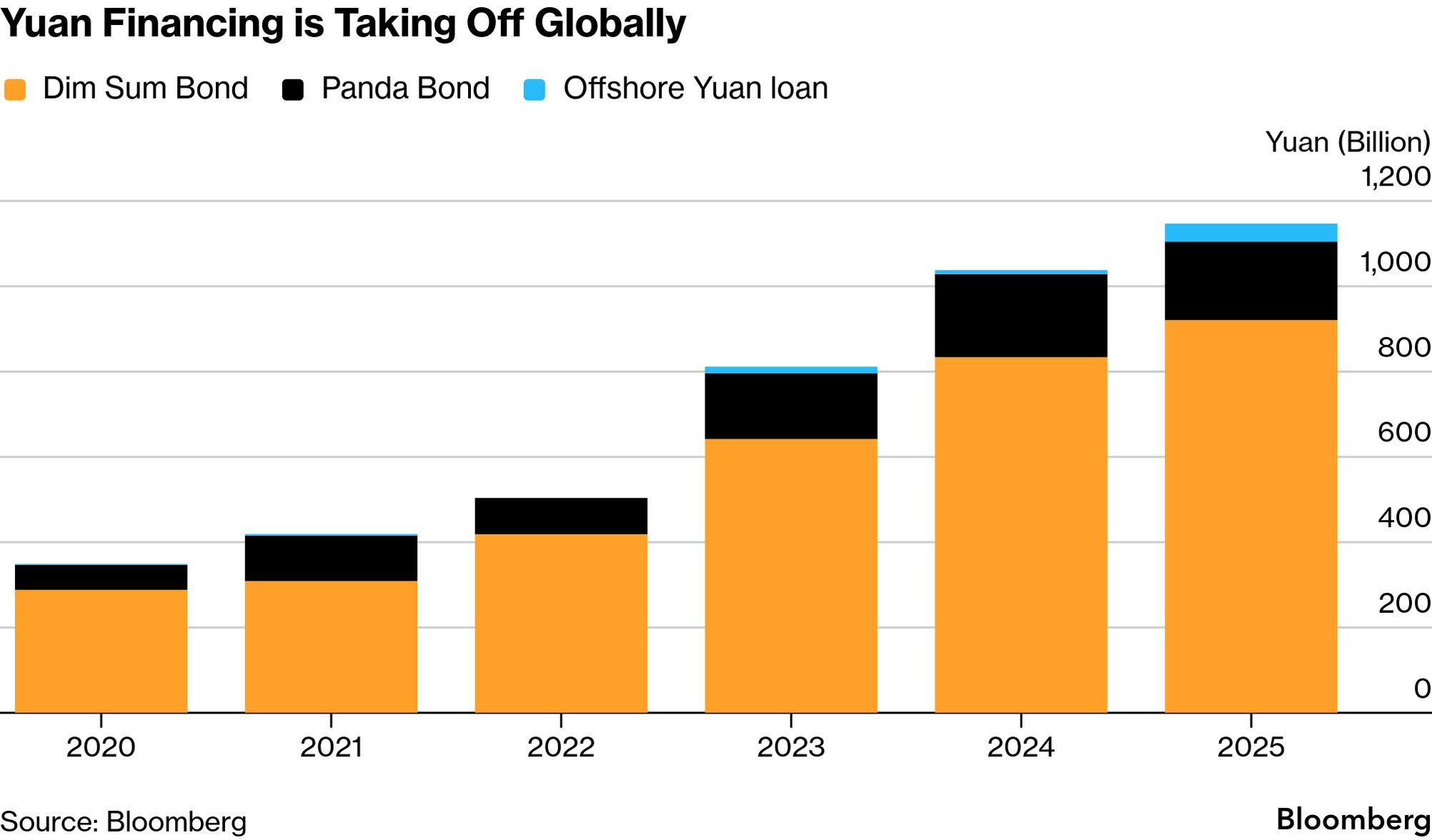
Bonds, either sold within China by overseas entities or issued elsewhere, raised a record 218 billion yuan ($31.6 billion) already this year, as the government and Wall Street’s joined the binge. That adds to the equivalent of $167 billion borrowed via notes and loans in 2025, a tripling in just five years.
The yuan’s growing importance as a global funding currency reinforces China’s for greater influence in finance and trade, just as the US upsets allies and markets alike with its America First policy. The drive is supported by a renminbi bouncing back from a 17-year low and cheap borrowing costs, and more importantly takes advantage of a desire by some investors to diversify away from the dollar.
There are signs Beijing wants more, with the People’s Bank of China last month support for cross-border financing, while prominent Chinese economists for looser capital controls given the historic opportunity to boost the yuan’s global appeal. Since late last year, Wall Street analysts have been to forecast further strength for the currency.
“The yuan’s internationalization is gaining real traction, especially in trade settlement and financing,” said Aidan Yao , senior investment strategist for Asia at Amundi Investment Institute. “With a growing share of settlements in yuan for Chinese imports, countries need to hold more yuan, driving demand that spills over into the offshore bond market and creates a virtuous cycle.”
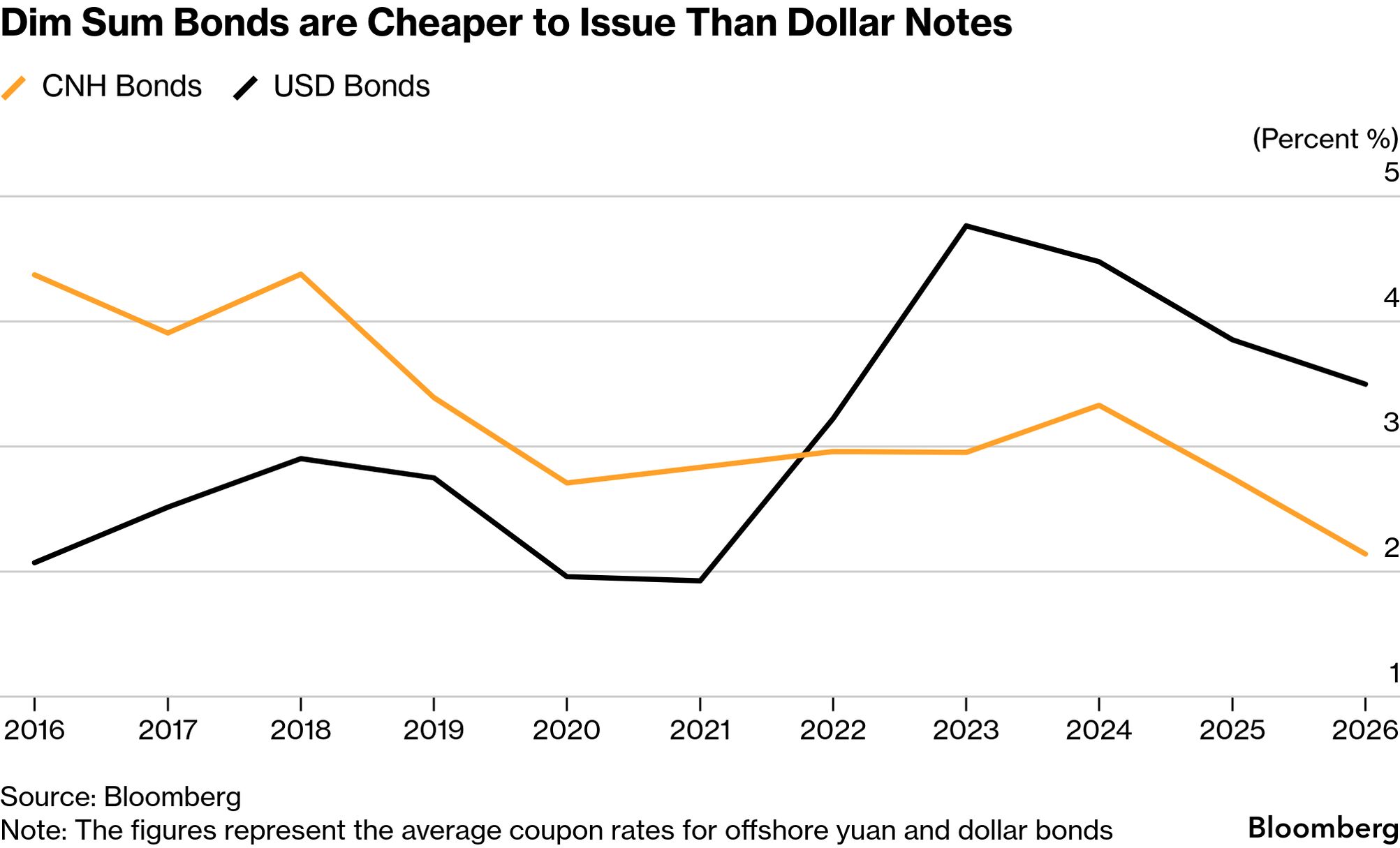
A key driver of demand for yuan financing is the lower interest rates in China, where deflationary pressures have persisted.
When Indonesia issued a dual-currency bond last month, it sold its 10‑year offshore yuan note at about one percentage point below what it paid on a euro tranche that matures in eight years.
The Southeast Asian country’s sale contributed to the record 103 billion yuan of so-called dim sum debt issued so far in 2026, almost double the amount raised in the same period last year. Those figures exclude borrowings by the Hong Kong authorities and China’s central government.
The expansion in yuan financing dovetails with a growing use of the currency in trade with the world’s second-largest economy. Its share in China’s cross-border goods trade settlement hit a record 34.5% last year, up from a low of around 10% in 2017, official data compiled by Bloomberg show.
Panda Fans
Meanwhile, an increasing number of foreign companies are selling yuan debt inside China, transforming what used to be a niche for supranational issuers such as the World Bank and Asian Development Bank into a diverse arena spanning sectors from healthcare to hospitality and commodities.
Sales of such debt — known as panda bonds — have reached 51.4 billion yuan so far this year, the most for this period. While overseas subsidiaries of Chinese enterprises remain the dominant issuers, foreign borrowers accounted for a record 36 deals last year, up from six in 2015. Morgan Stanley and Barclays Bank became repeat issuers in 2026, after making their debuts in the market last year.
“Offshore issuers are increasingly adding panda bonds into their mid-to-long-term debt management framework, treating them as regular financing tools,” said Liu Wei, deputy general manager of the investment banking center at Bank of China, the top arranger. “There’s been a fundamental change in borrowers’ behavior.”
The third leg of the yuan financing market has also expanded, with offshore loans jumping over 4.5 times on year to an unprecedented 42.5 billion yuan in 2025. Recent examples included a first-ever yuan by the local government of Sharjah from the United Arab Emirates, who is already a panda bond issuer.
While the Middle East conflict has disrupted financing plans in the region, with a major oil producer an offshore yuan bond sale, analysts expect only a temporary setback given the broader drivers.
Signaling Beijing’s comfort with currency appreciation, the PBOC a stronger reference rate to fuel another yuan rally earlier this week, defying the dollar’s rebound as the war in Iran escalated.
“De-dollarization is an ongoing theme despite the Middle East tensions and yuan internationalization will continue,” said Samuel Tse , senior economist at DBS Bank. “In fact, there was a wave of inflows into Chinese bonds and equities last year even as the trade war began.”
To be sure, for the yuan to truly become a “powerful currency” by President Xi Jinping, Beijing has a lot to overcome.
China maintains a tight grip on the yuan, confining its daily movement within a 2% trading band onshore. Its capital account is largely closed, making it hard for businesses and individuals to move money in and out of the country.
The Chinese currency’s in global international reserves was less than 2% as of the third quarter last year, according to the International Monetary Fund, lagging in a distant seventh place.
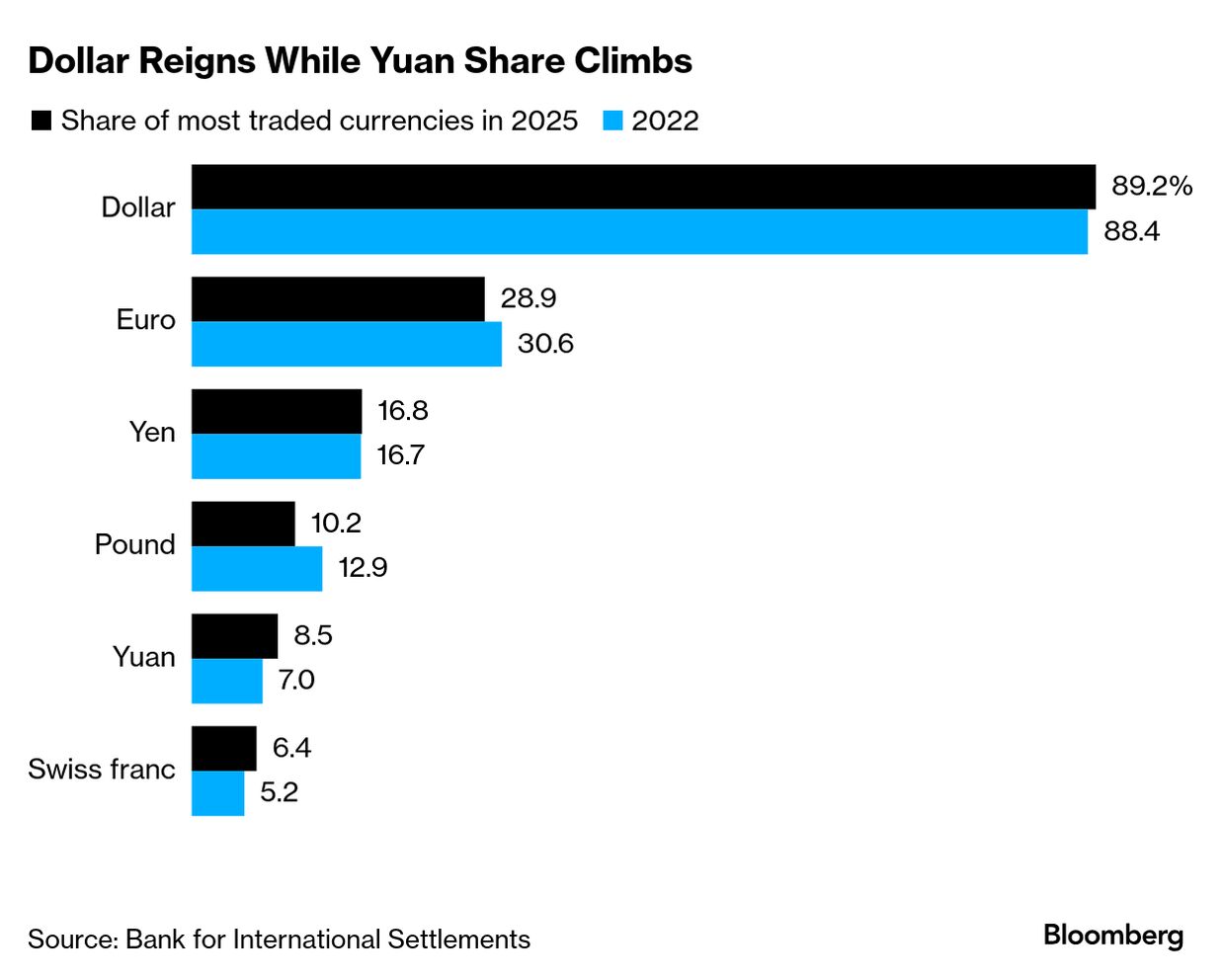
Similarly, the yuan made up of global currency transactions, well behind the dollar’s 89% and the euro’s 29%, according to the Bank for International Settlements’ latest triennial survey.
China’s more opaque policy environment and the limited range and market depth of yuan assets are also concerns for investors, said Lynn Song , chief economist for Greater China at ING Bank.
The PBOC didn’t immediately respond to a fax seeking comment.
Still, the quickening drumbeat of policy signals in recent months, starting from the PBOC’s move in October to some of its cautious language on its yuan ambition, pointed to a more confident and bolder approach.
Outside the real economy, the yuan’s popularity also is growing in carry trades, where investors borrow currencies with lower interest rates to invest in those with higher returns.
“China’s yuan is emerging as an alternative to the Japanese yen as a funding currency for global carry trades,” said Amundi’s Yao. “So from both the trade and financing perspectives, the offshore yuan market will attract investment flows.”