Japan’s Leader Faces Balancing Act on Yen Ahead of Election
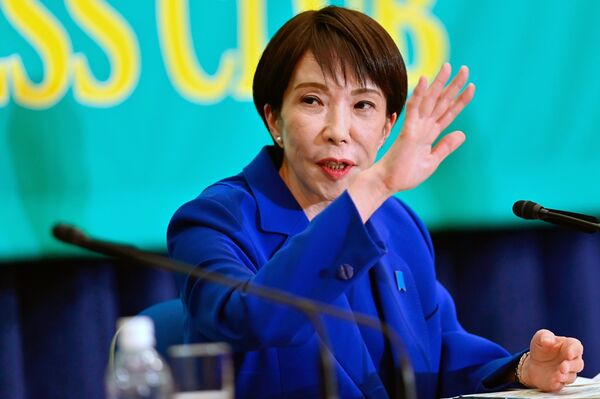
Japanese Prime Minister Sanae Takaichi kicks off her election campaign with an overriding goal: Get past the Feb. 8 vote without markets blowing up.
Figuring out how to do that as market pressure builds is causing headaches for her three-month-old government and the Bank of Japan, according to a Finance Ministry official familiar with the matter, who asked not to be identified discussing internal deliberations.
The problem, the official said, is that any action to rein in bond yields will prompt the yen to weaken further, stoking imported inflation and adding pressure to raise interest rates. Yet intervening to prop up the yen risks puncturing a stock-market rally that has become one of the few market indicators giving Takaichi’s administration a positive gloss ahead of election day.
No matter what the government does, the official said, there’s no solution that will accomplish everything. For now, authorities have sought to ride out market volatility with a combination of strong words and a little help from the US.
The ministry didn’t immediately respond to a request for comment.
Official campaigning for the election started Tuesday as Takaichi seeks to solidify her majority in the lower house of parliament. Polls conducted over the weekend showed her approval ratings remained high, despite a slight dip across the board.
Read more:
Speculation late last week about possible coordinated action by the US and Japan in currency markets helped bolster the yen without of actual intervention as of yet. Calls for calm in the bond market by Finance Minister Satsuki Katayama and US Treasury Secretary Scott Bessent have helped cool upward pressure on yields for the time being.
The yen strengthened to as strong as 153.31 against the dollar on Monday from 159.23 on Friday following speculation that the Finance Ministry had been in touch with traders, as well as reports that the New York Federal Reserve asked for exchange rate checks at the end of last week. The yen was trading around 154.15 on Tuesday morning in Tokyo.
Striking the right balance between managing the yen and yields will become easier once a new cabinet is formed after the election and an annual budget passed, according to Homin Lee , a senior macro strategist at Lombard Odier. The key for now, he added, is maintaining stability over the next two to three weeks.
“The Japanese government probably hopes to utilize its policy levers to stabilize both JGB yields and the yen,” he said. “Clearly, pursuing both is not easy.”
Investors are becoming to Japan’s longer-term fiscal outlook as Takaichi signals a willingness to spend more while pursuing a broader policy of trying to stoke demand-driven inflation.
Her plan to cut the sales tax on food for two years spooked markets last week, prompting a yield spike that also led to from Bessent. He’s repeatedly hinted that the BOJ needs to move faster. His dialogue with Katayama raised speculation that he wanted Tokyo to take more action to calm the bond market.
Reports of rate checks from the US have carried particular weight because they suggested that coordinated action with Washington was underway. While Japan spent around $100 billion propping up the yen in 2024 and tens of billions in 2022, it acted alone. A joint move by Japan and the US would be much harder to push back against, so the impression of coordination can instill fear among speculators even if no action is actually taken.
On Monday, Katayama sought to reinforce that view, saying that the government is to currency moves in line with the US-Japan joint statement.
“We have a memorandum agreed between Japan and the US last year, and we are acting based on that framework,” Katayama told reporters, referring to an accord on FX between Tokyo and Washington signed in September. “We are watching market conditions very closely with a sense of urgency.”
BOJ data released late Monday indicated that authorities had not stepped into the market in Tokyo on a large scale last Friday.
Read more:
The last coordinated action between Japan and other countries, including the US, took place in March 2011 after the yen soared in the aftermath of the earthquake, tsunami and nuclear disaster. Before that, Group of Seven members hadn’t entered the market together since 2000, when they intervened to support the euro. The last known example of the US-Japan joint intervention to prop up the yen was in summer 1998.
Speculation about renewed coordination as well as President Donald Trump ’s vocal disapproval of competing economies with weak currencies, has stirred talk of a new -like arrangement. The original 1985 Plaza Accord, forged by G-5 nations, aimed to weaken the dollar and strengthen the yen and other currencies.
At the time, Japan was closing in on the US as the world’s second-largest economy, with an 18% share of global output — compared with around 4% today. The agreement was credited with strengthening the yen from around the 230s per dollar to the 120s over the next couple of years, boosting Japanese buying power and enabling high-profile acquisitions of US real estate and companies, including the Rockefeller Center and Columbia Pictures. But the soaring yen also contributed to an asset bubble that eventually burst, leading to decades of slow growth and weak prices.
Any new US-Japan coordination would fall far short of the multilateral scope of the Plaza Accord. Yet the specter of such action underscores the stakes as Takaichi promises voters a return to the heady days of growth, using expansionary fiscal policy that has unsettled investors.
Takaichi’s pledge to lower the sales tax on food is a key step aimed at easing a cost-of-living crunch that is the top concern of voters as they struggle to get used to the return of inflation. After two election setbacks partly driven by the ruling party’s refusal to lower the sales levy, Takaichi will understand the importance of delivering on this promise.
“For now, we can say the government’s strategy has worked. When the yen strengthened, expectations for a BOJ rate hike eased slightly, which was positive for the bond market,” said Toru Suehiro , chief economist at Daiwa Securities. “The government managed to curb both yen weakness and the rise in yields with last weekend’s moves.”
Still, the return to calm remains fragile. The Nikkei 225 posted its largest decline since early December on Monday, highlighting the market’s sensitivity.
“Takaichi can argue that a rise in yields is a ‘good’ thing when stocks are still rising,” Suehiro said. “She will want to maintain a certain level of equity market performance.”