Japan Life Insurers Keep Hedging for Yen Gains Near 13-Year Low
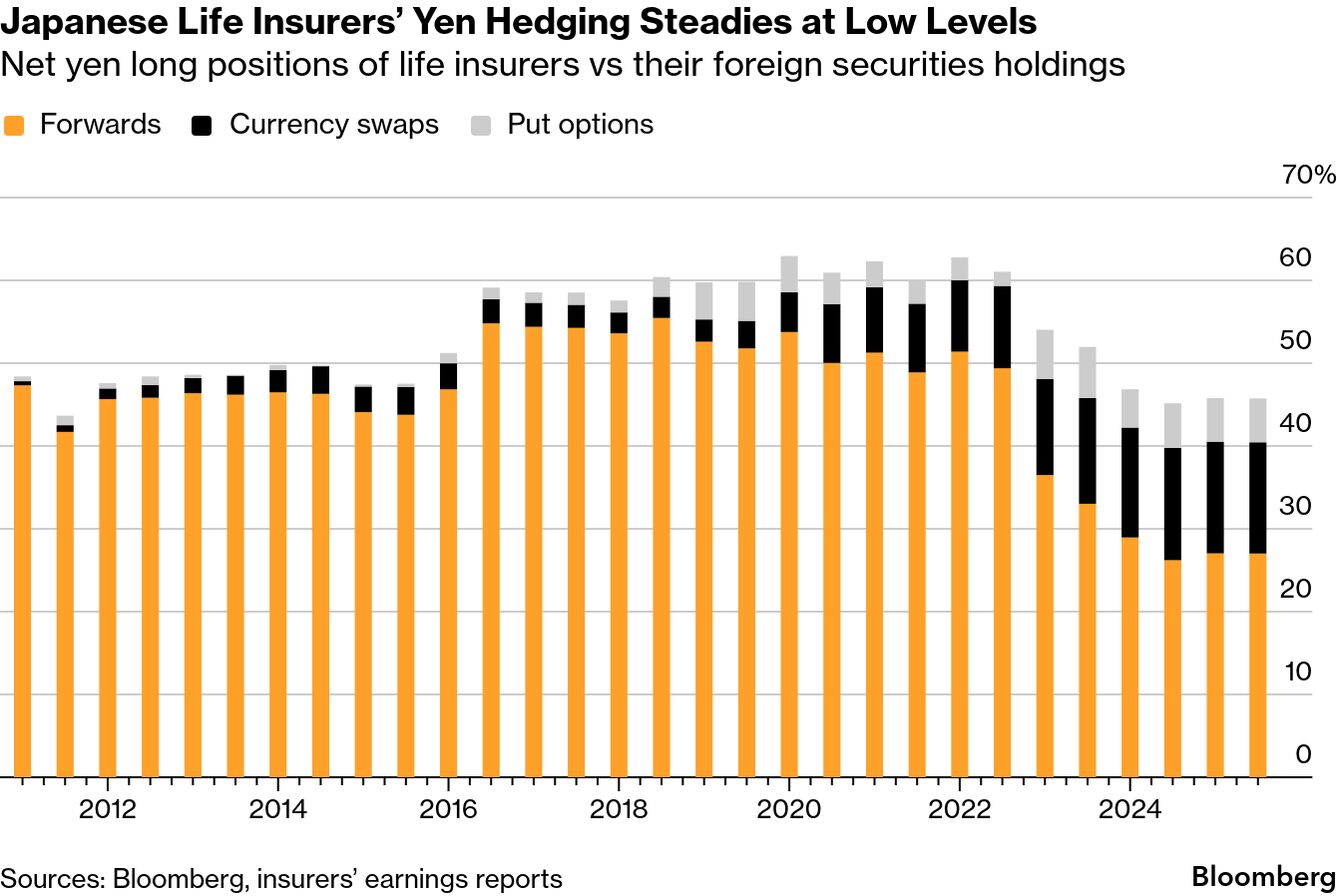
Japan’s life insurers left their hedging against the risk of a stronger yen near a 13-year low in the fiscal first half through end-September, according to a Bloomberg analysis of earnings reports.
The positioning by nine major insurers covered 45.7% of their overseas portfolios, little changed from six months earlier. The level had fallen to 45.2% in the half-year ended September 2024, which was the lowest since 2011.
Net long positions for the yen via forwards contracts covered 27% of foreign asset holdings in the latest period, roughly the same as in March. Currency swaps and put-option positions were steady at 13.4% and 5.3%, respectively.
“Hedge ratios remain low from a historical perspective,” said Aroop Chatterjee , macro strategist at Wells Fargo in New York. “We think hedge ratios are headed higher over the coming quarters and support a stronger yen.”
The positioning is important given that the yen’s moves have come into sharp focus after a recent bout of weakness put traders on guard for potential intervention by Japanese authorities. Collectively, the insurers own ¥109 trillion ($700 billion) of and a rise in their hedging activity can spur yen-buying flows that may slow the currency’s weakness.
Japan’s currency has declined in each of the past three months and is now trading around the 155 mark, within reach of levels around which the authorities stepped into the market repeatedly last year. Much of the weakness has stemmed from speculation that Prime Minister Sanae Takaichi ’s pro-stimulus stance might boost inflation and increase the debt load.
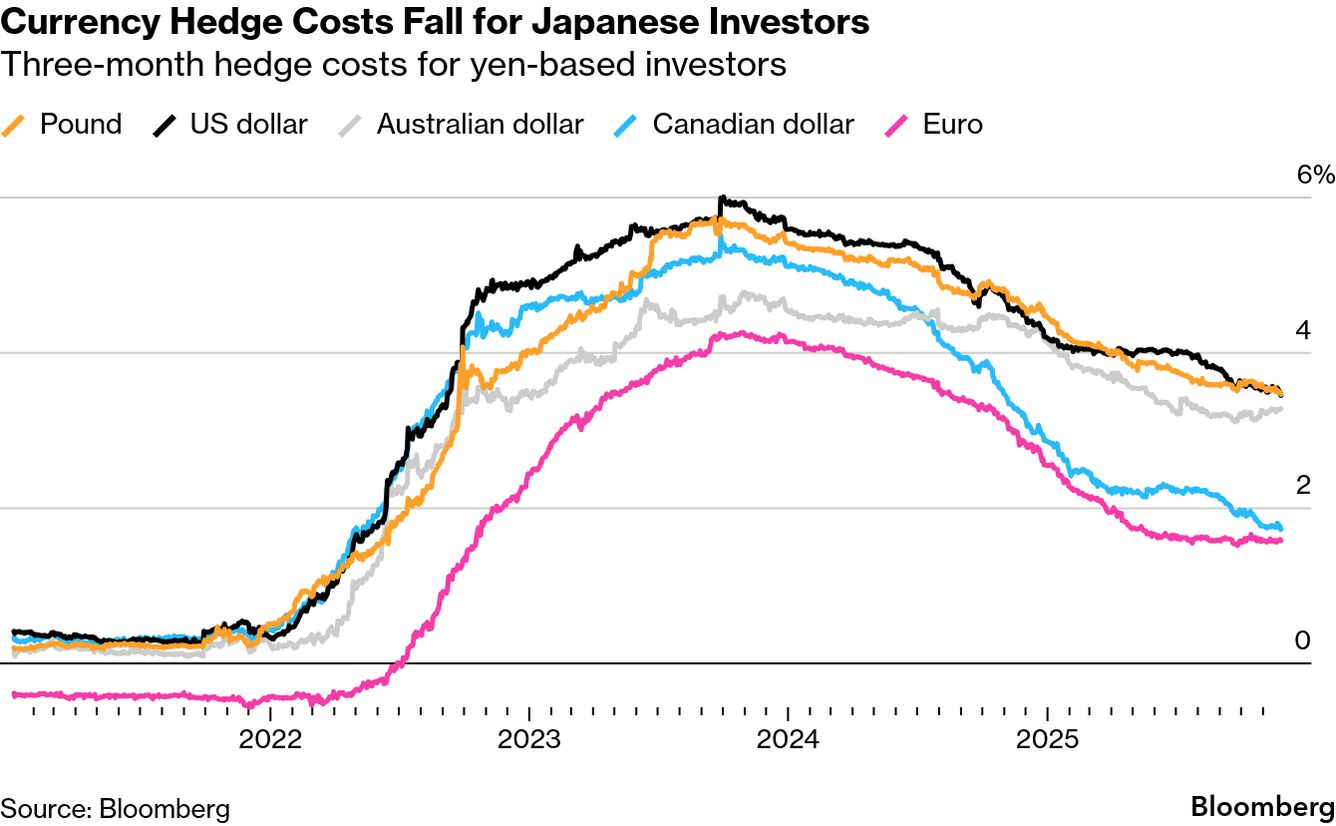
For the insurers, the decision to maintain their protection against a stronger yen came on the heels of a drop in hedging costs to multi-year lows. These costs have declined as the divergence between the Bank of Japan’s policy path and that of its major peers narrowed.
The BOJ has stayed on hold since while the Federal Reserve lowered its benchmark rate by half a percentage point this year. For its part, the European Central Bank has eased policy at twice the pace of the Fed.
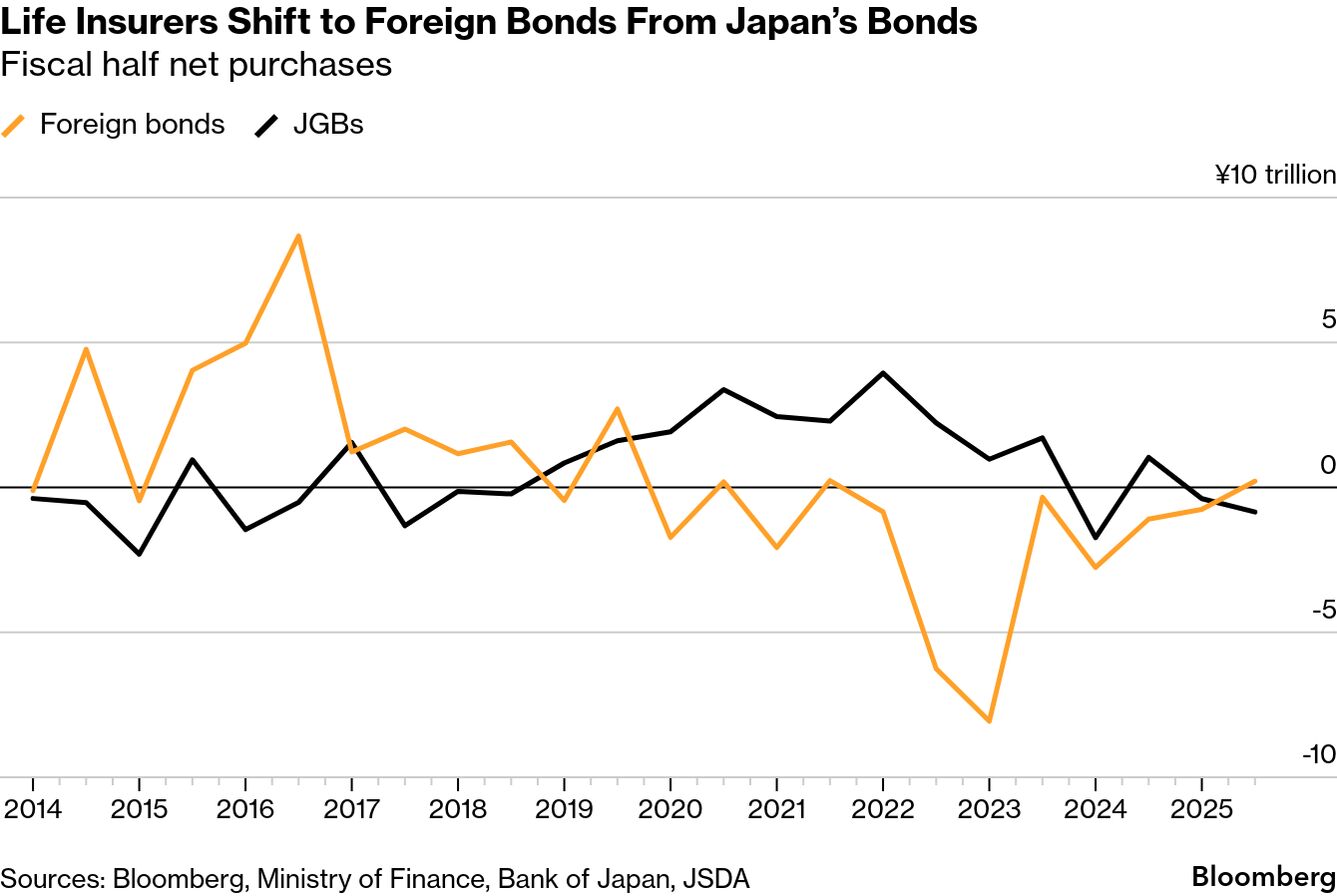
In terms of investments, life insurers turned net buyers of foreign bonds for the first time since 2021. As losses in Japanese government debt mounted, the firms snapped up ¥213 billion of overseas securities in the fiscal first half.
They offloaded about ¥849.7 billion of Japanese sovereign notes , compared with ¥388.1 billion previously, according to a Bloomberg analysis of data from the BOJ and Japan Securities Dealers Association. Japanese government debt has about 5% this year while yen-hedged global notes returned 1.7%.
“The most likely path from here is a gradual increase in hedge ratios rather than a sudden, wholesale shift,” said Shoki Omori , chief desk strategist at Mizuho Securities Co. in Tokyo. “New purchases of foreign bonds are more likely to be made with higher hedge ratios, and existing positions can be hedged more aggressively as current hedges roll off and are reset under more favorable cost conditions.”