Yen’s Rapid Fall Complicates Takaichi Hopes for Slower BOJ Hikes
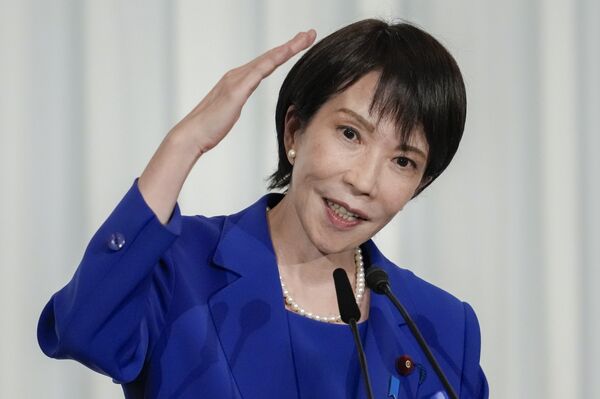
Japan’s likely next prime minister, Sanae Takaichi , risks unintentionally prompting a Bank of Japan rate hike as early as this month.
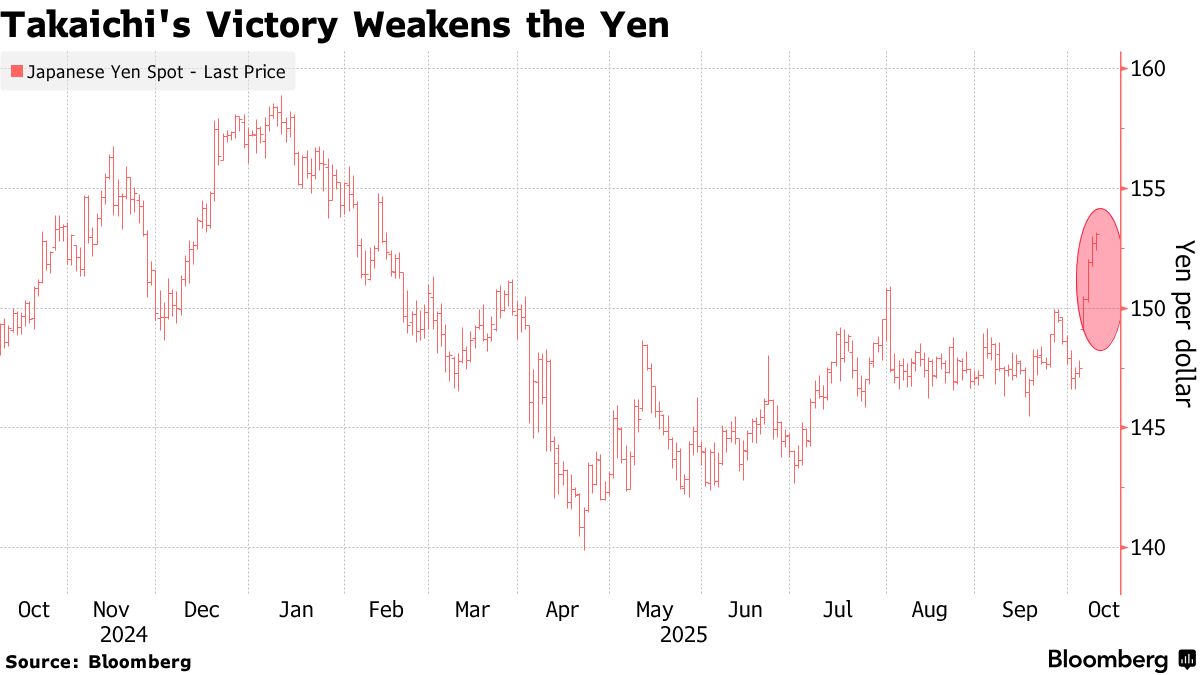
By giving markets the impression she doesn’t want the BOJ to move, she has helped drive down the yen. The currency hit 153.22 against the dollar on Thursday in Tokyo, its weakest in almost eight months.
A weak yen ramps up inflationary pressure by pushing up import costs, an outcome that would raise upside price risks for the central bank while potentially complicating Takaichi’s plans to reduce the impact of the cost-of-living crunch.
The weak yen is set to number among the initial tests of Takaichi’s expected premiership along with her ability to form a stable coalition government. While she is known as a staunch advocate of monetary easing, her stance risks fueling inflation and adding to discontent among voters. If the yen continues to slide toward 160 and the BOJ holds rates, Japan’s Finance Ministry might have to intervene in markets to stem the moves.
“With the yen weakening, the chance of an October hike has risen under Takaichi,” said Daisuke Karakama , chief market economist at Mizuho Bank. “Public discontent over a cheap yen importing inflation is extremely high.”
The yen began its rapid fall as market bets for a rate hike plunged after Takaichi’s victory in a leadership vote for the ruling Liberal Democratic Party on Saturday. Traders see about a 25% chance of a hike when the BOJ delivers its next policy decision on Oct. 30, down from 68% last week.
The yen has shed more than 3.5% against the greenback since Takaichi’s victory, easily the largest decline among major currencies during that span. Etsuro Honda , one of Takaichi’s economic advisers, said earlier this week that October was probably too early for a rate move by the BOJ, but he also said the yen weakening beyond 150 per dollar was a bit too much as that boosts inflation.
Analysts note that it wouldn’t look good to the US if Japan’s leader appeared to delay a rate hike and weaken the yen. President Donald Trump has said Japan is trying to gain an advantage via a cheap currency. Treasury Secretary Scott Bessent said in August that the BOJ is falling behind the curve on dealing with inflation in a highly unusual comment for a person in his post.
“The market is testing the stance of LDP President Takaichi, the Finance Ministry, and the BOJ,” said Eiichiro Miura , senior general investment manager at Nissay Asset Management. “Before reaching 160, Takaichi will likely be persuaded by the BOJ. There’s likely to be pressure from the US side, too, to raise rates.”
Read more:
Takaichi’s LDP has lost control of both chambers of parliament in recent national elections, with frustration over the cost of living cited as a key reason. Japan’s key inflation gauge has stayed at or above BOJ’s 2% target for more than three years, keeping real wages falling.
Japan has spent around ¥24.5 trillion ($160 billion) since 2022 propping up the yen by intervention in the currency market. Japan’s finance chief Katsunobu Kato on Tuesday indicated that the authorities aren’t yet close to stepping in again. His comment that the ministry is closely watching any excessive moves falls short of an imminent warning of action.