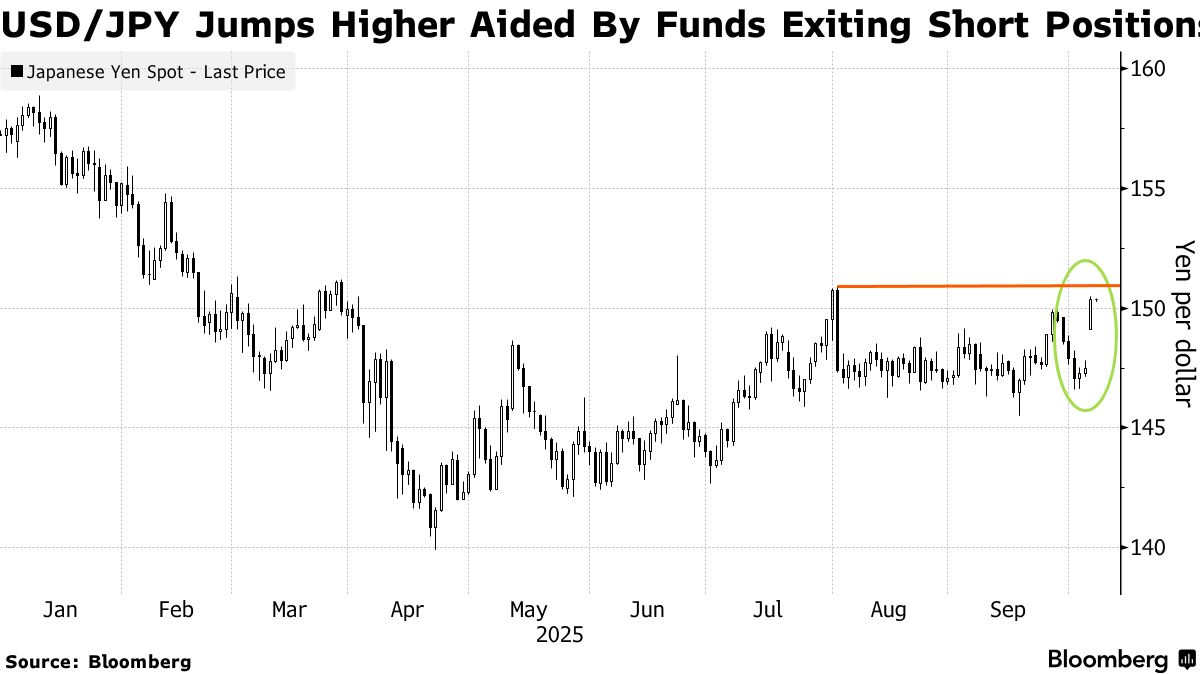
Yen Traders Caught in ‘Mass Square-Up’ Following Takaichi Win
A large part of yen selling Monday was macro hedge funds closing bullish bets, referred to as “squaring up,” rather than establishing new bearish ones, according to traders from Nomura International and Citigroup Inc.
While some funds entered new positions by buying the dollar against the yen, many more were simply buying the greenback to exit existing short greenback positions, said traders in Asia . This happened in reaction to the pair rising by as much as 2% amid expectations that Takaichi’s win may mean more fiscal expansion, and a slower pace of interest rate hikes for the Bank of Japan.
“In my opinion, it’s a mass square-up,” said Antony Foster , head of Group-of-10 spot trading at Nomura in London. “We have seen some dollar buying since the LDP elections, but it would be wrong to say that macro funds as a body are acting a particular way. Some are squaring up, some are going long the dollar, but the main flows seem to be the former.”
Read: JAPAN REACT: Takaichi’s Win Tips Stimulus, Adds Risk to BOJ
The fact that many funds decided just to exit bearish trades, rather than also initiate new bullish positions, signals that the jury is still out for many investors on how much Takaichi’s win will weaken the yen. This was illustrated further when the currency started to pare losses later Monday following news that one of Takaichi’s closest economic advisers the possibility of a BOJ rate hike in December.
Read: Deutsche Bank Turns Neutral on Yen as it Awaits Greater Clarity
A similar tale unfolded in the foreign exchange option market. The premium to hedge the dollar-yen’s downside over the next month compared to upside, as measured by risk reversals, halved from Friday’s level aided by traders covering short dollar-yen option positions. A risk reversal compares the price of call options, which gain in value as the pair rises, with that of put options which become worth more if dollar-yen falls.
“In USD/JPY options we have seen unwinds of short delta positions likely put on from bearish dollar and government shutdown hedges,” said Patrick Green London-based global head of FX options trading at Citigroup. “This has contributed to lower front end risk reversals.” A short delta position is one that profits if dollar-yen falls.
Despite the dollar-yen rallying, put options on the pair were more active Monday than call options, according to data from the Chicago Mercantile Exchange option order book . Given the relative fall in put options prices, this indicates that many of these were sold as positions were squared-up.