Pakistan Rupee’s Rally at Risk as Floods Fuel Dollar Shortage
Pakistan’s deadly floods have exacerbated dollar shortage in the country, intensifying concerns over hoarding of the greenback, according to foreign exchange dealers, in what may be a risk for the rupee’s recent rise.
Dollars are not available at exchange outlets as “many branches and banks have suspended operations after being submerged,” due to floods, said Saleem Amjad, chief executive officer at Link International Exchange Co., one of Pakistan’s largest foreign exchange companies.
have killed more than 930 people and displaced more than four million people in Pakistan during the past two months. The ongoing floods are supply chains of everything from food to foreign exchange in the nation.
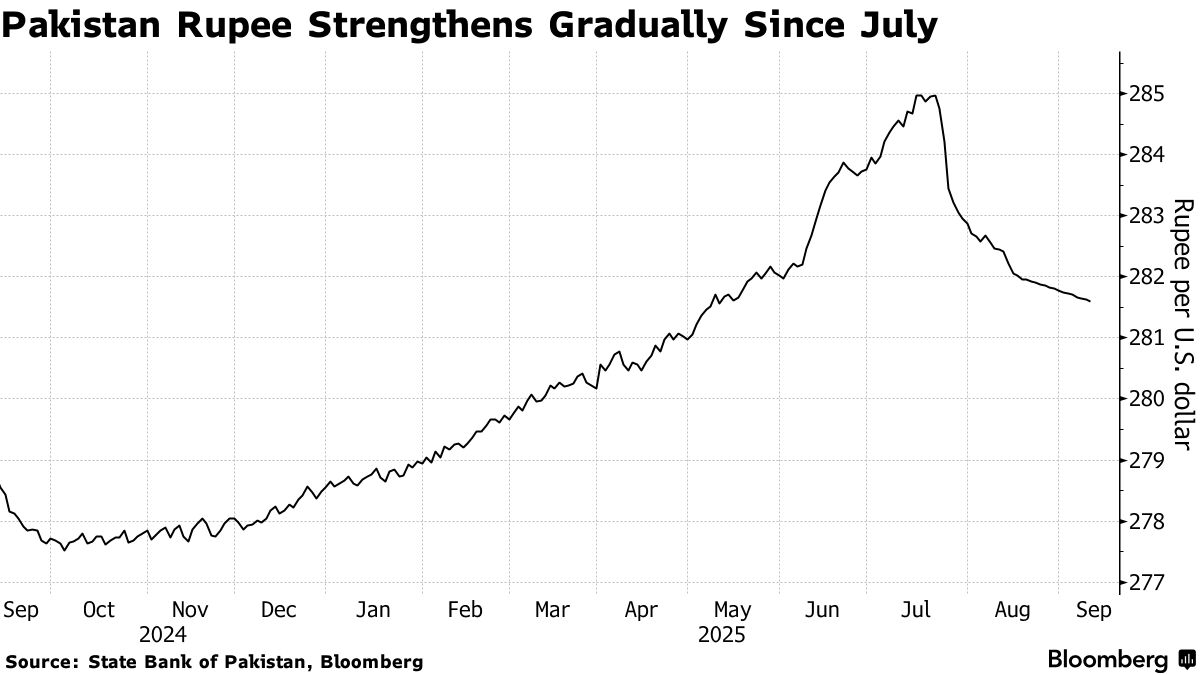
A prolonged dollar shortage can halt a rally in the Pakistan rupee , which has gained for 25 straight sessions in its longest rising streak in two years, according to central bank data compiled by Bloomberg. Dollars scarcity builds pressure on the local currency as importers and investors aggressively try to secure the greenback.
The shortage can also hinder imports and the government’s efforts to revive the economy ahead of an International Monetary Fund loan review .
“The floods could strain external balances, foreign exchange reserves and, hence the rupee,” Bloomberg economist Ankur Shukla wrote in a note . A threat to shipments “could stress already-weak FX reserves that cover less than three months of imports.”
The rupee has risen 1.2% against the dollar since its low in July, following a close by the army, an by S&P Global Ratings and a with the US.
The local currency’s strength is pushing some people to hold on to the greenback in anticipation to sell when the rupee gets weaker, Amjad said.
The dollar shortage is temporary and should ease within 10 to 15 days, according to Zafar Paracha, general secretary of the Exchange Companies Association of Pakistan.
While the rupee is fairly priced according to the central bank, half of the participants in a Topline Securities survey earlier this month saw the currency weakening to 285-290 a dollar by the year-end.