Investors Dismiss Spectre of Communist Victory in Chile Election
Chile’s financial market is preparing for the victory of ultra-conservative candidate Jose Antonio Kast in presidential elections this year, unfazed by the rise of a communist contender in the ruling alliance, a monthly survey shows.
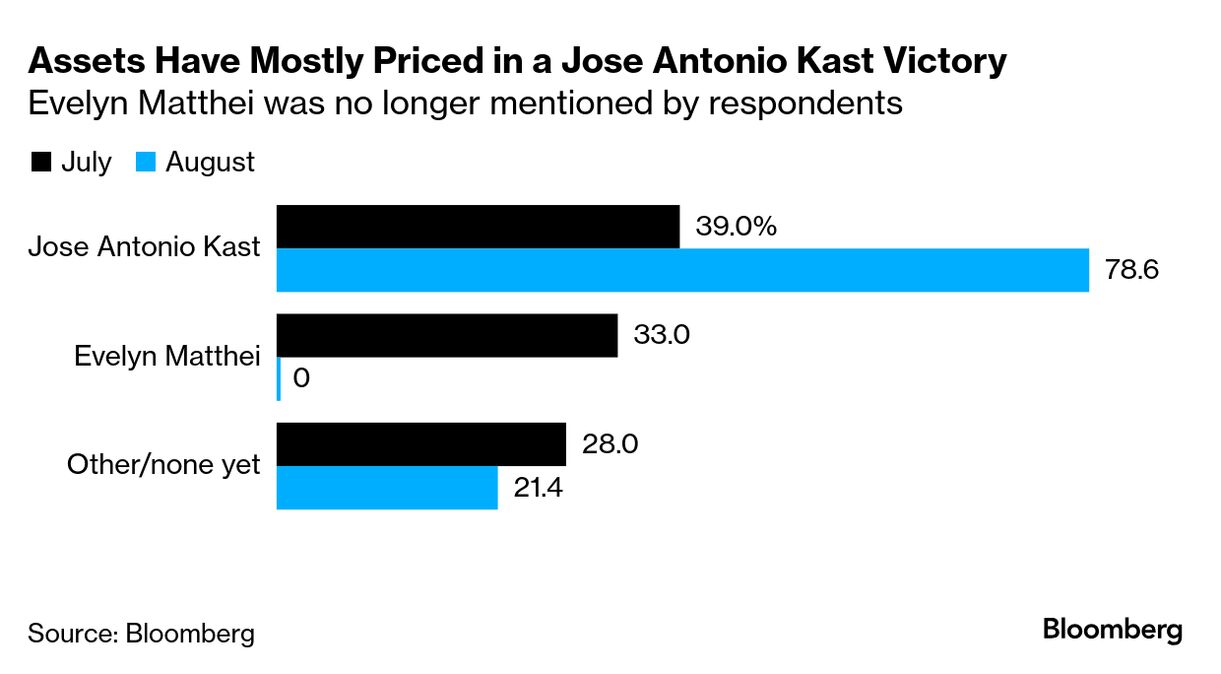
Almost 80% of 28 analysts and traders polled by Bloomberg last week said the market has entirely or partially priced in a win for Kast. None thought assets show any chance of a victory for center-right candidate Evelyn Matthei or the communist Jeannette Jara .
The survey comes after Jara won the primary for Chile’s left-wing ruling alliance on June 29, beating out more moderate contenders and further of a shift to the right in the presidential election. What has been a surprise since the primary is the rally in support for Kast over Matthei, the candidate many had thought just a few months ago was destined to be the next head of state.
“Kast is considered pro-financial market, which would reduce the spread in fixed income assets,” said Alexis Vega , head of market making at Banco de Credito e Inversiones. “In Treasury bonds, this could be due to expectations of lower fiscal spending, which would result in a lower need for financing.”
Kast said on Thursday that in his first 18 months in office, he would slash public expenditure by $6 billion. By contrast, Matthei says it would take four years to achieve similar savings. Kast also said he would reduce corporate taxes on medium and large companies to at least 20% in four years, while boosting investment and productivity by cutting regulations.
Read More:
Chileans go to the polls in a first round of voting on Nov. 16, followed by a runoff between the two principal candidates on Dec. 14.
Risk Premium
The percentage of analysts and traders who said markets are pricing in a victory for Kast rose from 39% the month before, while those citing a win for Matthei fell to zero from 33%. No-one ever thought markets were anticipating a victory for Jara.
All this “implies that local assets do not factor in an additional risk premium for the presidential elections,” said Vega. “There are not many arguments for changing investment strategies.”
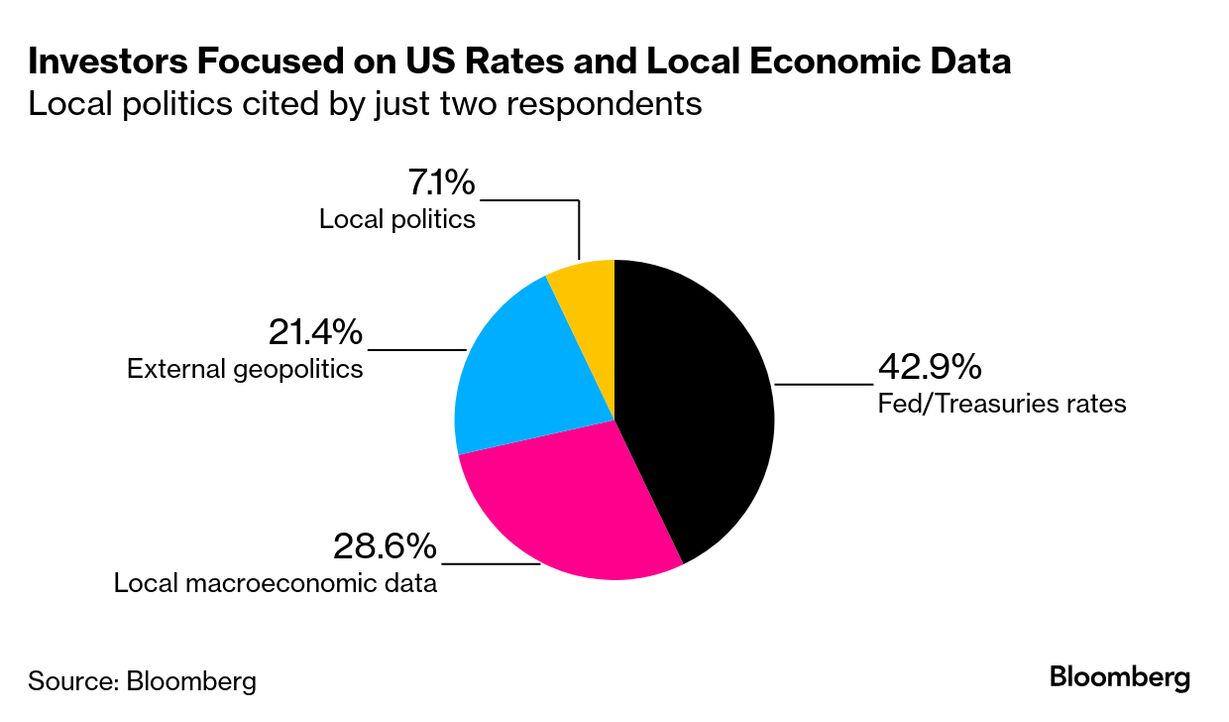
Investors are so relaxed about that outlook for the election that less than 10% cited local politics as the main driver for the local bond market this month. Many analysts — 43% in the Bloomberg survey — are looking to monetary policy in the US as the key factor, a focus that was borne out on Friday when a weaker-than-expected jobs report there sent bond yields tumbling worldwide.
Chile’s one-year swap rate slumped 6 basis points to 4.5% on Friday, hitting its lowest since 2021.
Almost 30% of respondents cited local macroeconomic data as the main driver for August, specifically inflation. Even though consumer prices dropped twice as much as analysts had projected in June, falling 0.4%, inflation is expected to have rebounded in July.
“The rise we’ve seen in both the exchange rate and oil prices is biased to the upside for inflation in the short term,” said Vega.
As a result, a little under 80% of respondents said they favored investment in bonds demoninated in Unidades de Fomento, an inflation-linked accounting unit. Over 60% backed UF notes with durations of between one and five years.
“The middle portion of the curve — between 3 and 5 years — continues to show attractiveness and room for potential capital gains and a better risk-return profile than longer-term bonds,” said Ariel Nachari, a strategist at SURA Investments.
The central bank cut by a quarter-point to 4.75% last week, with a majority of investors now expecting both the UF and the nominal bond curve to steepen this month. Exactly 75% expect UF rates to fall, with almost 15% seeing a drop of more than 10 basis points. Meanwhile, 54% see nominal rates declining.