Carry-Trade Rotation Looms as Key Negative for Asian Currencies
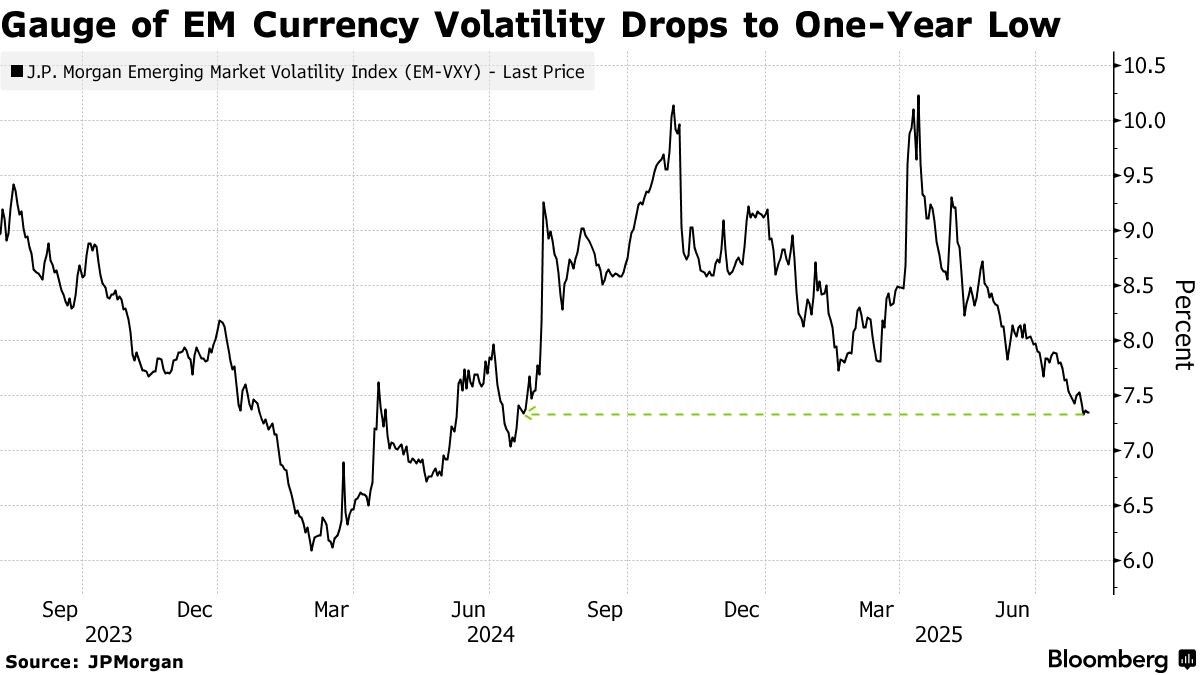
Emerging-market currency volatility at a one-year low is poised to sap demand for Asian foreign exchange in favor of its higher-yielding European and Latin American peers.
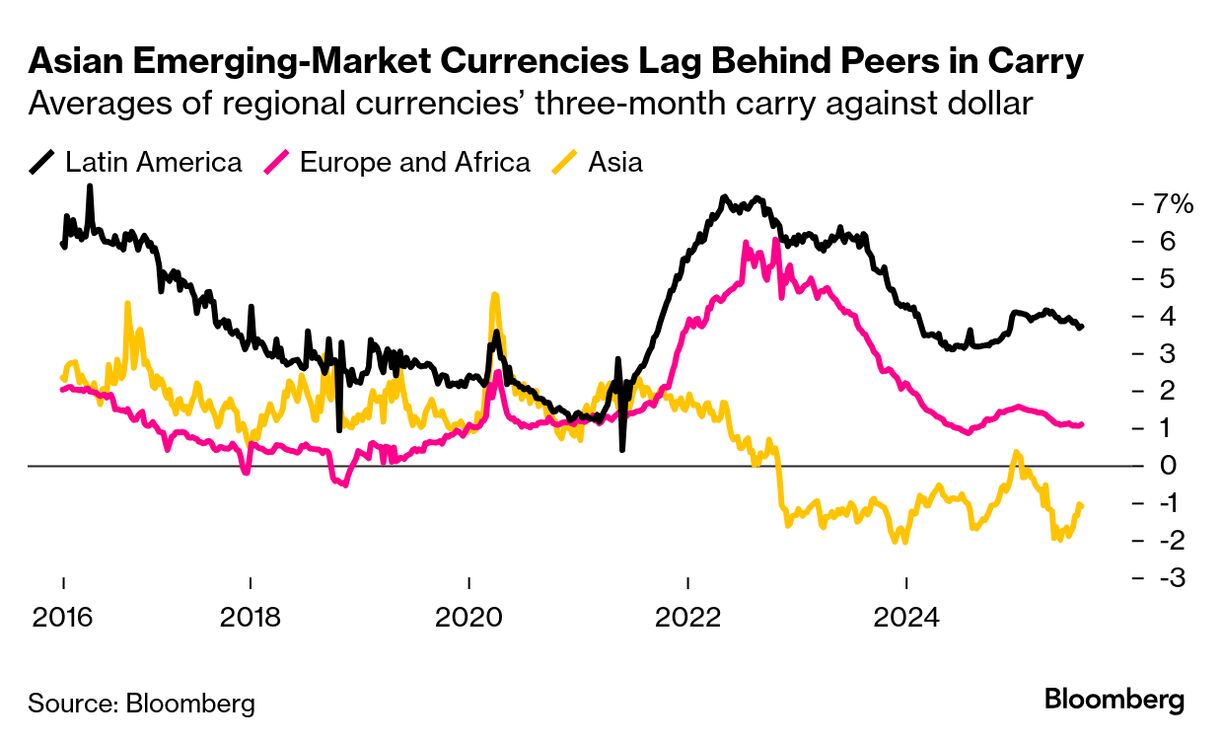
Falling volatility means there’s less prospect of earning capital gains from any currency appreciation, so traders are instead having to rely on potential returns from carry, which involves borrowing in countries with low interest rates and investing in others offering higher returns. The relatively meager rates in many Asian countries make their currencies unattractive as targets for such a trade, a Bloomberg analysis shows.
“I hesitate on Asian currencies because now they’ve rallied a long way,” said Valentina Chen , head of emerging-markets debt at MacKay Shields in London. “When it comes to the carry trade, Asian currencies would not be the first on the menu,” Chen said, adding that she favors their Latin American peers and the Egyptian pound.
A JPMorgan Chase & Co. gauge of emerging-market currency volatility slipped to 7.31% on Tuesday — the lowest since July 2024. The gauge fell as concerns over the impact of President Donald Trump’s tariff threats began to ease as the US reached deals with many of its largest trading partners.
Asian currencies have an average carry of minus 1.1%, based on the spread between their three-month forward implied yields and similar-tenor overnight-indexed swaps for the dollar, according to data compiled by Bloomberg. That shows the cost of holding them is higher than the potential return from owning dollars. In contrast, Latin American currencies have a carry of positive 3.7%, while European and African ones are positive 1.1%.
The Brazilian real was the most attractive emerging-market currency in the Bloomberg study, with a positive carry of almost 10%, while the Taiwan dollar was the worst at negative 5%, the data showed.
While most Asian currencies weakened last month, the fall was relatively smaller than their emerging-market peers amid the spike-up in volatility caused by Trump’s tariff threats. The Taiwan dollar has led regional gains this year, strengthening about 9.5%, while the South Korean won has appreciated nearly 6%.
Read more:
“The kind of performance that we have already seen, I don’t think we’ll get the same magnitude in next five months of this year,” Chandresh Jain , a rates and currency strategist at BNP Paribas SA in Singapore, said of emerging Asian currencies. Investors will try to close positions that yield a negative carry, like long the Korean won or Taiwan dollar against the greenback ahead of summer months, he said.