Dollar Jumps Ahead of Trump Tariff Deadline
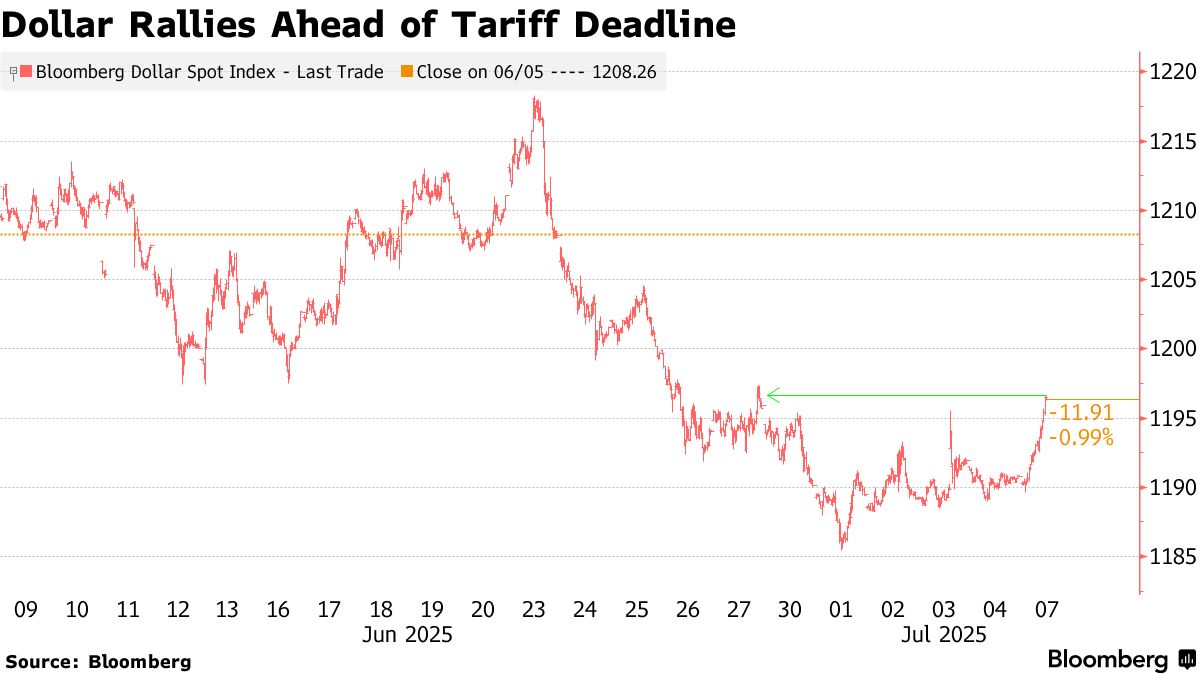
The rose against currencies globally, climbing to its strongest level in more than a week on speculation Donald Trump ’s trade tariffs won’t hurt the US economy as badly as feared or require aggressive interest-rate cuts to remedy.
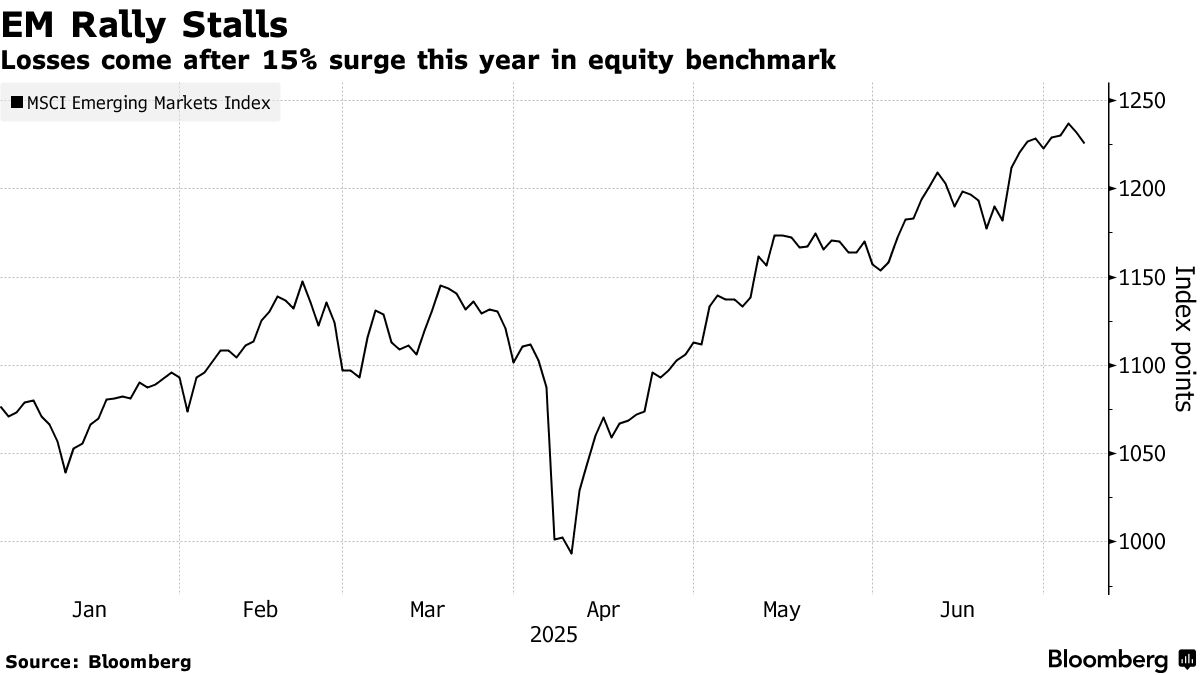
A gauge of the dollar’s strength rose as much as 0.5%, reaching its strongest level since June 27. That left the greenback higher versus the majority of G-10 currencies, strengthening the most versus the yen and the Australian and New Zealand dollars, while pushing a measure of emerging-market currencies toward its steepest drop since April.
The US is sending letters to its trading partners this week ahead of a Wednesday deadline for tariff deals to be reached. But they aren’t the final word on immediate rates, according to Treasury Secretary Scott Bessent . Levies will kick in on Aug. 1, giving countries without an agreement time to bring offers, he said on Sunday.
“Markets are treating this as yet another sign that the US administration is not serious when it comes to resurrecting the April version of Trump’s reciprocal tariffs,” which is buoying the dollar, currency analysts at Monex Europe wrote in a note.
The sweeping “Liberation Day” tariffs announced in April shook investor faith in the traditional safe-haven status of the US currency and fueled concern the aggressive levies would push the economy into recession. The dollar is still down almost 9% in the year so far.
As well as the tariffs speculation, last week’s strong US strong payrolls data are also providing support for the greenback.
Pricing for Fed rate cuts has eased since the jobs print, with traders betting on around 51 basis points of easing by year-end on Monday, compared with 65 basis points a week ago.
“Rate futures markets now price in an almost negligible probability of a Fed cut in July,” said Roberto Cobo Garcia , head of FX strategy at BBVA.
For nations elsewhere, lingering uncertainty over the final tariff rate is still hurting.
The higher-risk Australian dollar and New Zealand dollar both dropped around 1%. They and emerging-market currencies were dragged lower after Trump threatened an extra 10% tariff on any country aligning itself with what he called “the Anti-American policies” of the BRICS group.
The term originally referred to Brazil, Russia, India, China and South Africa, but has since expanded to include other developing nations.
MSCI Inc.’s EM FX benchmark dropped the most since April 7 on a closing basis, with almost all developing currencies falling against the dollar. South Africa’s rand led losses, down by about 1%. India’s rupee, Brazil’s real and China’s offshore yuan also declined on Monday.
Trump has said trading partners can expect a rate anywhere between 10% and 70% — implying some may have to shoulder higher tariffs than expected — though he suggested some deals are in the offing, too.
“The White House’s tariff strategy remains fluid,” UBS Group AG strategists including Mark Haefele wrote in a note. “We expect more market volatility on shifting headlines.”