Oil Surges, US Futures Drop After Strikes on Iran: Markets Wrap
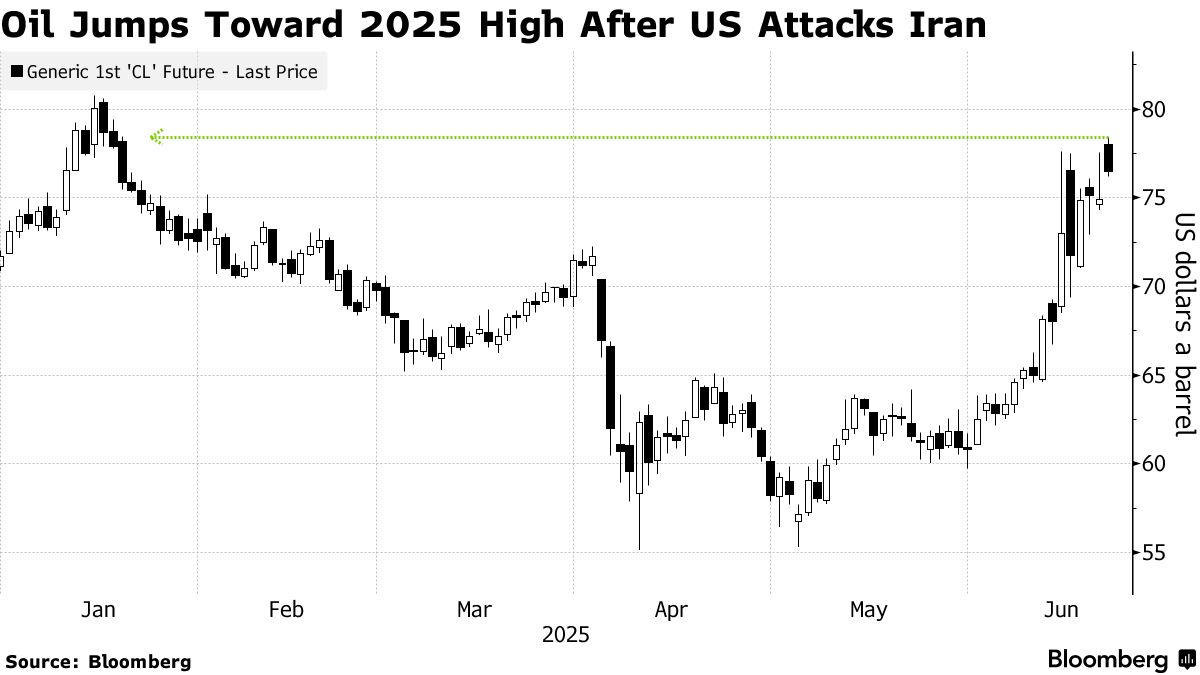
Markets were jolted by the US launching strikes on Iran’s nuclear sites over the weekend, a sharp escalation that sent oil prices surging and the dollar higher in early trading.
West Texas Intermediate crude jumped as much as 4.6% and S&P 500 futures dropped. The dollar climbed against the euro and most major peers, while gold edged higher. Bitcoin earlier slid below $100,000 for the first time since May and Ether sank sharply as cryptocurrencies posted broad-based declines.
Markets are quickly pricing risk of a in the Middle East after the US strike, an about face from early comments from the White House that suggested Trump would decide within two weeks on an attack to allow for negotiations. Traders are now waiting to see how Iran reacts and the US’s next move as to whether the risk-off sentiment is likely to extend.
“The key theme will be volatility — the moves might not stick if, for example, Trump decides the strikes are done,” said Nick Twidale , chief analyst at AT Global Markets. “Trump has the bigger stick compared with Tehran, and as such his next move — be it a further escalation or heading back to the negotiating table — will matter more for markets.”
Market reaction had been generally muted since Israel’s initial assault this month. Even after falling for the past two weeks, the S&P 500 is only about 3% below its all-time high from February. The dollar has climbed just over 1% since hitting a three-year low earlier this month.
Investors have mostly expected the conflict to be localized, with no wider impact on the global economy, said Evgenia Molotova , a senior investment manager at Pictet Asset Management.
“It all depends on how the conflict develops and things seem to be changing by the hour,” she said. “The only way they take it seriously is if the Strait of Hormuz gets blocked because that will affect oil access.”
Iran has vowed to impose “everlasting consequences” for the bombing and said it reserves all options to defend its sovereignty. Meanwhile, Israel resumed its assaults, targeting military sites in Tehran and western Iran.
“This marks a turning point for markets,” said Charu Chanana, chief investment strategist at Saxo Markets in Singapore. The “question is whether US assets can still command a safe-haven premium.”
Still, downside may be limited because some market participants have been preparing for a worsening conflict. The MSCI All Country World Index has pulled back 1.5% since Israel attacked Iran on June 13. Fund managers have reduced their stock holdings, shares are no longer overbought and hedging demand has increased, meaning a deep selloff is less likely at these levels.
Elsewhere, Federal Reserve Bank of San Francisco President Mary Daly on Sunday said she sees the central bank’s monetary policy stance as currently, with risks to its US employment and price stability mandates as roughly equal. Daly said she sees the central bank cutting rates in the fall, later than Governor Christopher Waller who said Friday he sees a move July.
Traders will be parsing economic activity data in Europe and the US later Monday to gauge whether the US trade war has crimped factory output ahead of the July 9 reciprocal tariff deadline. European Central Bank President Christine Lagarde is also due to speak.
Global shares “remain at high risk of a sharp near term pull back as the risk of an oil supply disruption flowing from the war with Iran is high and Trump’s tariff threat is far from resolved,” said Shane Oliver, head of investment strategy and chief economist at AMP Ltd. in Sydney.
Some of the main moves in markets:
Stocks
Currencies
Cryptocurrencies
Commodities
This story was produced with the assistance of Bloomberg Automation.