Philippines to Step In Should Peso Weakness Threaten Prices
Philippine central bank Governor Eli Remolona said authorities are prepared to intervene more strongly in the foreign-exchange market should the decline in the peso threaten inflation.
“The effect of the exchange rate on inflation depends on how big the depreciation is, and we have estimates of that threshold,” Remolona said in an interview with CNBC on Friday. “We would come in somewhat more forcefully than before” once such threshold is breached, he said.
While Remolona reiterated his comments this week that it would be futile to step in to defend the peso in the face of the dollar’s strength, he is also outlining the limit of the central bank’s tolerance for weakness in the currency.
“We do worry about the peso weakening too much; at some point it becomes inflationary,” the governor said.
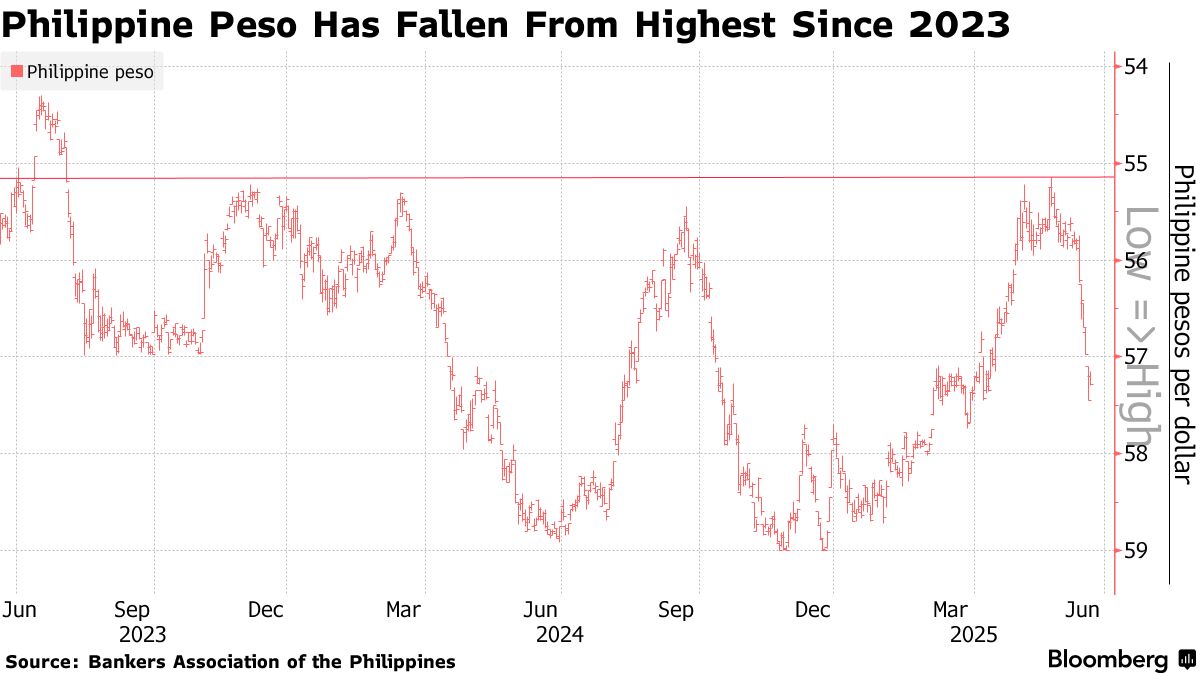
The peso slid about 2.6% this month, the worst performer in emerging markets, as higher oil prices fueled by the Israel-Iran tensions weighed on sentiment. The Philippines imports almost all of its oil requirement, making the currency vulnerable to rising energy costs globally.
The peso rose 0.5% to 57.15 per dollar on Friday, snapping eight days of losses.